

Tuesday 04 March 2025
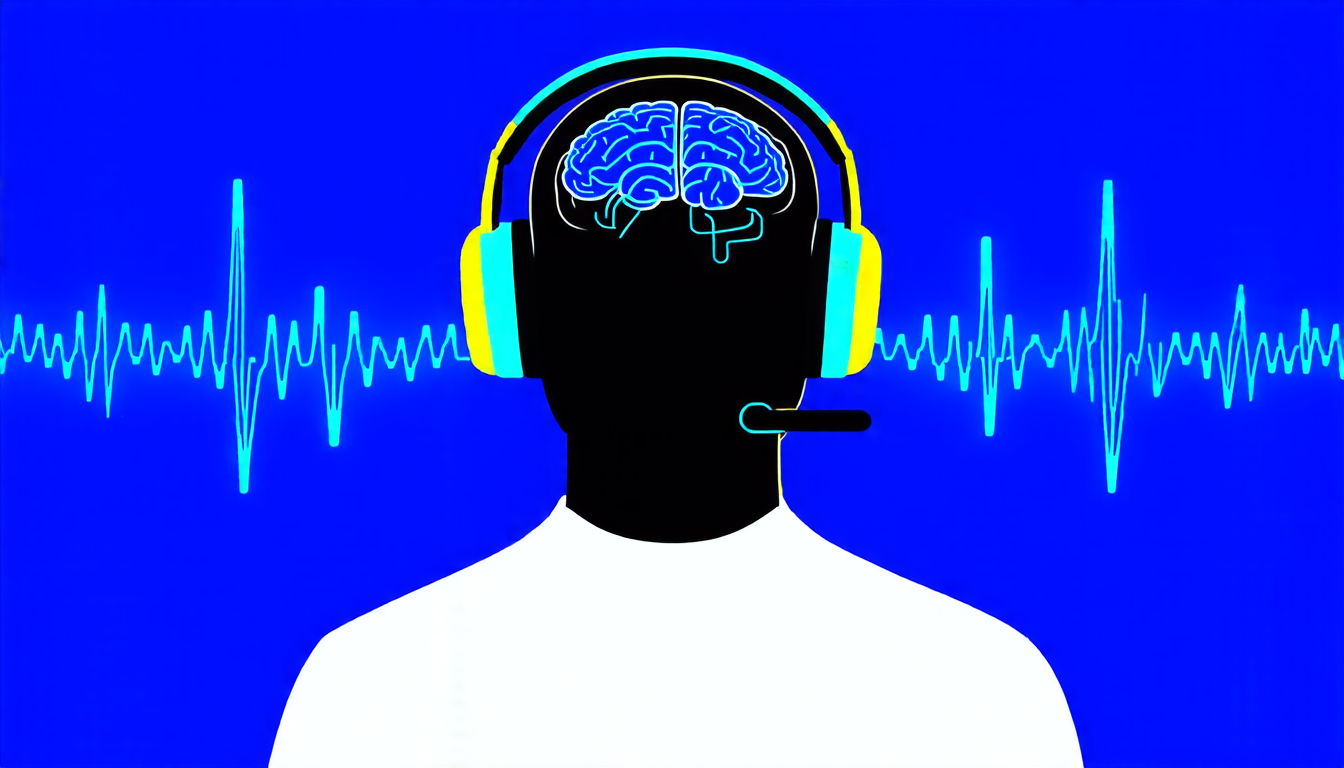
A new approach to cleaning up noisy brain signals has been developed, offering a promising solution for improving the accuracy of neural interfaces and brain-computer interfaces.
Electroencephalography (EEG) is a non-invasive technique used to record the electrical activity of the brain. However, EEG signals can be contaminated with noise from external sources such as muscle activity, eye movements, and other biological processes. This noise can interfere with the accurate interpretation of brain signals, making it challenging to develop reliable neural interfaces.
A team of researchers has designed a novel algorithm that uses a targeted approach to remove noise from EEG signals. The algorithm, called Targeted Adversarial Denoising Autoencoder (TADA), combines machine learning techniques with signal processing methods to effectively denoise EEG signals.
The TADA system consists of two main components: an autoencoder and a discriminator. The autoencoder is trained to learn the underlying structure of clean EEG signals and to generate a denoised version of noisy input data. The discriminator, on the other hand, is designed to differentiate between real and generated EEG signals.
During training, the autoencoder is optimized to produce denoised outputs that are indistinguishable from real EEG signals. At the same time, the discriminator learns to identify the noise in the original signal and to reject the autoencoder’s output as fake. This adversarial process encourages the autoencoder to generate more realistic denoised signals.
The TADA system has been tested on a dataset of EEG signals contaminated with electromyographic (EMG) noise. The results show that TADA outperforms other state-of-the-art algorithms in terms of signal-to-noise ratio, correlation coefficient, and spectral power density.
One of the key advantages of TADA is its ability to adaptively adjust the level of denoising based on the specific characteristics of each EEG signal. This allows for more accurate removal of noise and improved preservation of the original brain signals.
The potential applications of TADA are vast and varied. For example, it could be used to improve the accuracy of neural interfaces for people with paralysis or other motor disorders, enabling them to communicate more effectively. It could also be used in brain-computer interfaces (BCIs) to enable people to control devices with their thoughts.
Cite this article: “Advanced Denoising Algorithm for Neural Interfaces and Brain-Computer Interfaces”, The Science Archive, 2025.
Eeg Signals, Neural Interfaces, Brain-Computer Interfaces, Noise Reduction, Signal Processing, Machine Learning, Autoencoders, Discriminators, Electromyographic Noise, Denoising Algorithms





