

Tuesday 04 March 2025
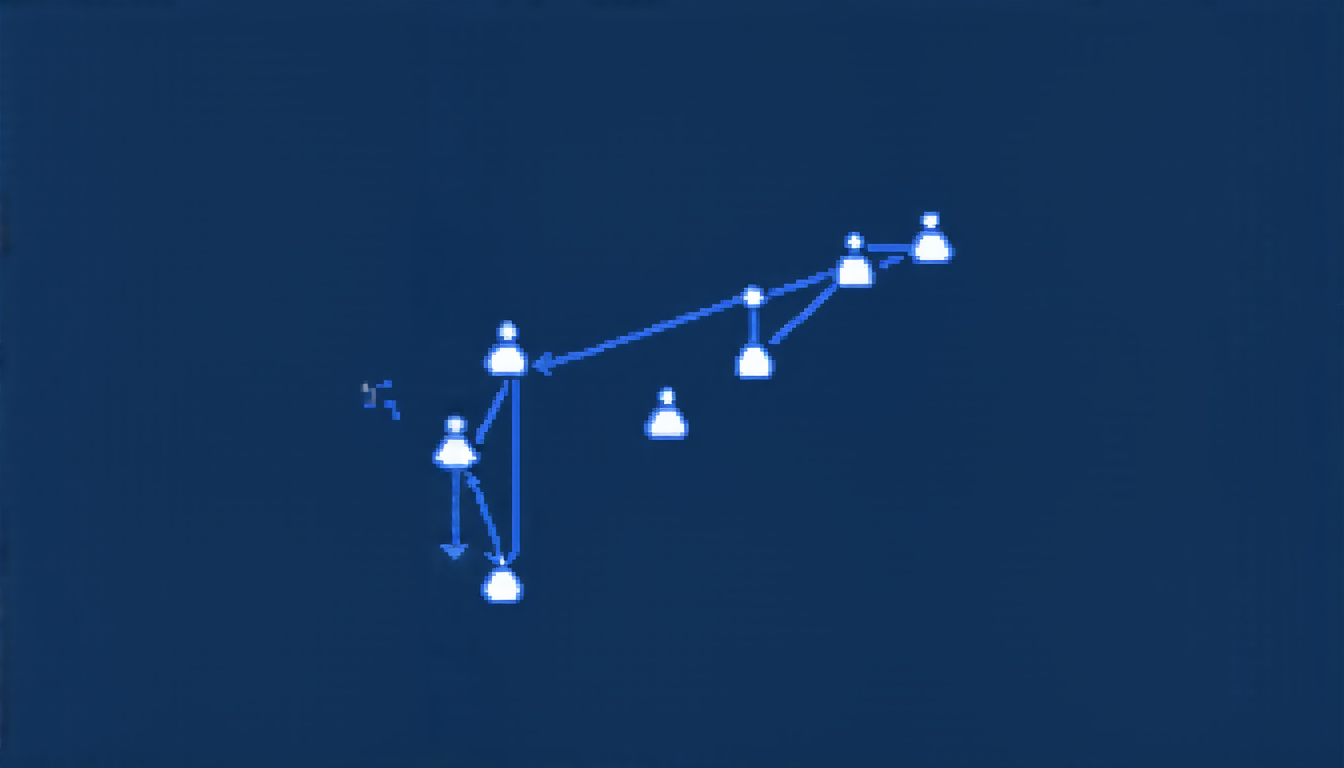
A team of mathematicians has made a significant breakthrough in understanding the intricacies of graph theory, a branch of mathematics that deals with patterns and connections between objects. The researchers have developed a new method for constructing drawings of complete graphs, which are networks where every pair of vertices is connected by an edge.
Complete graphs are notoriously difficult to draw without any edges crossing each other, but this new approach allows for the creation of such drawings even when the number of vertices is quite large. This achievement has important implications for computer science and engineering, as it could be used to develop more efficient algorithms for tasks like network optimization and data transmission.
The researchers’ method involves a series of clever constructions and transformations that allow them to create drawings with a high degree of complexity. By using these techniques, they were able to produce drawings of complete graphs with thousands of vertices, each with its own unique pattern of connections.
One of the key innovations of this approach is its ability to handle cases where the number of vertices is not divisible by three. This was previously considered a major obstacle in drawing complete graphs, as it made it difficult to create symmetrical patterns. The researchers’ method sidesteps this issue by using a combination of geometric and algebraic techniques.
The drawings produced by this method are incredibly detailed and intricate, with edges crossing over each other in complex ways. Despite their complexity, however, they are also surprisingly beautiful, with the vertices and edges forming intricate patterns that evoke the work of fractal artists.
The implications of this breakthrough are far-reaching. For example, it could be used to develop more efficient algorithms for tasks like network optimization and data transmission. It could also have important applications in fields like biology, where complex networks of interactions between organisms can be modeled using graph theory.
The researchers’ findings were published in a recent paper that has generated significant interest among mathematicians and computer scientists. The method is still in the early stages of development, but it has already shown great promise and could have a major impact on our understanding of complex systems.
In one sense, this breakthrough represents a major step forward in the field of graph theory, as it provides a new tool for constructing drawings of complete graphs. But it also highlights the incredible complexity and beauty of these networks, which continue to inspire mathematicians and computer scientists alike.
Cite this article: “Unraveling the Complexity of Graph Theory: A Breakthrough in Drawing Complete Graphs”, The Science Archive, 2025.
Graph Theory, Complete Graphs, Drawings, Network Optimization, Data Transmission, Computer Science, Engineering, Algebraic Techniques, Geometric Transformations, Fractal Art.
Reference: Isaac Chen, Oriol Solé-Pi, “On the crossing profile of rectilinear drawings of $K_n$” (2025).





