

Tuesday 04 March 2025
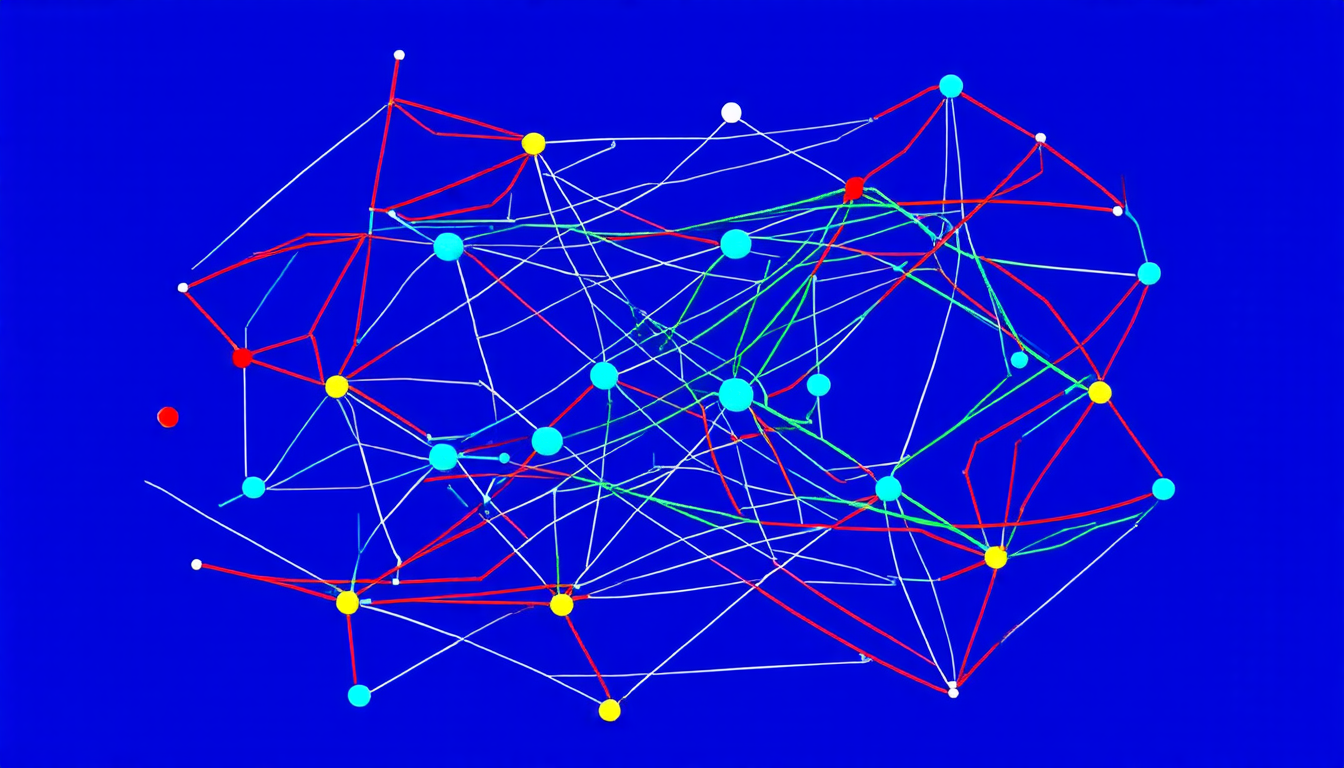
Scientists have made a significant breakthrough in the field of causality discovery, a crucial aspect of artificial intelligence that enables machines to understand the underlying relationships between events and variables. The new method, called the Quantum-Enhanced Causal Discovery (qPC) algorithm, utilizes the principles of quantum mechanics to analyze complex data sets and identify causal relationships.
Traditional algorithms for causality discovery rely on statistical models and are limited by their assumptions about the data. In contrast, the qPC algorithm leverages the power of quantum computing to explore a vast space of possible causal structures. This approach allows it to overcome limitations imposed by classical methods and provide more accurate results.
The qPC algorithm is based on the concept of kernel-based conditional independence tests, which are used to determine whether two variables are independent given a third variable. This test is performed using a quantum circuit that represents the relationships between the variables. The circuit is designed to exploit the entanglement properties of quantum mechanics, allowing it to efficiently explore the vast space of possible causal structures.
The qPC algorithm has been tested on various data sets, including synthetic and real-world data. In one experiment, researchers used the algorithm to analyze a dataset generated by a quantum circuit that simulated a complex system with multiple variables. The results showed that the qPC algorithm was able to accurately identify the causal relationships between the variables, even when traditional methods failed.
The implications of this breakthrough are significant. The qPC algorithm has the potential to revolutionize fields such as machine learning, data science, and artificial intelligence, enabling machines to better understand complex systems and make more accurate predictions. It also opens up new possibilities for scientific research, allowing researchers to explore previously inaccessible areas of study.
One of the key advantages of the qPC algorithm is its ability to handle large and complex datasets. Traditional methods often struggle with these types of data sets, as they require significant computational resources and can be slow to process. The qPC algorithm, on the other hand, is designed to scale efficiently with the size of the dataset, making it well-suited for analyzing large and complex data sets.
The development of the qPC algorithm also highlights the potential of quantum computing for solving real-world problems. Quantum computers are capable of performing certain calculations much faster than classical computers, making them ideal for tasks that require efficient exploration of vast solution spaces. The success of the qPC algorithm demonstrates the potential of quantum computing to make a significant impact in various fields.
Cite this article: “Quantum Leap in Causality Discovery: Unlocking Accurate Relationships Between Events and Variables”, The Science Archive, 2025.
Causality, Artificial Intelligence, Quantum Mechanics, Quantum Computing, Data Sets, Machine Learning, Data Science, Kernel-Based Conditional Independence Tests, Entanglement Properties, Complex Systems.





