

Tuesday 04 March 2025
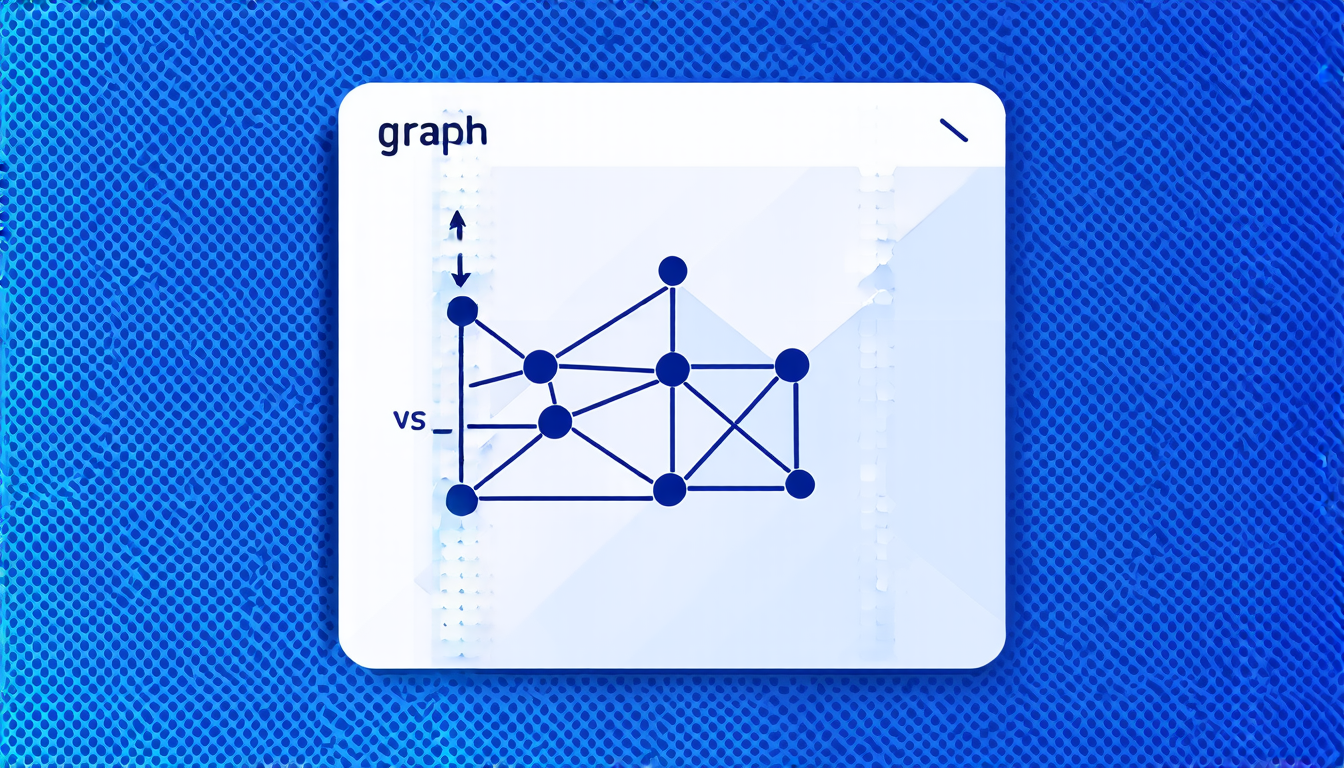
The intricate dance of labelled graphs and lattices has long fascinated mathematicians, but a recent breakthrough has shed new light on this complex relationship. For decades, researchers have been struggling to understand the connection between these two seemingly disparate fields. Now, a team of mathematicians has made significant strides in untangling this knot, revealing a one-to-one correspondence between labelled graphs and lattices.
The journey begins with labelled graphs, which are mathematical structures composed of vertices and edges, each labelled with unique information. These graphs can be thought of as networks or maps, where the labels provide additional context about the relationships between the vertices. In contrast, lattices are algebraic objects that arise from the study of partially ordered sets, such as collections of numbers or shapes.
The connection between labelled graphs and lattices lies in their commonalities. Both structures can be described using a set of rules, which govern how the vertices and edges interact with each other. These rules give rise to a rich landscape of patterns and structures, which have been studied extensively in both fields.
One key insight from this research is that labelled graphs can be used to represent lattices in a unique way. By mapping the vertices and edges of the graph to specific elements within the lattice, researchers have discovered that every lattice corresponds to a distinct labelled graph. This one-to-one correspondence has far-reaching implications for our understanding of both structures.
In particular, it allows mathematicians to harness the power of graph theory to study lattices in new ways. Graph theory is a well-established field that has been applied to a wide range of problems, from computer networks to social networks. By mapping lattices onto labelled graphs, researchers can now apply these same techniques to better understand and analyze lattice structures.
This breakthrough also has important implications for the study of dismantlable lattices, which are lattices that can be reduced to smaller sub-lattices by removing certain elements. The new correspondence between labelled graphs and lattices provides a powerful tool for studying dismantlability, allowing researchers to better understand when and how these structures arise.
The connection between labelled graphs and lattices is not limited to theoretical mathematics; it also has practical applications in fields such as computer science and data analysis. For example, labelled graphs can be used to represent complex networks, while lattices can provide a framework for analyzing and visualizing these networks.
Cite this article: “Unraveling the Connection: Labelling Graphs and Lattices”, The Science Archive, 2025.
Mathematics, Labelled Graphs, Lattices, Graph Theory, Algebraic Objects, Partially Ordered Sets, Networks, Data Analysis, Computer Science, Dismantlability
Reference: Ashok Nivrutti Bhavale, “Equivalence of labeled graphs and lattices” (2025).





