

Tuesday 04 March 2025
A new approach to predicting the behavior of complex industrial processes has been developed, using a combination of artificial intelligence and natural language processing. The method, known as LLM-TESS (Large Language Model for Text-based Knowledge-Embedded Soft Sensing), has shown significant improvements in accuracy and robustness over traditional approaches.
Soft sensors are computer programs that use data from various sources to predict the behavior of complex industrial processes, such as chemical reactions or mechanical systems. These predictions are crucial for ensuring the safe and efficient operation of these processes. However, developing accurate soft sensors requires a deep understanding of the underlying physics and chemistry of the process, as well as significant amounts of training data.
LLM-TESS uses a large language model to analyze text-based data from various sources, including scientific papers, technical reports, and online tutorials. The model is trained on this data to learn patterns and relationships that can be used to make predictions about the behavior of complex industrial processes.
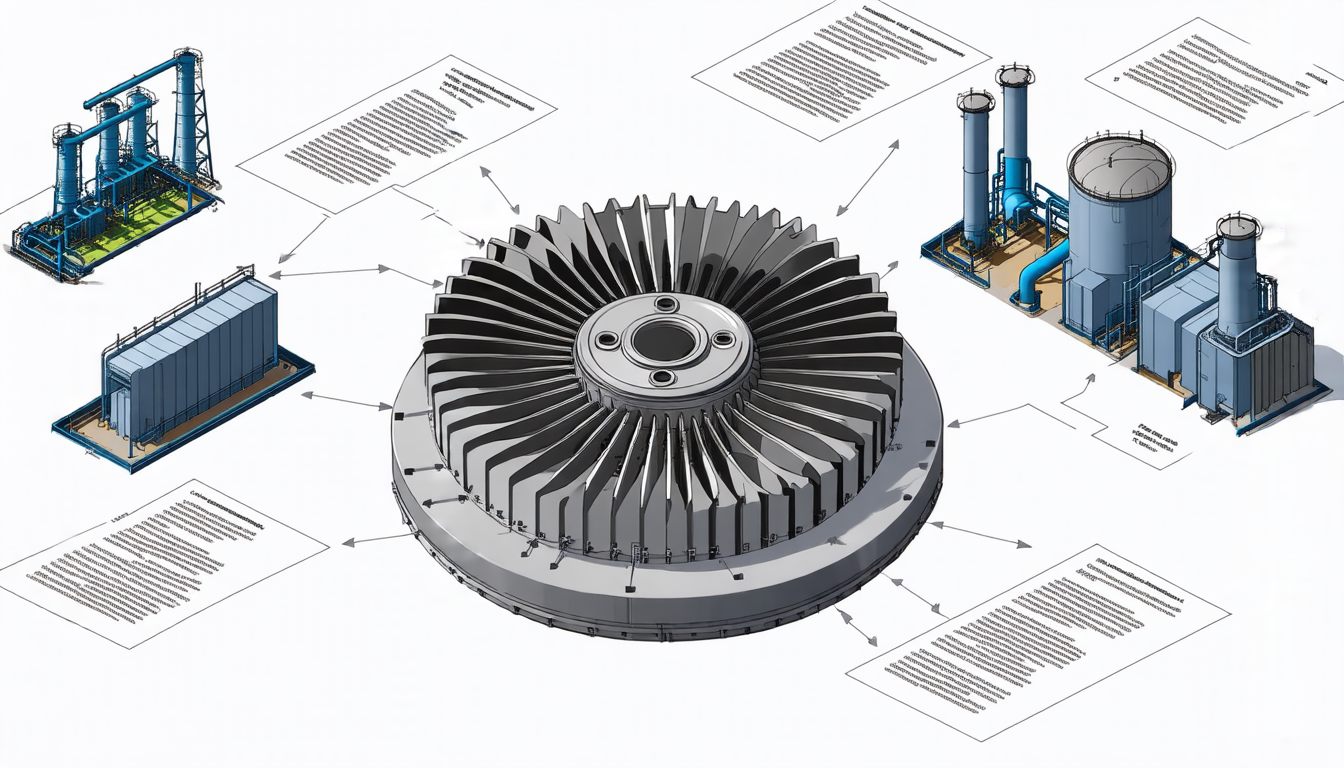
The approach has been tested using real-world data from an air preheater rotor, a critical component in power plants. LLM-TESS was able to accurately predict the deformation of the rotor over time, even when faced with limited training data and noisy sensor readings.
One of the key advantages of LLM-TESS is its ability to learn from incomplete or missing data. This is particularly important in industrial settings, where sensors may be damaged or malfunctioning, or where data is simply not available.
Another advantage of LLM-TESS is its flexibility. The model can be easily adapted to new processes and applications by simply retraining it on relevant text-based data.
The implications of this research are significant. By enabling the development of more accurate and robust soft sensors, LLM-TESS has the potential to improve the efficiency and reliability of complex industrial processes, while also reducing costs and environmental impacts.
In the future, researchers hope to continue developing and refining LLM-TESS, with applications in a wide range of fields, from power generation and chemical processing to medical diagnosis and climate modeling.
Cite this article: “Predicting Complex Industrial Processes with AI-Powered Soft Sensors”, The Science Archive, 2025.
Artificial Intelligence, Natural Language Processing, Industrial Processes, Soft Sensors, Predictive Analytics, Large Language Model, Text-Based Data, Process Control, Process Optimization, Machine Learning





