

Wednesday 05 March 2025
Deep learning has revolutionized many fields, from image recognition to natural language processing. But what about data that’s inherently complex and hierarchical, like social networks or molecular structures? Traditional deep neural networks can struggle to capture these relationships, but a new approach is changing the game.
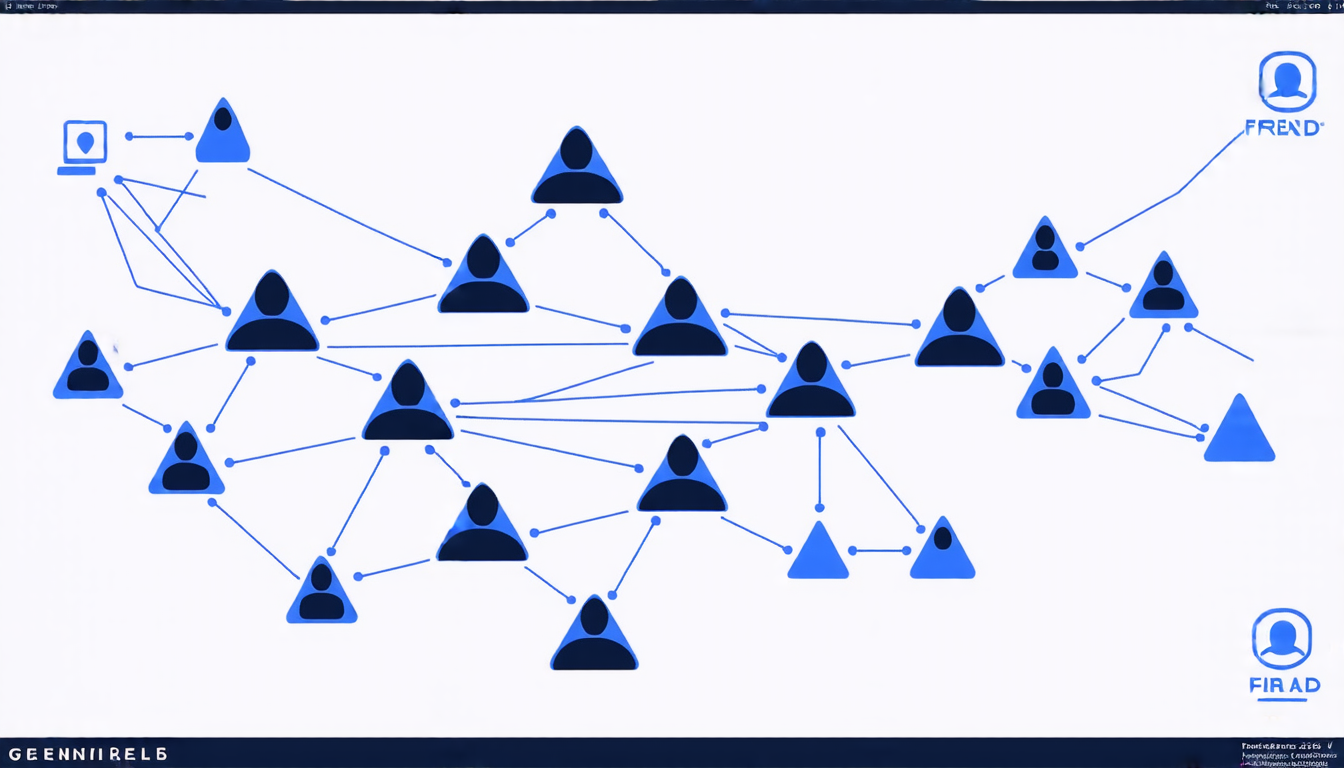
The key innovation is called Quantum Simplicial Neural Networks (QSNs), which combines the power of quantum computing with the structure of simplicial complexes. A simplicial complex is a mathematical object that looks like a network of connected triangles and higher-dimensional shapes. This abstract representation can be used to model everything from social networks to protein interactions.
The QSN architecture is inspired by the Ising model, a classic problem in statistical physics that describes magnetic materials. In this context, the Ising model represents spins (like tiny magnets) arranged on a lattice. The goal is to find the optimal configuration of these spins given certain constraints.
In a similar vein, QSNs use a stack of Quantum Simplicial Layers to encode higher-order structures into quantum states. Each layer consists of a set of qubits that interact with each other through entanglement and measurement. This process allows the network to learn complex relationships between nodes in the simplicial complex.
The authors tested their approach on synthetic classification tasks, where they found that QSNs outperformed traditional classical methods in both accuracy and efficiency. The results are impressive, especially considering that these networks were trained on relatively small datasets.
But what does this mean for real-world applications? For one, it could lead to more accurate predictions in fields like biology or social network analysis. Imagine being able to identify key players in a social movement or predict protein interactions with unprecedented accuracy.
The QSN architecture also has potential implications for quantum computing itself. By leveraging the power of quantum parallelism and entanglement, these networks might be able to solve complex problems that are currently intractable using classical methods.
Of course, there’s still much work to be done before QSNs can be widely adopted. The authors acknowledge that their approach is still in its early stages and requires further development and testing. Nevertheless, the potential benefits of this technology are undeniable, and it’s an exciting time for researchers exploring the intersection of quantum computing and machine learning.
The real challenge now lies in scaling up these networks to larger datasets and more complex problems.
Cite this article: “Quantum Simplicial Neural Networks: A New Approach to Capturing Complex Relationships”, The Science Archive, 2025.
Quantum Simplicial Neural Networks, Machine Learning, Quantum Computing, Deep Learning, Social Networks, Molecular Structures, Ising Model, Quantum States, Entanglement, Classification Tasks





