

Wednesday 05 March 2025
The researchers at University of Wisconsin-Madison have made a significant breakthrough in understanding human mobility patterns, which could have far-reaching implications for fields such as epidemiology, transportation, and redistricting. By developing a new method called the spatially weighted temporal rich club (WTRC), they’ve been able to identify clusters of densely connected nodes in spatiotemporal networks that exhibit strong interactions.
The concept of rich clubs has been well-studied in network science, but most research has focused on static networks. The WTRC method takes into account the dynamic nature of human mobility, analyzing how connections between people and places change over time. This allows researchers to identify not only which nodes are connected but also when and why.
The team applied their method to a large dataset of human mobility flows in the United States, using data from SafeGraph, a company that provides location-based intelligence. They found that the WTRC effect is robust across different spatial scales, from cities to congressional districts. This means that the same patterns of strong interaction between nodes are observed regardless of the level of geographic aggregation.
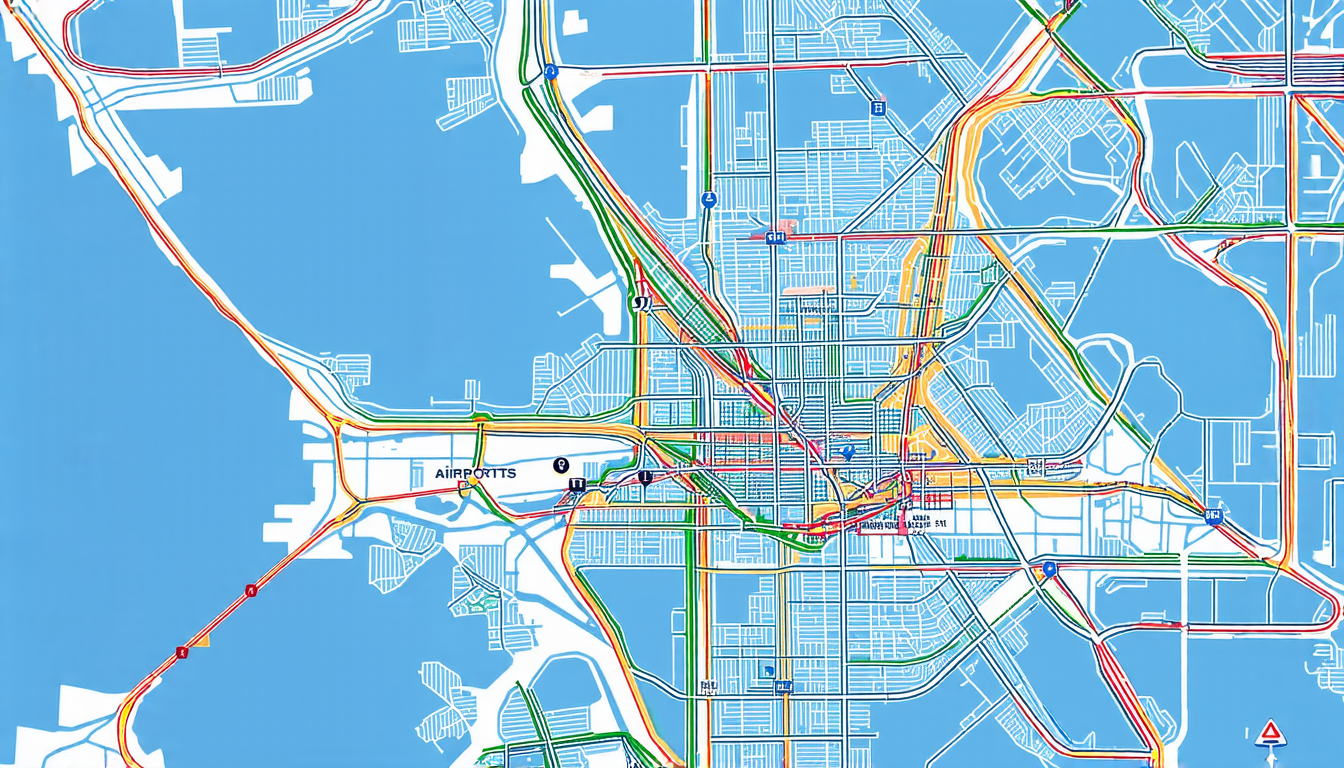
One key finding was that airports play a crucial role in shaping human mobility flows at the national scale. The researchers discovered that counties with major airports tend to have stronger connections to other areas, which could have implications for disease spread and transportation planning.
The WTRC method also allowed the team to identify significant changes in human mobility patterns over time. For example, they found that during the COVID-19 pandemic, there was a pronounced shift towards more localized movement, with people staying closer to home.
The potential applications of this research are vast. In epidemiology, understanding how disease spread through human mobility networks could inform public health policy and intervention strategies. In transportation planning, identifying areas of strong interaction between nodes could help optimize routes and infrastructure development.
In redistricting, the WTRC method could be used to analyze population flows and identify areas that are more likely to experience changes in political representation. This could lead to more informed decision-making about how districts are drawn.
The researchers acknowledge that their work is just a starting point, and there’s still much to be learned about human mobility patterns. However, the WTRC method offers a powerful tool for analyzing complex spatiotemporal networks, which could have significant impacts across multiple fields of study.
Cite this article: “Unraveling Human Mobility Patterns: A Breakthrough in Understanding Spatiotemporal Networks”, The Science Archive, 2025.
Human Mobility, Network Science, Spatial Analysis, Temporal Networks, Rich Clubs, Epidemiology, Transportation Planning, Redistricting, Data Mining, Spatiotemporal Modeling





