

Wednesday 05 March 2025
The quest for precision in chemical analysis has long been a challenge for scientists. With the ability to probe matter at the atomic scale, energy-dispersive X-ray spectroscopy (EDX) has become a powerful tool for understanding the composition of materials. However, as researchers continue to push the boundaries of what is possible with EDX, they are also discovering new challenges that must be overcome.
One such challenge is the impact of electron beam propagation on chemical analysis. As an electron beam travels through a sample, it can interact with the material in complex ways, affecting the signals detected by the spectrometer. This can lead to inaccuracies in the measurement of elemental concentrations, which can have significant implications for our understanding of materials.
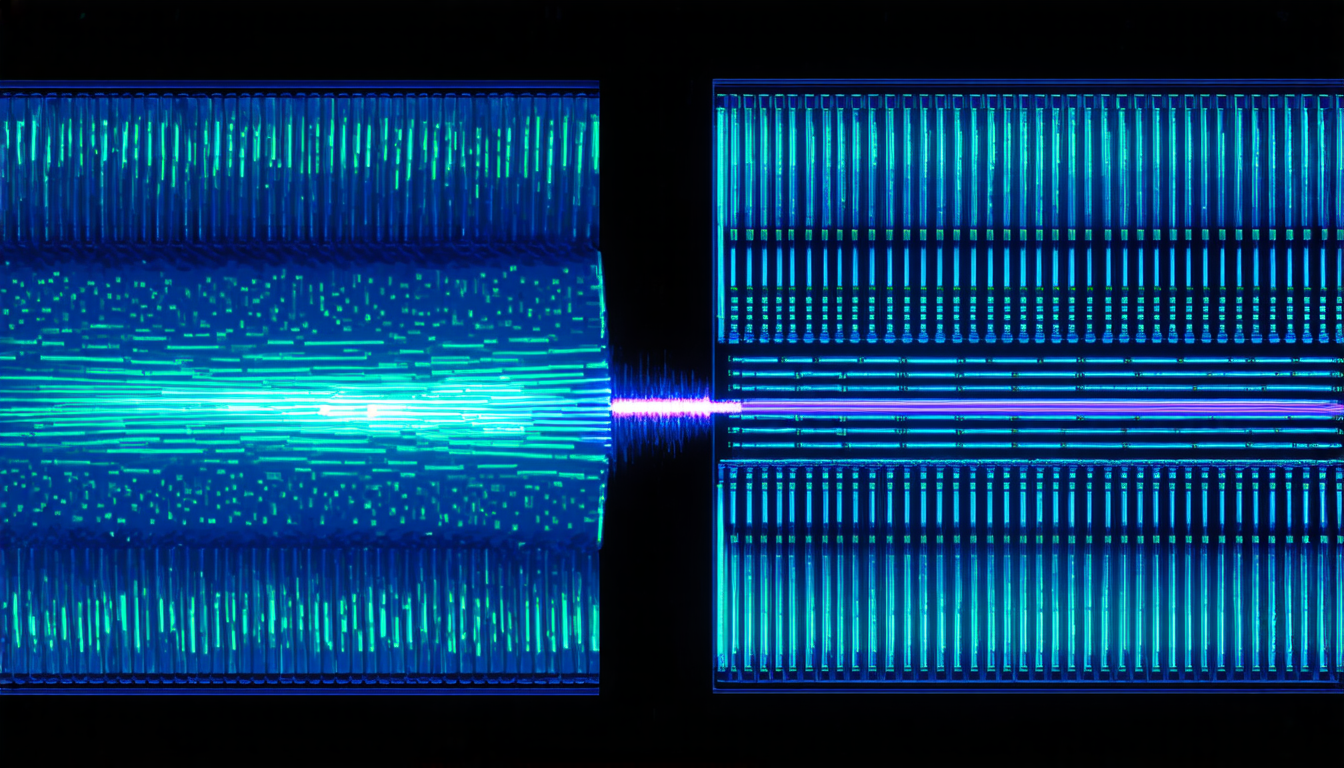
To address this issue, researchers have developed a new approach that combines experimental data with simulations of electron beam propagation. By modeling the behavior of the electron beam as it interacts with the sample, scientists can correct for the effects of beam propagation and obtain more accurate measurements of elemental concentrations.
The team behind this research has used this approach to analyze the composition of gallium nitride (GaN) quantum wells, which are critical components in many electronic devices. By measuring the intensity of X-rays emitted by different elements within the sample, they were able to determine the concentration of each element with high precision.
One of the key challenges in this research was ensuring that the electron beam was well-collimated and focused on the sample. This required careful alignment of the microscope and precise control over the electron beam’s convergence angle. The team used a combination of simulations and experimental measurements to optimize these conditions, ultimately achieving a precision of better than 1% in their elemental concentration measurements.
The implications of this research are significant. By developing more accurate methods for chemical analysis, scientists can gain a deeper understanding of the properties and behavior of materials at the atomic scale. This knowledge can be used to design new materials with specific properties, such as improved strength or conductivity.
In addition, the ability to analyze complex materials with high precision could have important implications for fields such as energy storage and medicine. For example, researchers studying the properties of lithium-ion batteries may use EDX to analyze the composition of battery electrodes, while scientists investigating the behavior of nanoparticles in biological systems may employ similar techniques to understand their interactions with cells.
Overall, this research demonstrates the power of combining experimental measurements with simulations to overcome the challenges of chemical analysis.
Cite this article: “Enhancing Chemical Analysis through Simulation-Driven Electron Beam Propagation Correction”, The Science Archive, 2025.
Energy-Dispersive X-Ray Spectroscopy, Edx, Electron Beam Propagation, Chemical Analysis, Gallium Nitride, Quantum Wells, Elemental Concentrations, Precision, Simulations, Experimental Measurements





