

Wednesday 05 March 2025
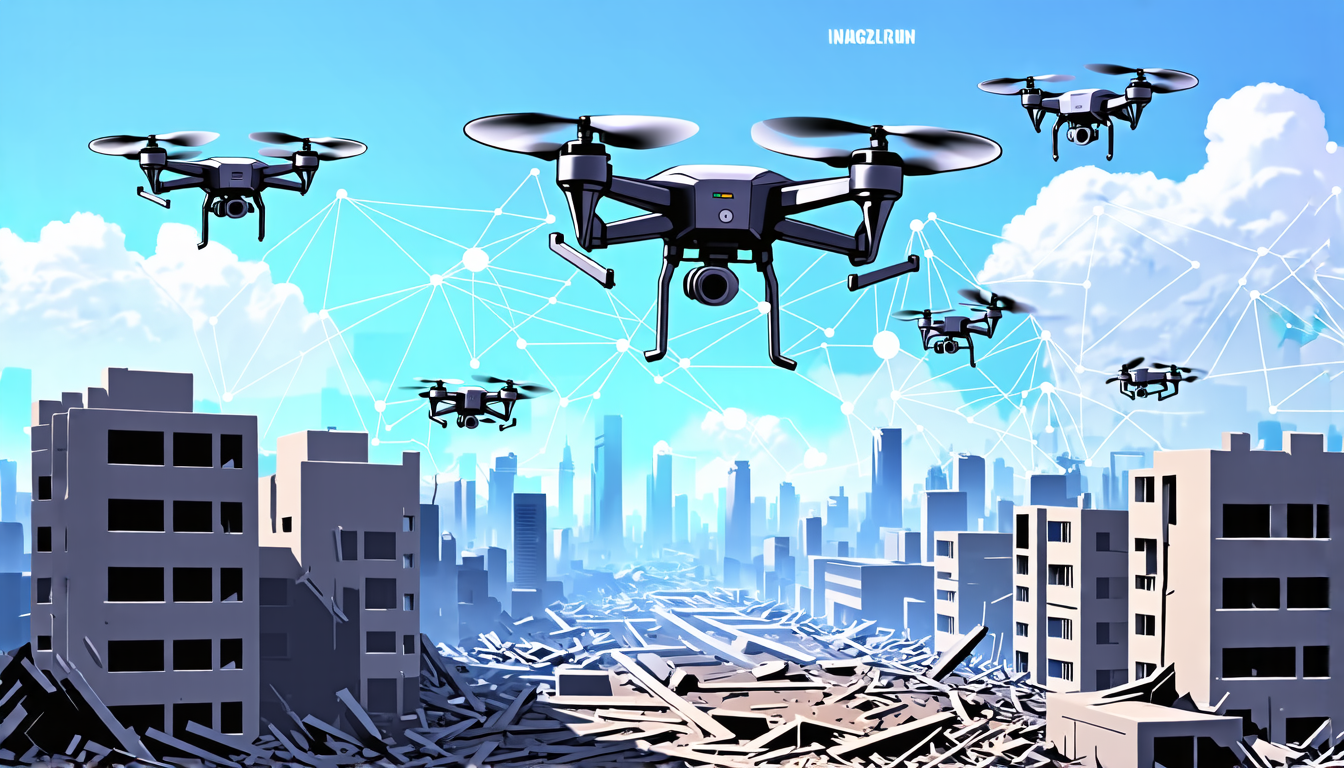
As the world continues to grapple with the challenges of disaster response, a team of researchers has made a significant breakthrough in developing a system that can quickly and efficiently establish communication networks in areas devastated by natural disasters or conflicts.
The system, known as a UAV swarm-enabled collaborative post-disaster communications network, relies on a fleet of unmanned aerial vehicles (UAVs) to provide communication coverage and facilitate data collection. The UAVs are equipped with advanced sensors and communication equipment, allowing them to quickly establish a network that can be used by emergency responders and other stakeholders.
One of the key advantages of this system is its ability to rapidly deploy and adapt to changing circumstances on the ground. The UAVs can be quickly deployed from a central location, and their movement and altitude can be adjusted in real-time to optimize communication coverage and minimize interference.
The system also incorporates advanced beamforming technology, which allows it to focus energy transmission towards specific areas or devices, increasing the effectiveness of the network and reducing the risk of interference. This is particularly important in disaster scenarios where multiple emergency responders may be competing for limited bandwidth resources.
Another key feature of the system is its ability to optimize traffic routing and resource allocation in real-time. This allows it to quickly adapt to changing circumstances on the ground, such as the location of emergency responders or the availability of communication infrastructure. The system can also prioritize critical communications, such as those related to life-saving operations, over less urgent messages.
The researchers behind this project have conducted extensive simulations and testing to validate their approach. They found that the system was able to provide reliable communication coverage in a variety of scenarios, including those with limited infrastructure or high levels of interference.
While there are still many challenges to be overcome before this technology can be deployed in real-world disaster response situations, the potential benefits are significant. By providing emergency responders with rapid and reliable access to communication networks, this system could help save lives and reduce the impact of disasters on affected communities.
The researchers are now working to refine their approach and address any remaining technical challenges before seeking to deploy the system in real-world scenarios. With continued development and testing, it is likely that this technology will play an important role in disaster response efforts for years to come.
Cite this article: “Swarm-Based Communication Network for Disaster Response”, The Science Archive, 2025.
Uavs, Communication Networks, Post-Disaster, Natural Disasters, Conflicts, Swarm-Enabled, Collaborative, Beamforming Technology, Traffic Routing, Resource Allocation





