

Wednesday 05 March 2025
Researchers have made a significant breakthrough in the field of artificial intelligence, developing a new method for training machine learning models that can adapt to changing data distributions and learn from multiple sources simultaneously.
The approach, called Spatio-Temporal Heterogeneous Federated Learning (STHFL), allows machines to learn from different types of data, including images, text, and audio, and combine them to make predictions. This is a significant improvement over traditional methods, which are limited to learning from a single type of data.
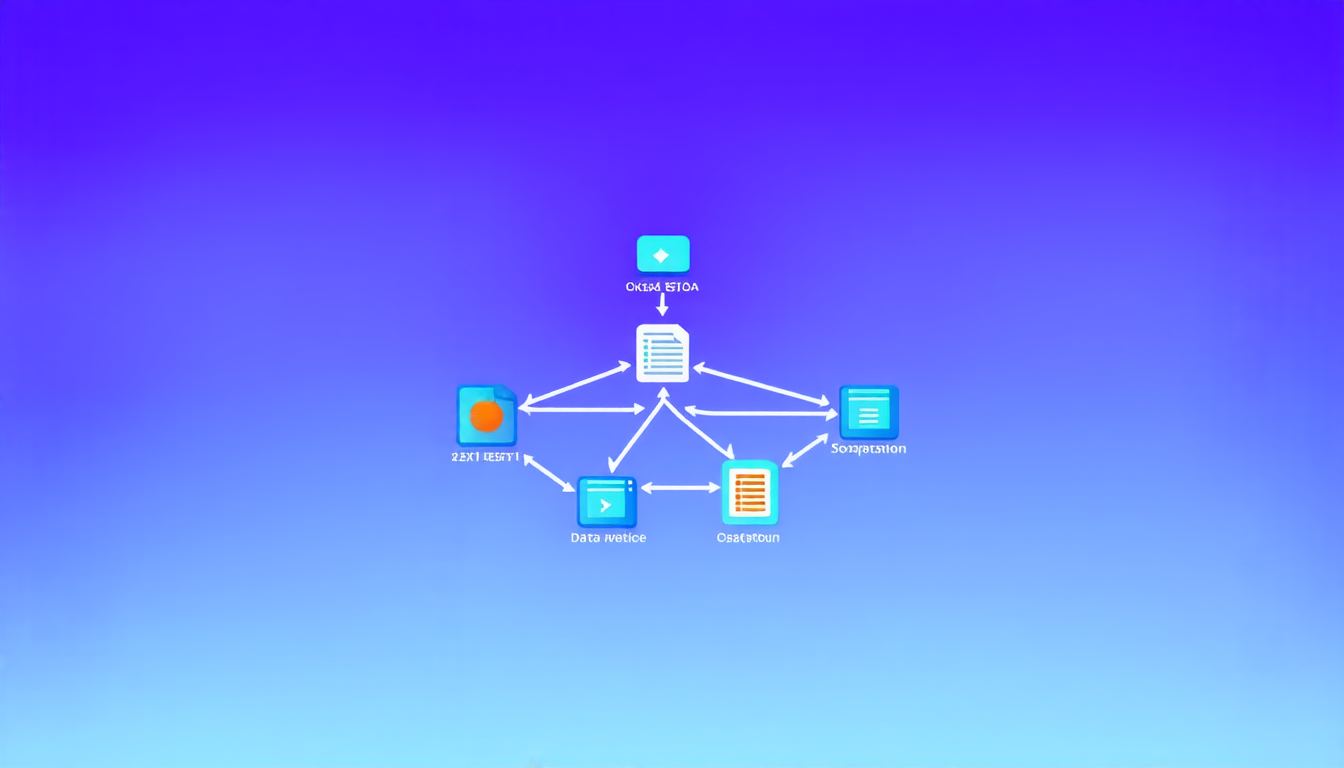
The STHFL algorithm works by creating a global model that can be updated by multiple local models, each trained on its own specific dataset. The global model is then used to predict the outcome of new data, and the local models are updated based on how well they performed compared to the global model.
One of the key advantages of STHFL is its ability to handle non-iid (independent and identically distributed) data, which means that the data from different sources may not have the same characteristics or distribution. This is a common problem in machine learning, as real-world data often comes from multiple sources with different properties.
The researchers tested their algorithm on several benchmark datasets, including images, text, and audio files. They found that STHFL outperformed traditional methods in terms of accuracy and efficiency, particularly when dealing with non-iid data.
Another benefit of STHFL is its ability to handle long-tailed data distributions, where some classes have many more instances than others. This is common in real-world applications, such as medical diagnosis or image classification, where some diseases are much rarer than others.
The researchers also explored the potential applications of STHFL in various fields, including healthcare, finance, and education. For example, they proposed using STHFL to develop personalized treatment plans for patients based on their individual characteristics, or to improve financial forecasting by combining data from multiple sources.
Overall, the development of STHFL represents a significant step forward in the field of artificial intelligence, with potential applications in many areas where machine learning is used. Its ability to adapt to changing data distributions and learn from multiple sources simultaneously makes it an attractive solution for many real-world problems.
Cite this article: “Breakthrough in Artificial Intelligence: STHFL Algorithm Learns from Multiple Sources Simultaneously”, The Science Archive, 2025.
Artificial Intelligence, Machine Learning, Federated Learning, Spatio-Temporal, Heterogeneous Data, Non-Iid Data, Long-Tailed Data, Image Classification, Text Analysis, Audio Processing





