

Wednesday 05 March 2025
A mathematical framework for understanding how social norms influence the formation of clusters in social networks has been developed by researchers. The study, published in a recent issue of a scientific journal, sheds light on how individuals assess each other’s behavior and adjust their own actions accordingly.
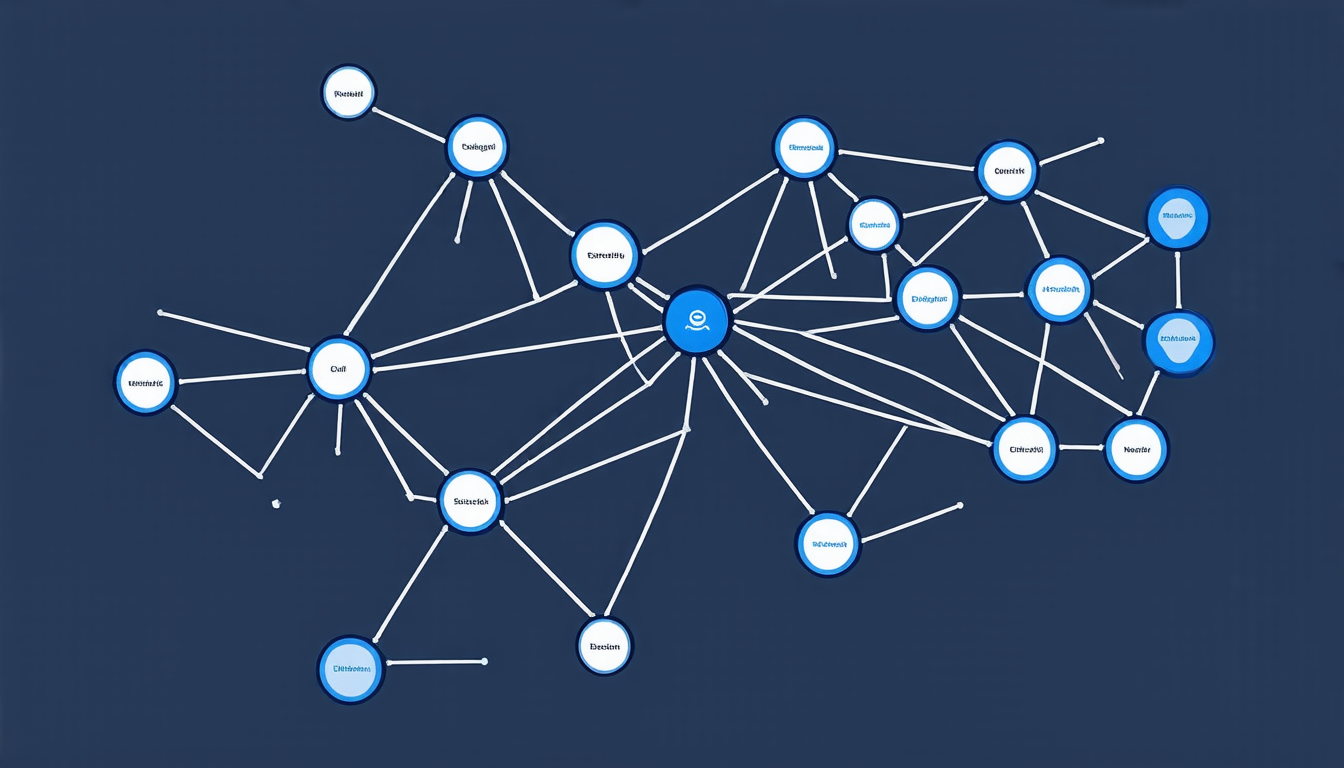
The researchers created a model that simulates the behavior of agents in a network, where each agent is influenced by its neighbors’ assessments of others. They found that when an individual makes a mistake while assessing another person’s behavior, it can have a ripple effect throughout the network, leading to the formation of clusters based on shared beliefs or behaviors.
The study reveals that the probability of an agent joining a cluster depends on the number of agents already in that cluster and the size of the entire network. The researchers also found that when an agent makes a mistake while assessing another person’s behavior, it can increase the chances of other agents joining the same cluster.
One of the key findings of the study is that even small mistakes or errors in assessment can have significant consequences for the formation of clusters. This highlights the importance of accurate assessments and communication in social networks.
The researchers believe that their model has implications for understanding various social phenomena, such as the emergence of social norms, the spread of information, and the behavior of groups. They also suggest that the study could be used to design strategies for promoting cooperation or reducing conflict in social networks.
In the study, the researchers used a mathematical framework called indirect reciprocity to model the behavior of agents in a network. Indirect reciprocity is a concept where individuals assess each other’s behavior based on how others have behaved towards them. This can lead to the emergence of social norms and the formation of clusters in social networks.
The study has also been praised for its simplicity and ability to capture complex social phenomena. The researchers hope that their model will be used by other scientists to further understand the dynamics of social networks and develop new strategies for promoting cooperation or reducing conflict.
Overall, the study provides valuable insights into how social norms influence the formation of clusters in social networks, highlighting the importance of accurate assessments and communication in these complex systems.
Cite this article: “Influence of Social Norms on Cluster Formation in Social Networks”, The Science Archive, 2025.
Social Norms, Cluster Formation, Social Networks, Mathematical Framework, Indirect Reciprocity, Assessment Errors, Ripple Effect, Network Size, Probability, Cooperation
Reference: Minwoo Bae, Seung Ki Baek, “Indirect reciprocity as a dynamics for weak balance” (2025).





