

Wednesday 05 March 2025
Scientists have made a significant breakthrough in understanding how air bubbles form and propagate through the xylem vessels of plants, a process that can lead to devastating consequences for trees and crops under drought conditions.
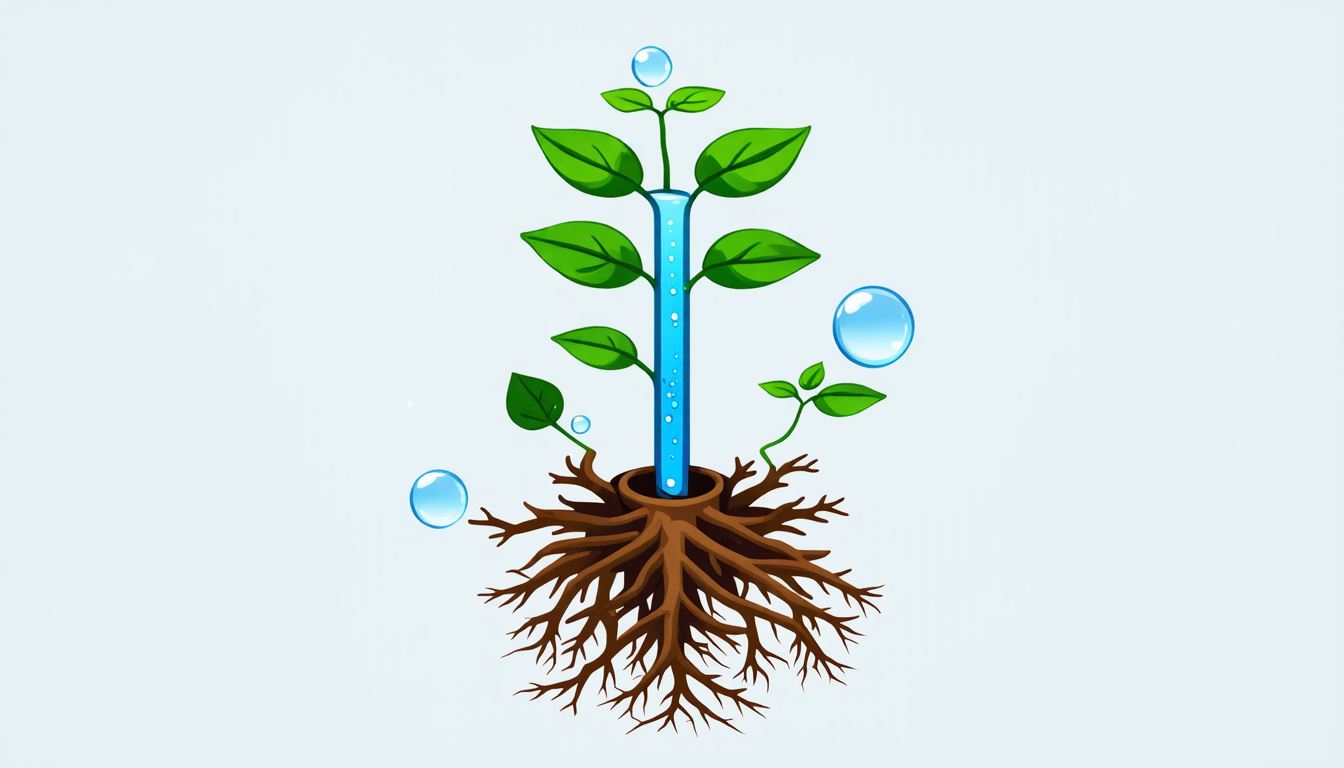
The xylem is a vital part of a plant’s vascular system, responsible for transporting water and nutrients from the roots to the leaves. However, when the water pressure inside the vessels drops due to evaporation or other factors, air bubbles can form and block the flow of water, leading to embolism and potentially even killing the plant.
Researchers have long been interested in understanding how these air bubbles form and propagate through the xylem, but the process is complex and involves many variables. To tackle this challenge, scientists turned to biomimicry, creating artificial systems that mimic the structure and behavior of real plants.
One such system was developed by a team of researchers at the University of Nice Sophia Antipolis in France. They created a device made of polydimethylsiloxane (PDMS), a flexible and permeable material, that mimics the structure of plant leaves. The device has a network of microchannels that replicate the xylem vessels found in real plants.
The researchers then used this device to study how air bubbles form and propagate through the system under controlled conditions. They observed that the air bubbles formed at constrictions in the microchannels, where the pressure is lower due to the curvature of the walls. As the bubbles grew, they blocked the flow of water and caused the pressure inside the vessels to drop further.
The team also found that the propagation of air bubbles was influenced by the geometry of the microchannels and the properties of the PDMS material. For example, narrower constrictions allowed for faster propagation of air bubbles, while wider constrictions slowed them down.
These findings have important implications for our understanding of how plants respond to drought conditions. By studying the behavior of air bubbles in these artificial systems, scientists can gain insights into how real plants might respond to similar conditions.
The researchers also believe that their work could lead to new strategies for protecting crops from drought-induced damage. For example, by designing microchannels with specific geometries and properties, farmers may be able to create more resilient plants that are better equipped to withstand dry spells.
Overall, this study represents a significant step forward in our understanding of how air bubbles form and propagate through the xylem vessels of plants.
Cite this article: “Unlocking the Secrets of Air Bubble Formation in Plants”, The Science Archive, 2025.
Air Bubbles, Xylem Vessels, Plant Vascular System, Drought Conditions, Embolism, Biomimicry, Microchannels, Polydimethylsiloxane, Pdms Material, Plant Leaves





