

Wednesday 05 March 2025
The quest for precision in computer simulations has led researchers to develop a new technique that combines the accuracy of isogeometric analysis with the flexibility of Bézier extraction. By merging these two approaches, scientists have created a method that can tackle complex geometries and refine their calculations on demand.
Isogeometric analysis, a branch of numerical simulation, uses mathematical curves and surfaces called NURBS (non-uniform rational B-splines) to model physical phenomena. These curves are particularly useful for describing the intricate shapes found in nature and engineering designs. However, traditional isogeometric methods can be computationally expensive and limited by their rigid mesh structure.
Bézier extraction, on the other hand, allows researchers to transform these NURBS into simpler, more efficient elements known as Bézier elements. These elements can then be used within standard finite element software, making it easier to integrate isogeometric analysis with existing computational tools.
The new technique, dubbed multi-level Bézier extraction, takes advantage of both approaches by using hierarchical B-splines (THB-splines) to construct a mesh that can be refined on demand. This allows researchers to focus their calculations on specific regions of interest, reducing the overall computational cost and increasing accuracy.
One of the key benefits of this approach is its ability to handle complex geometries with ease. By using THB-splines, researchers can create meshes that conform precisely to the intricate shapes found in nature or engineering designs. This is particularly important for applications such as fluid dynamics, where small errors in geometry can have significant consequences.
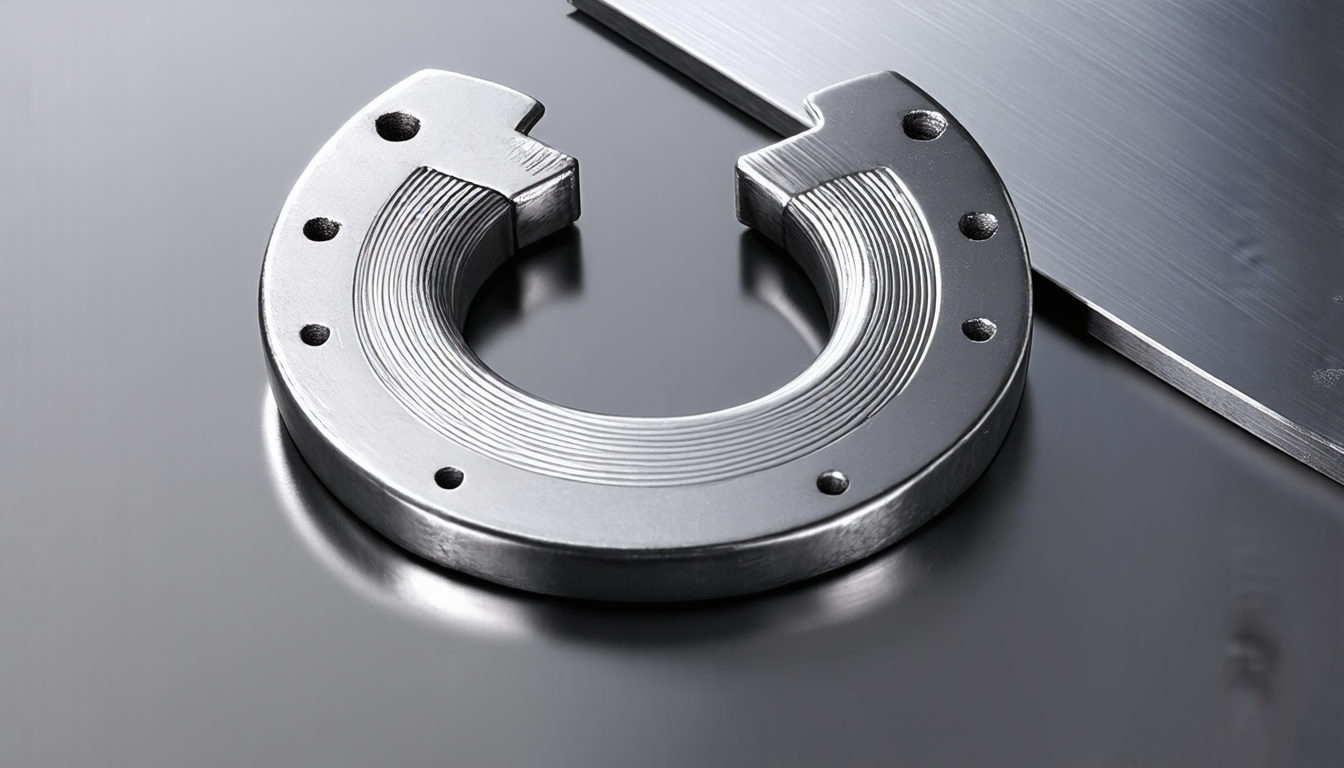
To demonstrate the effectiveness of multi-level Bézier extraction, scientists used it to simulate a 2D magnetostatic problem involving a horseshoe magnet and a metal sheet. The results showed that the technique was able to accurately capture the complex magnetic fields and flux densities found in this system.
The potential applications of multi-level Bézier extraction are vast. Researchers could use it to simulate complex fluid dynamics, study the behavior of materials under stress, or even model the intricate structures of biological systems. By combining the accuracy of isogeometric analysis with the flexibility of Bézier extraction, scientists have opened up new possibilities for computational simulation and modeling.
In the future, researchers plan to extend this technique to 3D simulations and explore its applications in a wide range of fields.
Cite this article: “Unlocking Complex Geometries with Multi-Level Bézier Extraction”, The Science Archive, 2025.
Isogeometric Analysis, Bézier Extraction, Numerical Simulation, Nurbs, Computational Expense, Finite Element Software, Thb-Splines, Hierarchical Mesh, Complex Geometries, Magnetostatic Problem





