

Wednesday 05 March 2025
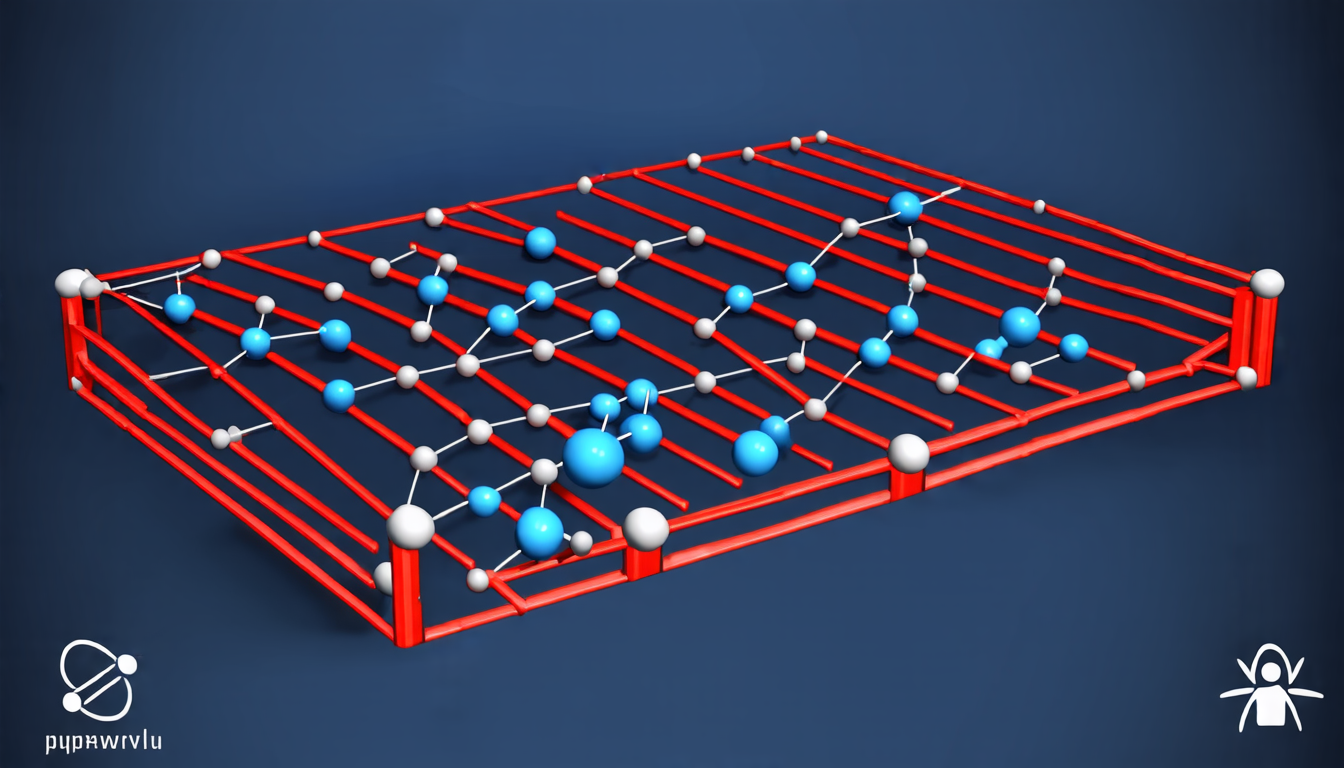
For years, scientists have been working on a new frontier in quantum computing: three-dimensional optical tweezers arrays. This technology has the potential to revolutionize the field of quantum processing by allowing for the creation of large-scale, highly controlled systems that can manipulate individual atoms.
The latest breakthrough in this area comes from researchers at Kyoto University, who have successfully demonstrated plane-selective coherent manipulations of nuclear spin qubits in a three-dimensional optical tweezer array. In other words, they’ve figured out how to precisely control the orientation of atomic spins within a 3D structure, which is crucial for building large-scale quantum computers.
The team achieved this feat by using a technique called plane-selective excitation, where they focused a laser beam on specific planes within the 3D array to manipulate the atoms. This allowed them to selectively control the spin states of individual atoms, while leaving others untouched.
To achieve this level of precision, the researchers had to overcome several challenges. One major hurdle was the need for precise control over the magnetic field gradients within the 3D array. They achieved this by using a combination of coils and permanent magnets to create a highly uniform magnetic field.
Another challenge was the need to suppress crosstalk between different planes within the array. Crosstalk occurs when the manipulation of one plane affects the spin states of nearby atoms, which can lead to errors in quantum computations. To mitigate this, the researchers used a technique called hyperbolic secant pulse shaping to precisely control the frequency of the laser beam.
The results are impressive: the team was able to achieve a 3P2 excitation fidelity of around 80%, which is comparable to state-of-the-art 2D systems. They also demonstrated the ability to selectively manipulate the spin states of individual atoms within the 3D array, without affecting nearby atoms.
This breakthrough has significant implications for the development of large-scale quantum computers. By allowing for precise control over atomic spins in a 3D structure, this technology could enable the creation of complex quantum algorithms and simulations that are currently impossible to implement.
The team’s achievement is also an important step towards building more practical quantum computers. Currently, most quantum computing systems rely on 2D arrays or individual atoms trapped in magnetic fields. The ability to create large-scale 3D arrays could lead to more efficient and scalable quantum computing architectures.
Cite this article: “Breakthrough in 3D Optical Tweezers Enables Precise Control over Atomic Spins”, The Science Archive, 2025.
Here Are The Keywords: Quantum Computing, 3D Optical Tweezers Arrays, Nuclear Spin Qubits, Plane-Selective Coherent Manipulation, Atomic Spins, Laser Beam, Magnetic Field Gradients, Crosstalk, Hyperbolic Secant Pulse Shaping





