

Wednesday 05 March 2025
The integration of renewable energy sources into power grids has become increasingly important in recent years, as countries strive to reduce their carbon footprint and meet climate change goals. However, this transition also presents challenges for grid stability and reliability. A team of researchers has been working on a new method to analyze the transient stability of power systems containing grid-following inverters.
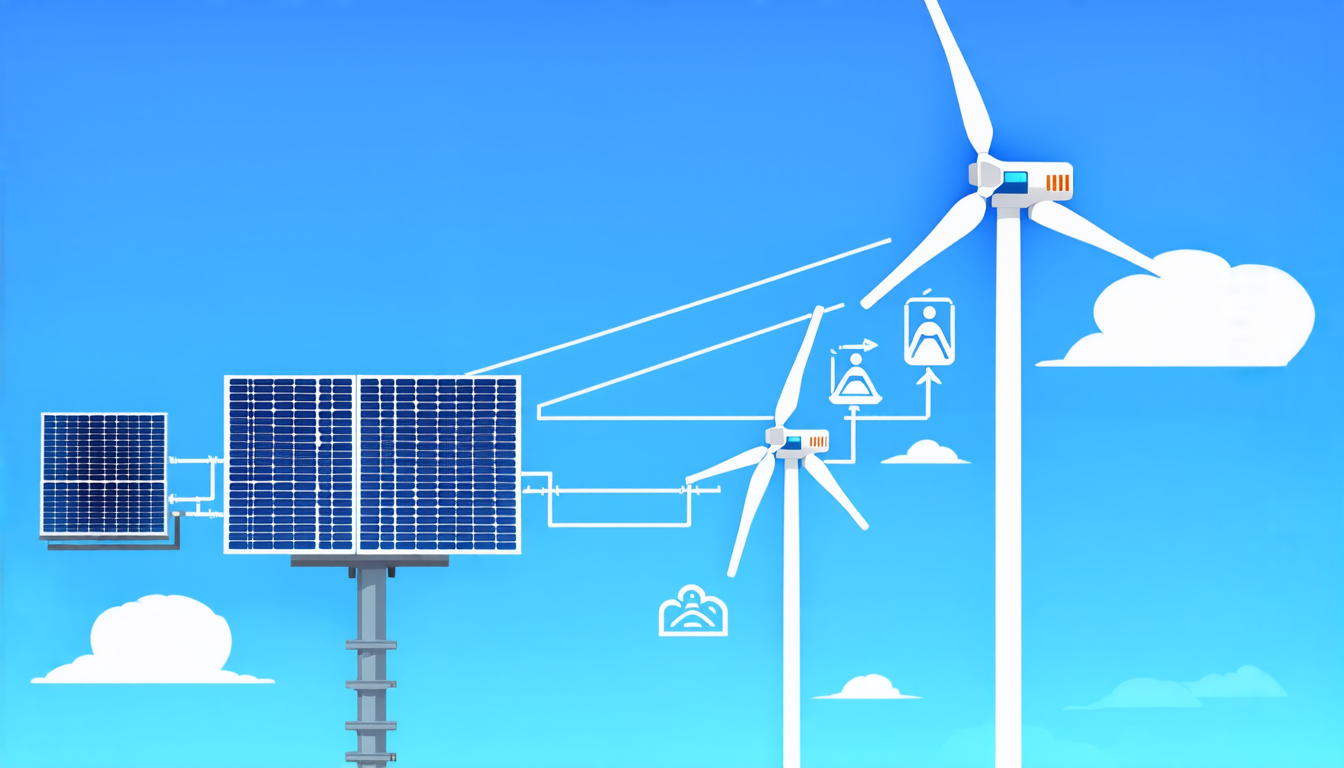
Grid-following inverters are used to interface renewable energy sources such as solar panels and wind turbines with the power grid. These devices convert DC power from the renewable source into AC power that can be fed into the grid. However, during severe grid faults, these inverters can lose synchronization with the grid, leading to disconnection and potentially causing blackouts.
The researchers have developed a new method called the manifold method, which uses a mathematical framework to precisely determine the domain of attraction (DOA) of the power system. The DOA is essentially the region where the system remains stable and operates within its normal limits. By analyzing the DOA, engineers can identify the boundaries beyond which the system becomes unstable.
The team has also proposed a new metric called the critical clearing radius (CCR), which assesses the transient stability of the system. The CCR represents the minimum distance from the initial operating point to the boundary of instability. This allows engineers to determine how far away from the normal operating range the system can be before it becomes unstable.
The researchers have applied their method to a variety of scenarios, including systems with grid-following inverters and systems containing grid-forming devices such as synchronous condensers. They found that inverter-based systems are more prone to transient instability than traditional power systems, but that this can be mitigated by incorporating grid-forming devices.
One interesting finding was that the optimal placement of grid-forming devices can significantly improve the transient stability of the system. The researchers discovered that placing these devices at strategic points within the transmission line can help to stabilize the system and reduce the risk of blackouts.
The study highlights the importance of considering the interactions between different components in power systems, particularly when it comes to renewable energy sources. As more renewable energy is integrated into the grid, understanding how these sources affect system stability will become increasingly important for ensuring a reliable and efficient supply of electricity.
The researchers’ findings have significant implications for the development of future power grids. By applying their method to real-world scenarios, engineers can design more stable and reliable systems that can handle the increasing penetration of renewable energy sources.
Cite this article: “Ensuring Grid Stability with Advanced Renewable Energy Integration Methods”, The Science Archive, 2025.
Renewable Energy, Power Grids, Transient Stability, Grid-Following Inverters, Carbon Footprint, Climate Change, Manifold Method, Domain Of Attraction, Critical Clearing Radius, Grid-Forming Devices





