

Wednesday 05 March 2025
The quest for online anonymity has led researchers to develop new methods of protecting internet users’ privacy. A recent study has made a significant breakthrough in this area by introducing a novel approach to selecting Tor relays, which are crucial components of the Tor network.
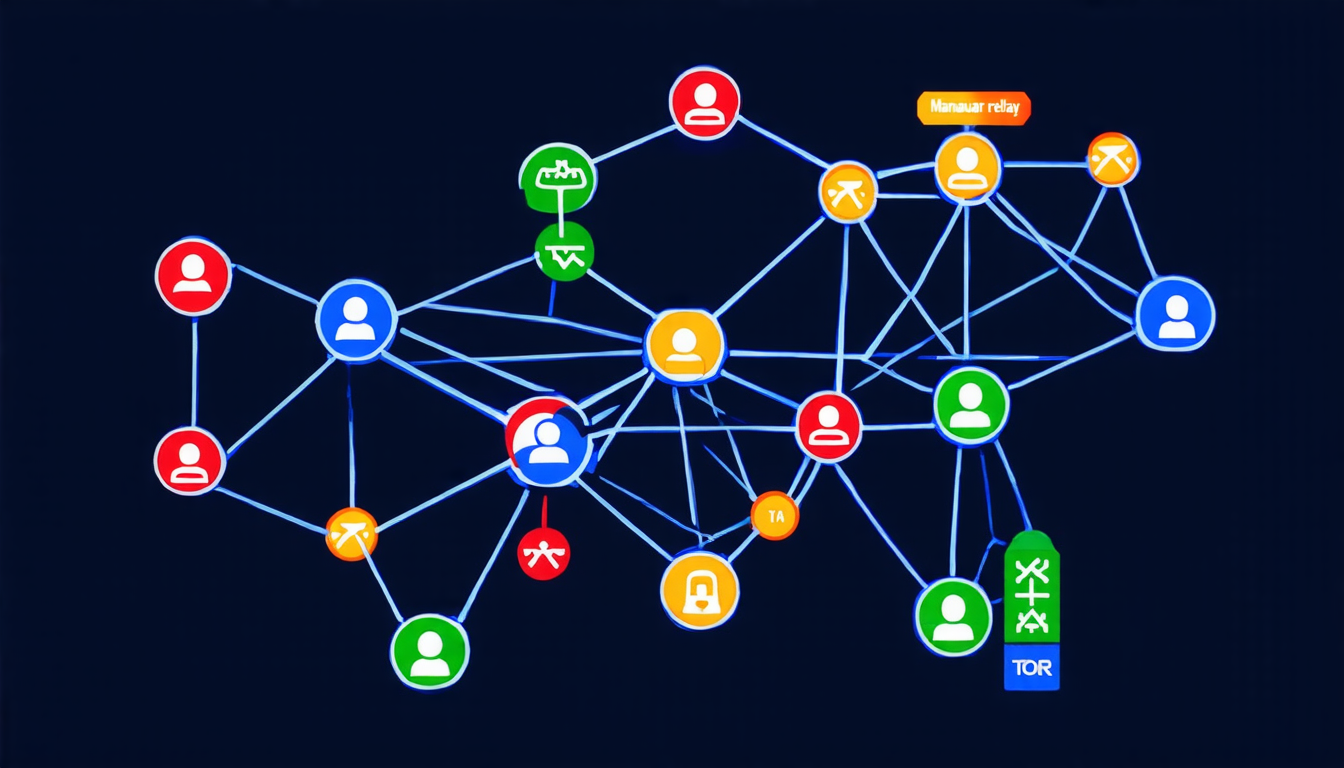
Tor is an anonymous communication system that allows users to browse the internet without revealing their identities. The system works by routing internet traffic through a network of relays operated by volunteers around the world. Each relay acts as an intermediary between the user’s computer and the destination website, masking the user’s IP address and making it difficult for anyone to track their online activities.
However, Tor is not foolproof. Attackers can exploit weaknesses in the system to identify users and compromise their privacy. One such weakness lies in the way Tor selects its relays. The current approach relies on a simple randomization process, which can be easily exploited by malicious actors.
The new study proposes an innovative solution to this problem by using Resource Public Key Infrastructure (RPKI) data to select Tor relays. RPKI is a system that helps ensure the integrity and authenticity of internet routing information. By incorporating RPKI data into the relay selection process, researchers aim to create a more secure and private Tor network.
The study’s authors developed two algorithms, Discount Selection and Matching Selection, which use RPKI data to select relays based on their route origin authorization (ROA) and route origin validation (ROV) information. ROA and ROV are critical components of the RPKI system, as they help ensure that internet traffic is routed correctly and securely.
In a simulation experiment, researchers tested the performance of the two algorithms using real-world data from the Tor network. The results showed that both algorithms significantly improved the security and privacy of the Tor network compared to the current randomization process.
The Discount Selection algorithm was found to be particularly effective in reducing the number of malicious relays introduced into the network. This is because it uses a discount factor to weight the importance of each relay’s ROA and ROV information, allowing it to selectively discard relays with questionable credentials.
Meanwhile, the Matching Selection algorithm demonstrated superior performance in terms of matching client-relay pairs based on their RPKI data. This suggests that it may be more effective at creating secure and private connections between users and relays.
While this study is a significant step forward in protecting online anonymity, there are still many challenges to overcome before Tor can be considered truly secure.
Cite this article: “Enhancing Tor Network Security with RPKI-Based Relay Selection”, The Science Archive, 2025.
Tor, Anonymity, Online Privacy, Rpki, Relay Selection, Routing, Internet Traffic, Security, Authentication, Validation, Cryptography, Network Protocols, Cybersecurity, Encryption, Digital Security, Web Browsing, Online Activities, Malicious Actors, Simulation Experiment,





