

Wednesday 05 March 2025
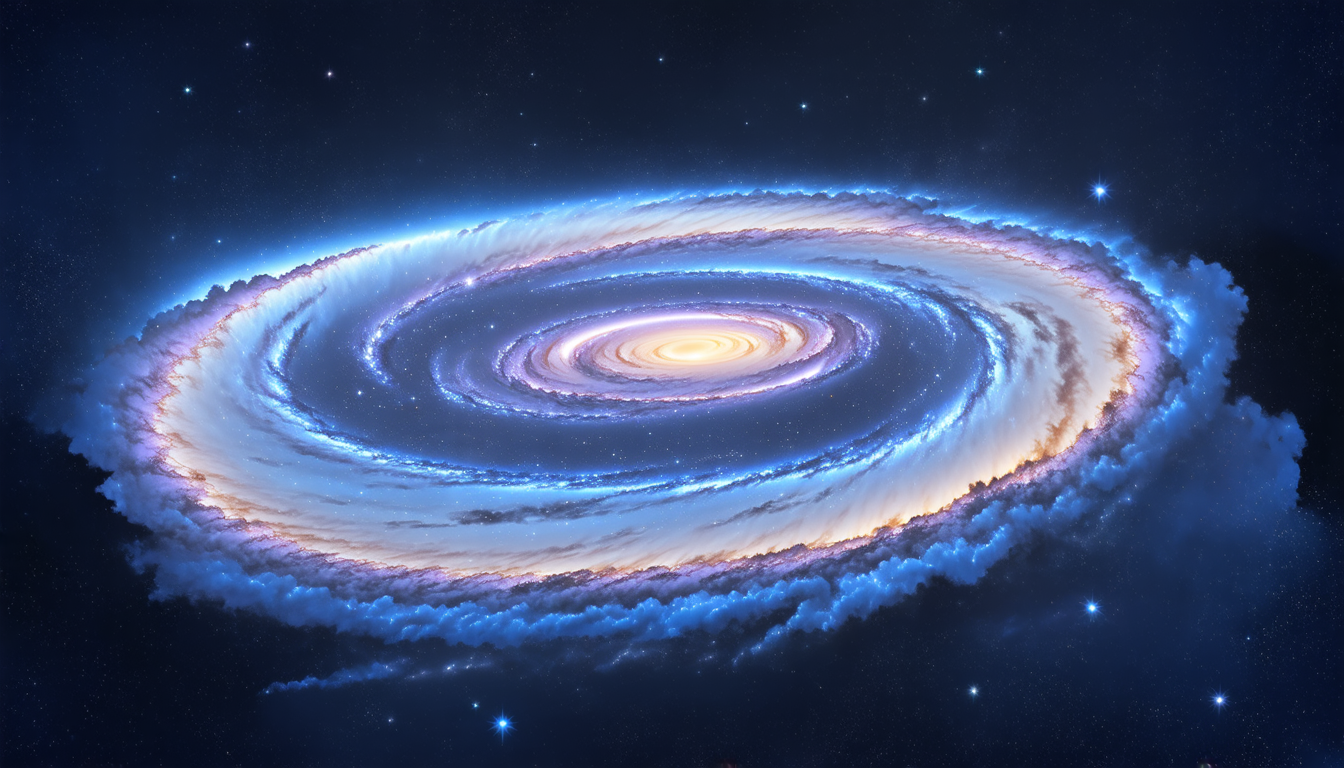
A relic galaxy in the early universe has been discovered, offering a glimpse into the formation of massive galaxies like our own Milky Way. The galaxy, known as ZF-UDS-7329, is incredibly massive, with a mass equivalent to about 100 billion times that of our sun. It’s also remarkably old, with most of its stars forming in a single burst around 12 billion years ago.
The discovery was made possible by the James Webb Space Telescope (JWST), which has been able to peer back in time and observe galaxies as they existed during the early universe. The JWST is equipped with advanced instruments that allow it to detect the faint light emitted by distant galaxies, making it an ideal tool for studying the formation of massive galaxies like ZF-UDS-7329.
One of the most striking features of ZF-UDS-7329 is its rapid star formation rate. In just 250 million years, the galaxy formed half of its stars, which is incredibly fast compared to other galaxies. This rapid star formation was likely triggered by a massive inflow of gas and dust into the galaxy’s center.
The discovery of ZF-UDS-7329 provides valuable insights into the formation of massive galaxies like our own Milky Way. It suggests that these galaxies may have formed through a combination of rapid star formation and mergers with other galaxies. The fact that ZF-UDS-7329 is so massive and has such an old age also implies that it has undergone significant changes over time, including the merger with smaller galaxies.
The discovery of ZF-UDS-7329 is not just important for understanding the formation of massive galaxies like our own Milky Way. It also provides a unique opportunity to study the chemical composition of these galaxies and how they have changed over time. By analyzing the light emitted by ZF-UDS-7329, astronomers can gain insights into the abundance of elements such as oxygen, carbon, and iron in the galaxy.
The discovery of ZF-UDS-7329 is a testament to the power of modern astronomy and the capabilities of telescopes like the James Webb Space Telescope. It demonstrates that even with the most advanced technology available, there is still much to be learned about the universe and its many mysteries.
As astronomers continue to study ZF-UDS-7329 and other galaxies in the early universe, they will likely uncover more secrets about the formation of massive galaxies like our own Milky Way.
Cite this article: “Unveiling the Secrets of the Ancient Galaxy ZF-UDS-7329”, The Science Archive, 2025.
Galaxies, Universe, James Webb Space Telescope, Star Formation, Massive Galaxies, Milky Way, Rapid Star Formation, Galaxy Mergers, Chemical Composition, Early Universe.





