

Wednesday 05 March 2025
Artificial Intelligence has made tremendous progress in recent years, but there’s still one major challenge it needs to overcome: learning how to coordinate and work together effectively with other AI systems or even humans. In a newly published paper, researchers have proposed an innovative solution to this problem by developing a new type of neural network that can learn from the capabilities and strengths of individual agents.
The new system, called Capability-Aware Shared Hypernetworks (CASH), is designed to enable multiple autonomous agents to work together seamlessly by taking into account their unique abilities and limitations. This is especially important in complex tasks where each agent has a different set of skills and strengths that can be leveraged to achieve a common goal.
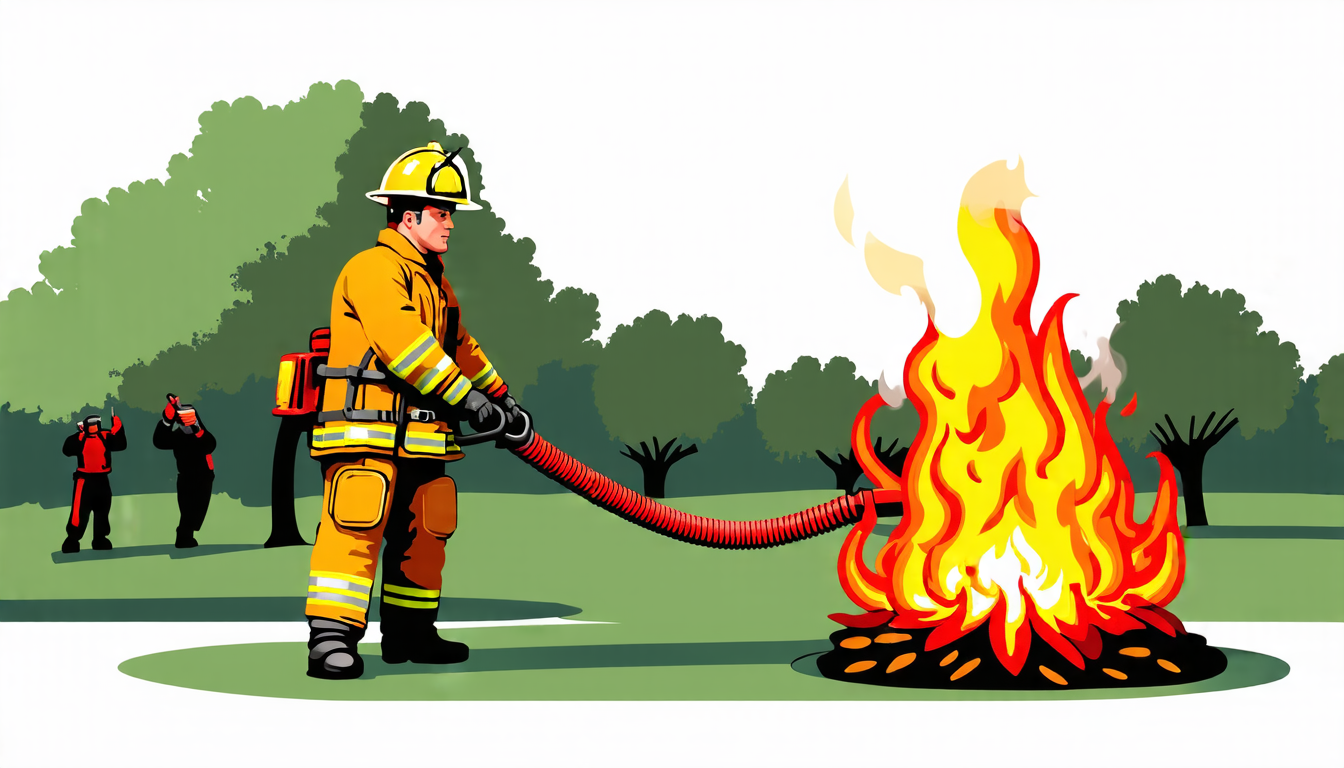
To understand how CASH works, consider a scenario where you’re trying to put out a fire with multiple firefighters, each with their own strengths and weaknesses. One firefighter might be an expert at tackling flames, while another is better suited for evacuating people from the area. A traditional AI system would struggle to coordinate these agents effectively, as they wouldn’t know how to utilize each other’s skills.
CASH changes this by creating a shared neural network that can learn from and adapt to the capabilities of individual agents in real-time. This allows the system to adjust its strategy mid-task to ensure that each agent is working within their strengths and contributing to the overall goal. For example, if one firefighter is struggling to put out a particularly stubborn flame, CASH could redirect another agent with expertise in firefighting to take over.
The researchers tested CASH on several complex tasks, including a firefighting simulation and a transportation logistics problem. In both cases, CASH performed significantly better than traditional AI systems, demonstrating its ability to effectively coordinate and utilize the strengths of individual agents.
One of the most impressive aspects of CASH is its ability to generalize to new scenarios and environments. The researchers found that even when they introduced new agents with unique capabilities or changed the task requirements, CASH was able to adapt quickly and efficiently.
While there’s still much work to be done to fully realize the potential of CASH, this breakthrough has significant implications for a wide range of applications, from search and rescue operations to disaster relief efforts. By enabling multiple autonomous agents to work together seamlessly, CASH could help save lives and improve response times in emergency situations.
The development of CASH also highlights the importance of considering the unique capabilities and strengths of individual agents when designing AI systems.
Cite this article: “AI System Learns to Coordinate with Other Agents Through Shared Hypernetworks”, The Science Archive, 2025.
Artificial Intelligence, Multi-Agent Systems, Neural Networks, Capability-Aware, Shared Hypernetworks, Coordination, Autonomy, Firefighting, Transportation Logistics, Generalization





