

Thursday 06 March 2025
For decades, scientists have been trying to crack the code of simulating complex systems using quantum computers. One major hurdle has been the ability to efficiently simulate coupled classical oscillators, a fundamental problem in many fields, including physics and engineering. Recently, researchers made significant progress in this area by developing a novel approach that can simulate these systems in polynomial time.
The key to their breakthrough lies in the concept of block encoding, which is a technique used in quantum computing to represent large matrices as smaller blocks. This allows for more efficient processing of the matrices, making it possible to simulate complex systems quickly and accurately. The researchers developed a new algorithm that combines block encoding with other quantum techniques, such as amplitude amplification and singular value transformation, to achieve exponential speedups over classical algorithms.
One of the most impressive aspects of this new approach is its ability to handle large-scale simulations. Unlike previous methods, which were limited by their inability to scale up to larger systems, this algorithm can efficiently simulate coupled oscillators with thousands of nodes. This makes it a powerful tool for scientists who need to model complex systems, such as molecular dynamics or quantum many-body systems.
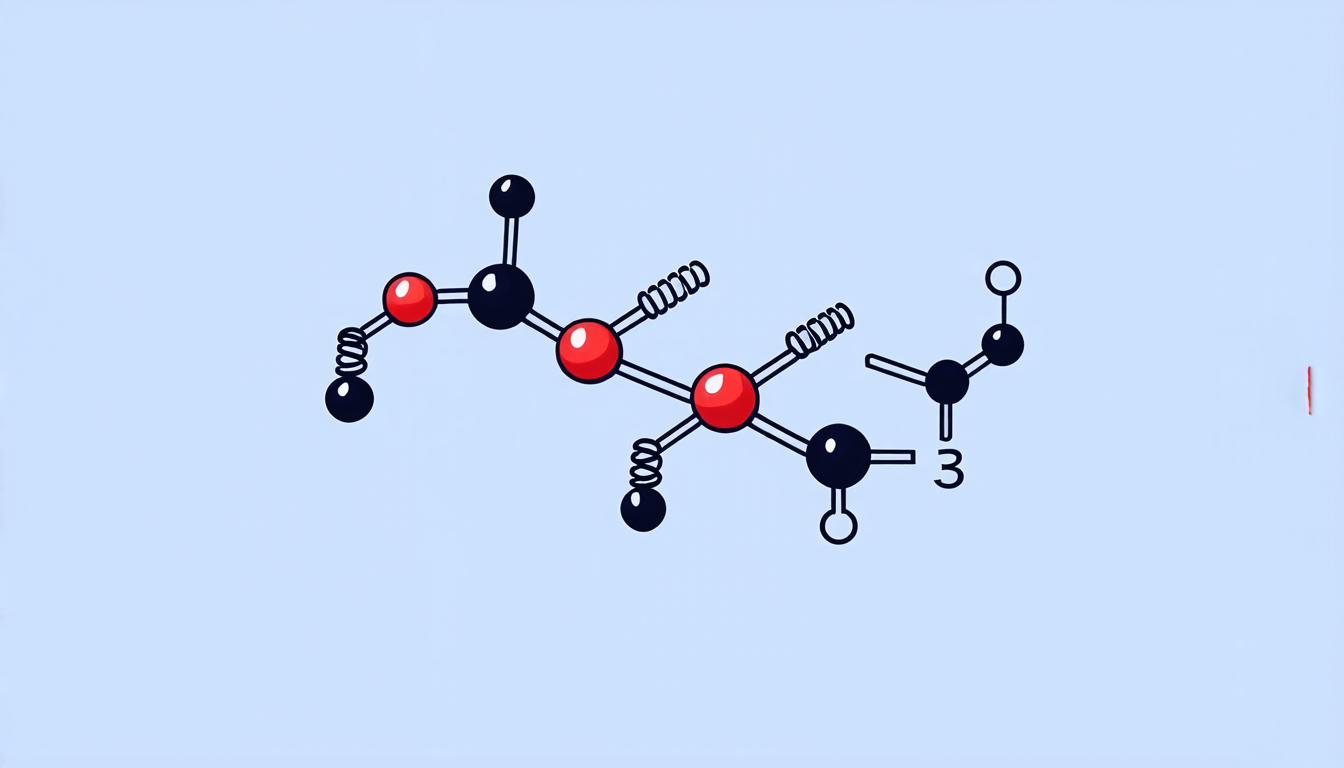
The researchers tested their algorithm on various systems, including one-dimensional spring-mass models and two-dimensional lattices. They found that their approach was able to accurately simulate the behavior of these systems, even when the number of oscillators exceeded 1,000. This is a significant achievement, as classical algorithms would require an impractically large amount of computational resources to achieve the same level of accuracy.
The potential applications of this new algorithm are vast and varied. In physics, it could be used to simulate complex quantum systems, such as many-body localized phases or topological insulators. In engineering, it could be applied to optimize the design of complex networks, such as power grids or communication systems. The ability to efficiently simulate coupled oscillators also has implications for fields like chemistry and materials science.
While this breakthrough is an important step forward in the development of quantum computing, there is still much work to be done. The researchers plan to continue refining their algorithm and exploring its potential applications. As the field of quantum computing continues to evolve, it will be exciting to see how scientists use these new techniques to tackle some of the most complex challenges facing us today.
The algorithm’s ability to efficiently simulate coupled oscillators has significant implications for a wide range of fields.
Cite this article: “Quantum Leap: Efficient Simulation of Complex Systems”, The Science Archive, 2025.
Quantum Computing, Coupled Oscillators, Block Encoding, Amplitude Amplification, Singular Value Transformation, Exponential Speedups, Classical Algorithms, Molecular Dynamics, Quantum Many-Body Systems, Complex Networks





