

Thursday 06 March 2025
The quest for efficient task offloading in 5G networks has led researchers to explore novel approaches, including reinforcement learning (RL) and edge computing. A recent study published in a prominent technical journal proposes a novel methodology that integrates both concepts to optimize task offloading and resource allocation in multi-slice networks.
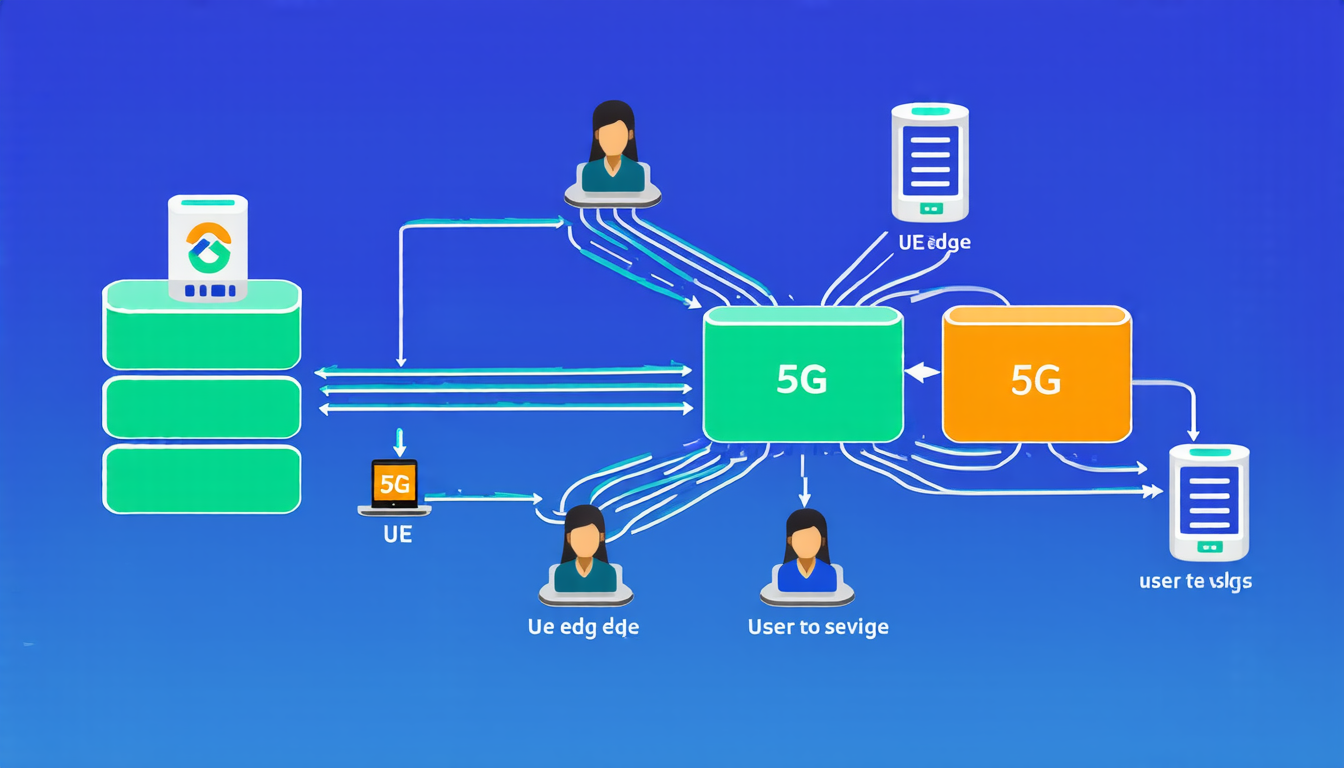
The authors of the study describe a system where multiple slices, each serving specific applications with unique requirements, coexist within a 5G network. These slices are tasked with processing tasks generated by user equipment (UE), which can be categorized into two main groups: Ultra-Reliable Low Latency Communication (URLLC) and Massive Machine Type Communication (mMTC). URLLC requires low latency and high reliability for applications such as autonomous driving, while mMTC is focused on IoT devices with energy efficiency in mind.
To address the challenges posed by these diverse requirements, the researchers developed a RL-based system that learns to optimize task offloading and resource allocation. The system consists of an agent that interacts with the environment, making decisions about which tasks to offload to edge servers or process locally. This decision-making process is based on a reward function that takes into account factors such as processing time, energy consumption, and latency.
The authors evaluated their methodology through simulations, comparing it to two baseline methods: a sequential assignment approach and a fair allocation strategy. The results show that the RL-based system outperforms both baselines in terms of reducing overall processing time, energy consumption, and latency for URLLC tasks. Additionally, the system exhibits adaptability and fairness across various scenarios, ensuring that resources are allocated efficiently to meet the diverse requirements of each slice.
This study demonstrates the potential of combining RL and edge computing to optimize task offloading in 5G networks. By leveraging the strengths of both approaches, researchers can develop more efficient and effective systems for managing the complex demands of modern communication networks. As the use of IoT devices and other applications continues to grow, this methodology may play a crucial role in ensuring that networks are able to meet the evolving needs of users.
The authors’ findings also highlight the importance of considering the specific requirements of each slice when designing 5G network architectures. By tailoring resource allocation strategies to the unique demands of each application, networks can be optimized for performance and efficiency.
Cite this article: “Optimizing Task Offloading in Multi-Slice 5G Networks using Reinforcement Learning and Edge Computing”, The Science Archive, 2025.
Reinforcement Learning, Edge Computing, 5G Network, Task Offloading, Resource Allocation, Multi-Slice Network, Urllc, Mmtc, Iot Devices, Low Latency Communication.





