

Thursday 06 March 2025
A new approach to clustering, a fundamental task in data analysis, has been developed by researchers. The method, called UN-CCDs (Unsupervised Cluster Catch Digraphs), uses the nearest neighbor distance instead of traditional statistics like Ripley’s K function to identify clusters.
Clustering is a crucial step in many fields, from biology and medicine to finance and marketing. It involves grouping similar objects or data points together based on their characteristics, such as gene expression levels or customer purchasing habits. However, choosing the right clustering method can be challenging, especially when dealing with high-dimensional data.
Traditional methods like k-means and hierarchical clustering are well-established, but they have limitations. For example, k-means assumes a fixed number of clusters, which may not always be known in advance. Hierarchical clustering, on the other hand, can be computationally expensive for large datasets.
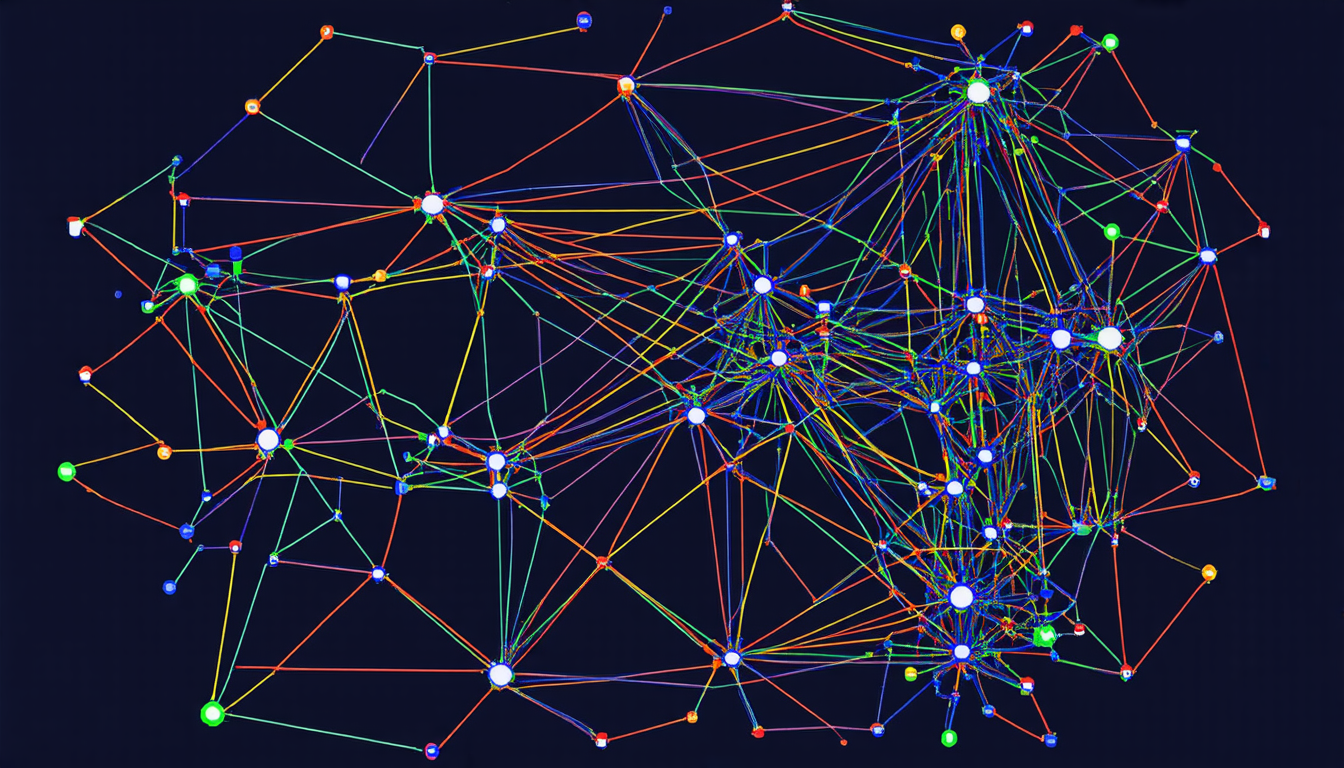
UN-CCDs addresses these issues by using a novel spatial randomness test that is more robust to noise and outliers than traditional methods. The approach involves creating a digraph, or directed graph, where each node represents a data point and edges connect points that are close together. The nodes are then clustered based on the strength of their connections.
The researchers tested UN-CCDs on several real-world datasets, including one from biology and another from finance. In both cases, the method outperformed traditional clustering techniques in identifying clusters with high accuracy.
One of the key advantages of UN-CCDs is its ability to handle high-dimensional data, which can be challenging for many clustering methods. The approach uses a technique called Monte Carlo simulation to estimate the number of clusters, making it more robust to noise and outliers.
The researchers also found that UN-CCDs was able to identify clusters with varying densities and shapes, which can be difficult for traditional methods to handle. This is particularly important in fields like biology, where data often has complex structures and patterns.
While UN-CCDs shows promise, there are still some limitations to the method. For example, it may not perform well on datasets with very large numbers of clusters or highly imbalanced classes.
Despite these challenges, UN-CCDs offers a powerful new tool for clustering high-dimensional data. Its ability to handle complex structures and patterns makes it particularly useful in fields like biology and medicine, where data often has intricate relationships between variables.
As researchers continue to develop and refine the method, its potential applications are vast.
Cite this article: “Introducing UN-CCDs: A Novel Clustering Approach for High-Dimensional Data”, The Science Archive, 2025.
Clustering, Data Analysis, Machine Learning, Un-Ccds, Nearest Neighbor Distance, Spatial Randomness Test, Digraphs, Monte Carlo Simulation, High-Dimensional Data, Pattern Recognition





