

Thursday 06 March 2025
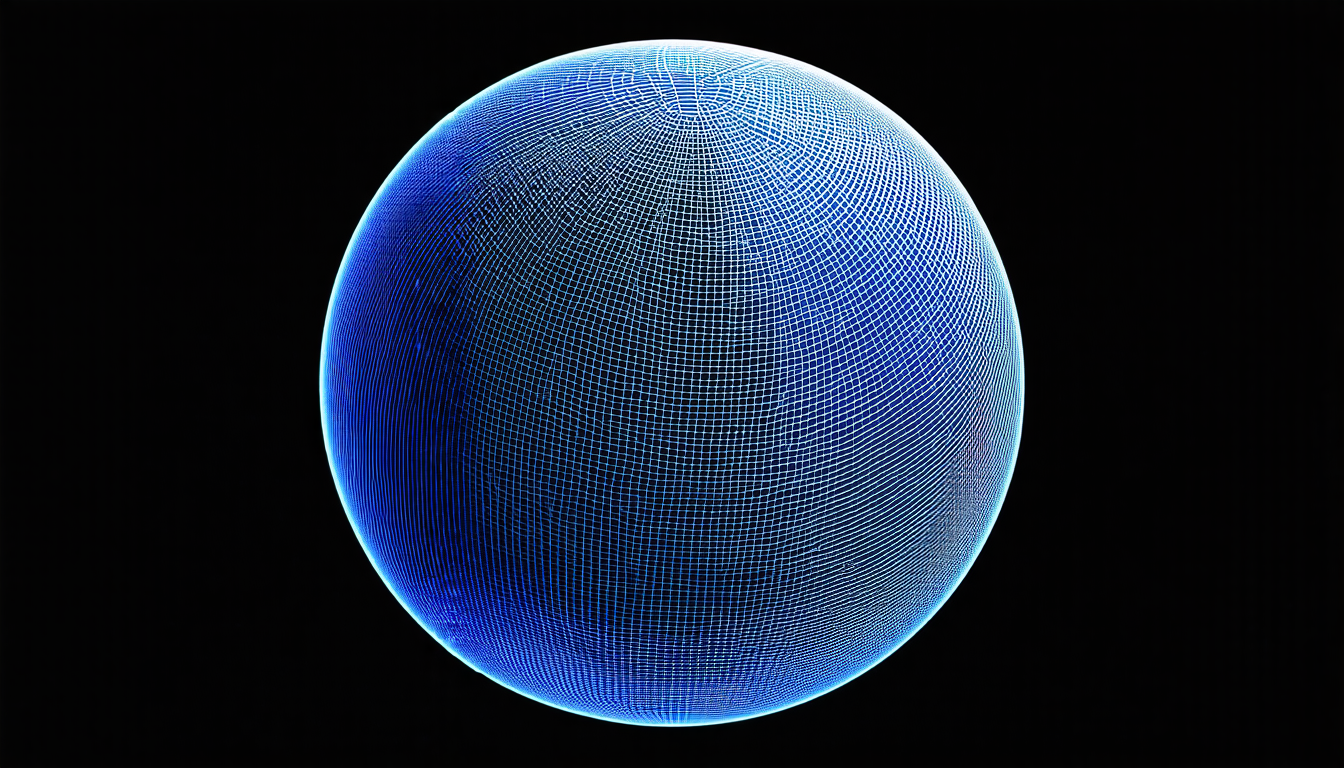
The quest for precision has long driven scientists and engineers, pushing the boundaries of what is possible in fields as diverse as medicine, physics, and computer science. One area where this pursuit of accuracy has led to significant breakthroughs is in the development of high-order meshes – complex networks of points that help us understand and model various phenomena.
For years, researchers have been working on creating meshes that can accurately capture the intricate details of curved surfaces and shapes, crucial for applications such as computer-aided design, fluid dynamics, and materials science. However, traditional methods often fall short, resulting in distorted or inaccurate representations of these complex geometries.
Recently, a team of scientists has made a major breakthrough in this field by developing a new approach to generating high-order meshes that can accurately capture the shape and curvature of complex surfaces. The key innovation lies in the use of Riemannian metrics – mathematical frameworks that describe how distances and angles change on curved spaces.
By applying these metrics to the mesh generation process, the researchers have created meshes that are not only more accurate but also more efficient and flexible than their predecessors. This is achieved by optimizing the placement of points on the surface to minimize distortion and preserve local features, rather than relying solely on complex algorithms or manual adjustments.
The implications of this breakthrough are far-reaching, with potential applications in a wide range of fields. In medicine, for example, high-order meshes could be used to create more accurate models of the human body, allowing researchers to better understand disease progression and develop more effective treatments. In materials science, they could help engineers design new materials with unique properties, such as superconductors or nanomaterials.
In addition to their practical applications, these high-order meshes also have the potential to advance our understanding of fundamental scientific concepts. By creating more accurate models of complex geometries, researchers can gain insights into the underlying physics and behavior of these systems, driving new discoveries and innovations in fields such as physics, chemistry, and biology.
The development of high-order meshes has long been a challenging problem, requiring significant advances in mathematical and computational techniques. The recent breakthrough by this team is a testament to the power of interdisciplinary collaboration and innovative thinking, pushing the boundaries of what is possible in the pursuit of precision and accuracy.
Cite this article: “High-Order Meshes: A Breakthrough in Precision and Accuracy”, The Science Archive, 2025.
Mesh Generation, High-Order Meshes, Riemannian Metrics, Computer-Aided Design, Fluid Dynamics, Materials Science, Medical Imaging, Computational Geometry, Interdisciplinary Collaboration, Mathematical Modeling.





