

Thursday 06 March 2025
Scientists have developed a new approach for solving complex optimization problems in chemical engineering, using physics-informed neural networks (PINNs). This innovative method combines machine learning and mathematical modeling to efficiently solve nonlinear model predictive control (NMPC) formulations.
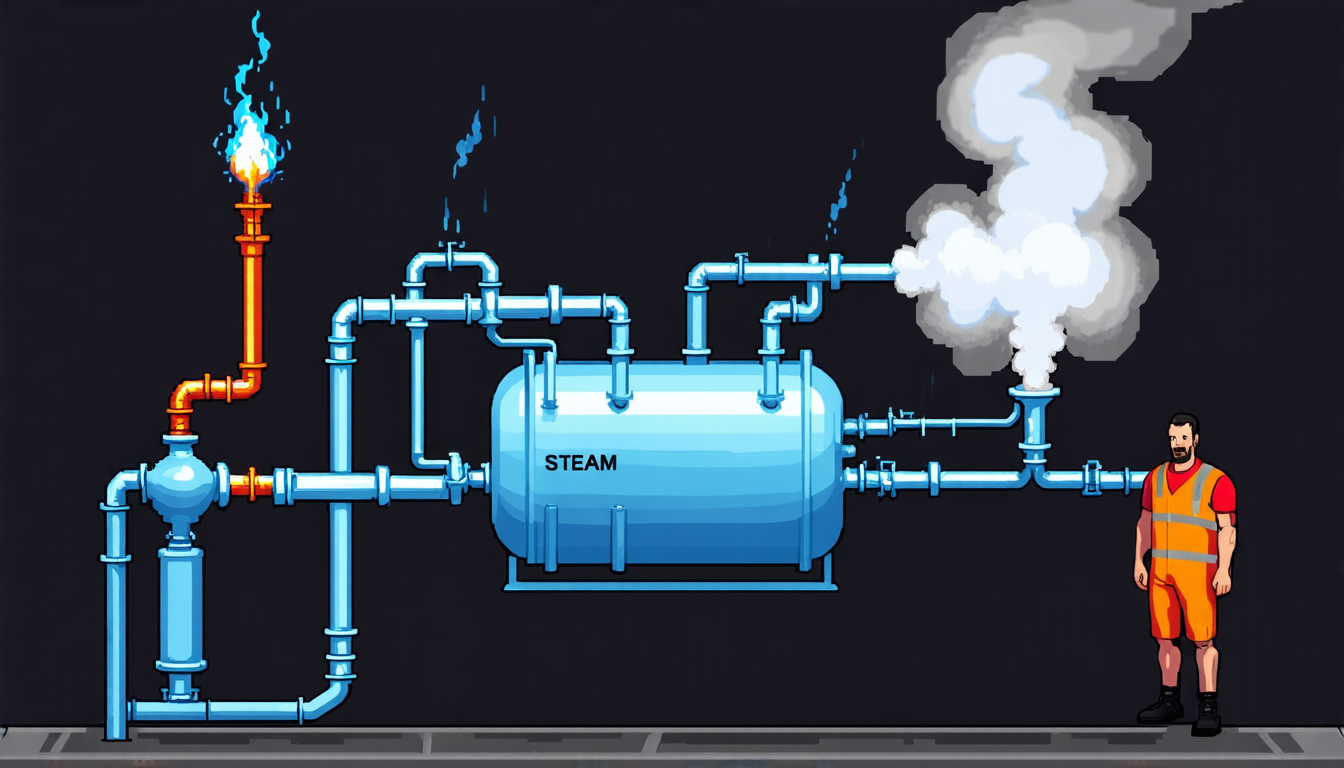
The team’s research focuses on the steam reforming process, which is crucial for producing hydrogen fuel. The process involves reacting natural gas with high-temperature steam to produce a mixture of hydrogen, carbon monoxide, and methane. However, this reaction is highly nonlinear, making it challenging to model and control.
Traditional methods for solving NMPC problems involve discretizing the partial differential equations (PDEs) that govern the system’s behavior. This approach can lead to large systems of algebraic constraints, which are difficult to solve efficiently. The new PINN-based method avoids this problem by directly modeling the PDEs using neural networks.
The researchers trained their PINNs on a set of benchmark models, each representing a different steam reforming scenario. These models were designed to test the limits of the PINN approach, with varying levels of nonlinearity and complexity. The results showed that the PINNs were able to accurately capture the behavior of the systems, even in scenarios where traditional methods would struggle.
One of the key advantages of the PINN approach is its ability to handle large-scale systems. By directly modeling the PDEs, the method can efficiently solve problems that would be computationally expensive using traditional approaches. This makes it an attractive solution for real-world applications, such as optimizing the operation of industrial chemical plants.
The team’s work has significant implications for the field of chemical engineering. It offers a new tool for solving complex optimization problems, which could lead to more efficient and sustainable production processes. Additionally, the PINN approach can be applied to other areas of science and engineering, where nonlinear systems need to be modeled and controlled.
The researchers are now working on extending their method to handle even larger-scale systems and more complex scenarios. They hope that their work will pave the way for a new generation of optimization algorithms, which could revolutionize the field of chemical engineering.
Cite this article: “Physics-Informed Neural Networks Revolutionize Optimization in Chemical Engineering”, The Science Archive, 2025.
Physics-Informed Neural Networks, Nonlinear Model Predictive Control, Steam Reforming, Hydrogen Fuel, Partial Differential Equations, Machine Learning, Mathematical Modeling, Chemical Engineering, Optimization Problems, Industrial Chemical Plants





