

Thursday 06 March 2025
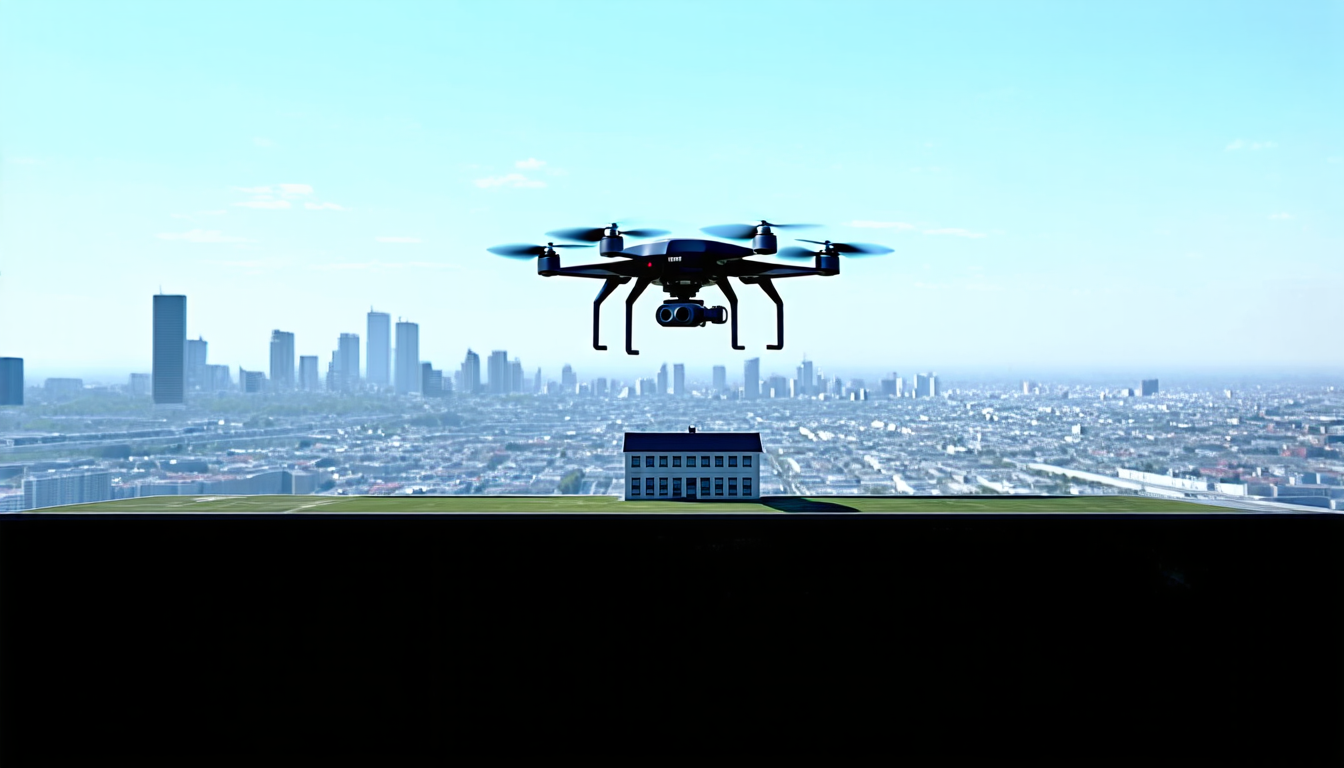
Drones are increasingly being used in a variety of applications, from package delivery to environmental monitoring. One area where they’re making a significant impact is in mobile edge computing, which allows devices to process data closer to where it’s generated, reducing latency and improving performance.
A recent paper published in the IEEE Transactions on Mobile Computing explores how drones can be used to enable mobile edge computing in areas with limited infrastructure. The authors propose a new algorithm that uses deep reinforcement learning to optimize drone trajectories and task offloading for maximum efficiency.
The key challenge in using drones for mobile edge computing is managing the trade-off between energy consumption and communication delay. Drones need to conserve energy to stay airborne for extended periods, but they also need to communicate with devices on the ground quickly enough to ensure timely data processing.
To address this issue, the authors developed a multi-objective deep reinforcement learning algorithm that can balance these competing demands. The algorithm uses a combination of neural networks and Q-learning to learn optimal drone trajectories and task offloading strategies in real-time.
The authors tested their algorithm using a simulator and found that it significantly outperformed traditional optimization methods in terms of energy efficiency and communication delay. They also demonstrated the effectiveness of their approach by conducting experiments with real drones and devices on the ground.
One of the most promising applications of this technology is in disaster response scenarios, where timely data processing can be critical for saving lives. For example, drones could be used to quickly assess damage after a natural disaster and transmit vital information back to responders on the ground.
The authors also highlight the potential benefits of their algorithm in other areas, such as environmental monitoring, agriculture, and construction. In each case, the ability to process data closer to where it’s generated can lead to improved accuracy, efficiency, and decision-making.
While the paper focuses on drone-based mobile edge computing, the underlying technology has broader implications for a wide range of applications. The use of deep reinforcement learning to optimize complex systems is rapidly becoming a key area of research, with potential applications in fields such as robotics, autonomous vehicles, and even finance.
As the use of drones becomes increasingly widespread, it’s likely that we’ll see more innovative applications of this technology emerge. The authors’ work represents an important step forward in enabling mobile edge computing in areas where traditional infrastructure is lacking, and it has significant implications for a wide range of fields.
Cite this article: “Drone-Based Mobile Edge Computing: A New Era in Data Processing”, The Science Archive, 2025.
Drones, Mobile Edge Computing, Deep Reinforcement Learning, Energy Efficiency, Communication Delay, Optimization Methods, Disaster Response, Environmental Monitoring, Agriculture, Construction





