

Thursday 06 March 2025
Scientists have made a significant breakthrough in developing a new method for solving complex mathematical problems, which could have far-reaching implications for fields such as physics and engineering.
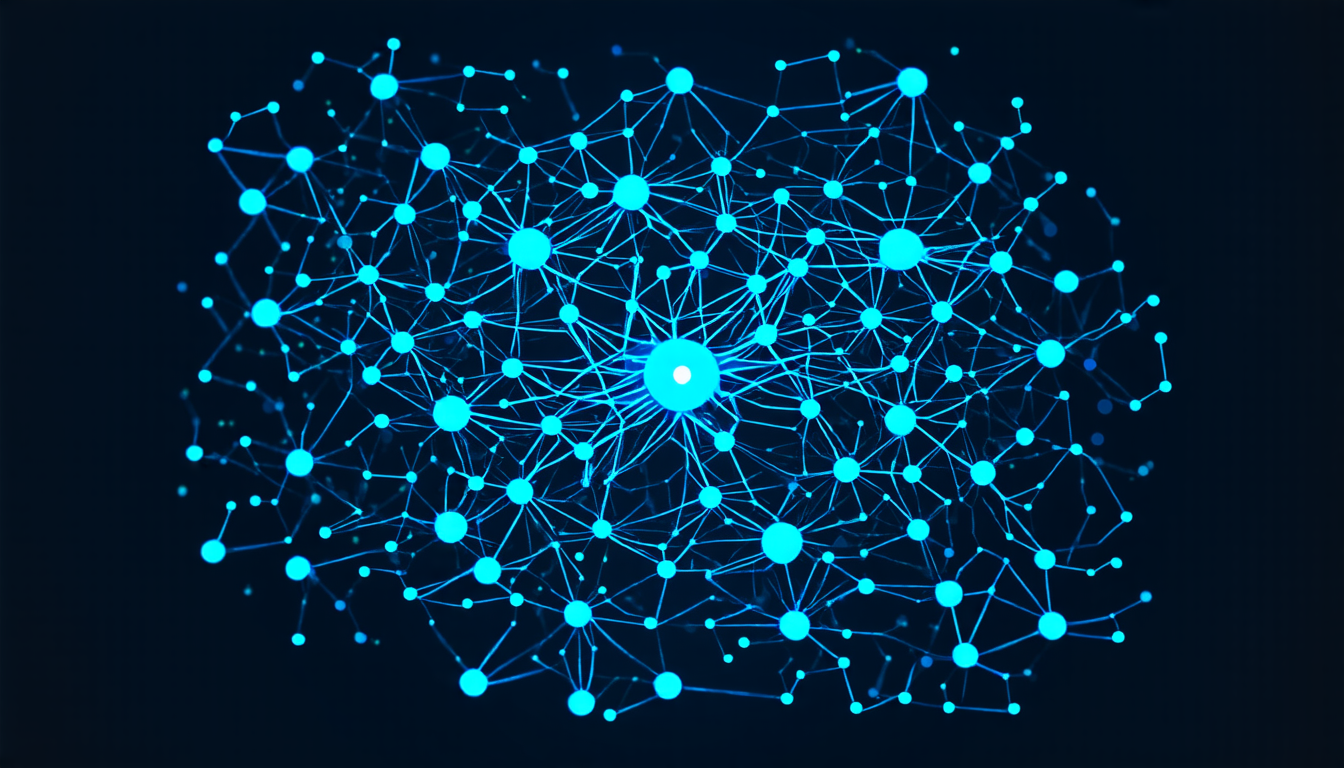
The approach, known as neural networks, uses artificial intelligence to approximate solutions to partial differential equations (PDEs), which are used to model a wide range of phenomena, from the flow of fluids to the behavior of subatomic particles. Traditionally, solving PDEs has been a laborious process that requires significant computational power and human expertise.
The new method works by training artificial neural networks on large datasets of known solutions to PDEs. These networks are then able to generalize this knowledge to solve previously unknown problems. In other words, they can learn from experience and apply it to new situations.
The beauty of this approach is that it allows scientists to tackle complex problems that would be impossible to solve using traditional methods alone. For example, in physics, PDEs are used to describe the behavior of particles at the quantum level. However, solving these equations analytically has proven to be a daunting task, requiring significant mathematical expertise.
The neural network approach offers a much more accessible solution. By training the networks on large datasets of known solutions, scientists can use them to solve complex problems that were previously unsolvable. This could lead to major advances in our understanding of quantum mechanics and other areas of physics.
In addition to its potential applications in physics, this method also has significant implications for engineering and computer science. For instance, it could be used to optimize complex systems, such as traffic flow or supply chains, by solving PDEs that describe their behavior.
The use of neural networks to solve PDEs is not without its challenges, however. One major issue is the need for large datasets of known solutions to train the networks. This can be time-consuming and expensive, particularly in fields where experimental data is scarce.
Despite these challenges, the potential benefits of this approach are significant. By allowing scientists to tackle complex problems that were previously unsolvable, it could lead to major advances in our understanding of the world around us. And by providing a new tool for engineers and computer scientists, it could have far-reaching implications for fields such as transportation and logistics.
In recent years, there has been a growing interest in using artificial intelligence to solve complex mathematical problems. This approach has shown great promise in solving PDEs, and its potential applications are vast and varied.
Cite this article: “Artificial Intelligence Breakthrough in Solving Complex Mathematical Problems”, The Science Archive, 2025.
Neural Networks, Artificial Intelligence, Partial Differential Equations, Pdes, Complex Mathematical Problems, Physics, Engineering, Computer Science, Quantum Mechanics, Machine Learning.





