

Thursday 06 March 2025
Autonomous vehicles are getting smarter, and so is their ability to detect objects on the road. A new paper published in a recent issue of IEEE Transactions on Intelligent Transportation Systems shows that combining data from multiple sensors can lead to more accurate object detection, even when faced with challenging real-world scenarios.
The researchers used a combination of lidar (light detection and ranging), camera, and radar sensors to detect objects on the road. They trained their model using a dataset of over 10,000 images and point cloud data, which includes various types of vehicles, pedestrians, and other obstacles.
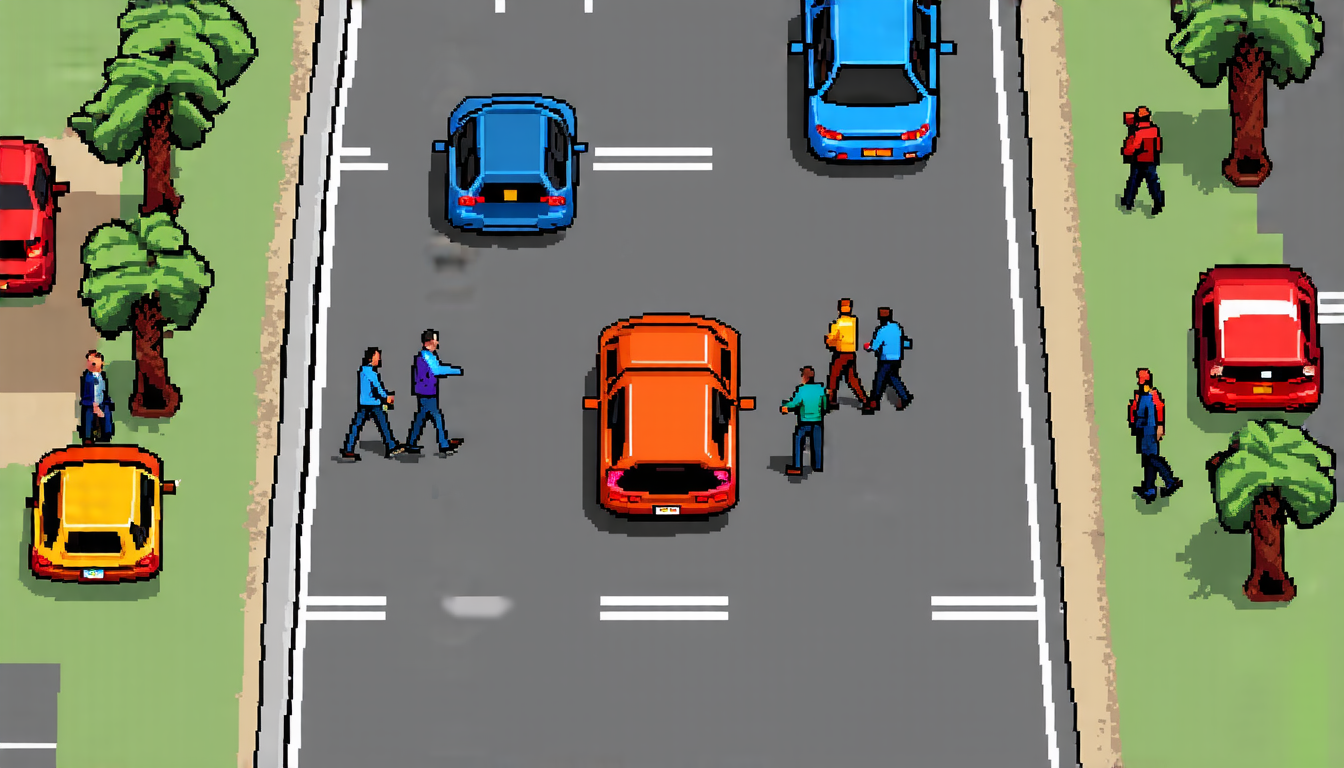
One of the key findings is that the fusion of multiple sensor modalities can significantly improve object detection accuracy in complex scenarios. For instance, when detecting pedestrians, the model was able to correctly identify them even when they were partially occluded or moving at an angle.
The paper also highlights the importance of robustness to common corruptions, such as weather conditions and road surface quality. The researchers tested their model on a dataset with various types of noise and found that it was more resistant to corruption than other state-of-the-art models.
Another significant aspect is the ability to detect objects at different scales and distances. This is particularly important for autonomous vehicles, which need to be able to detect objects from a distance to avoid collisions. The model was able to accurately detect objects of varying sizes, from small obstacles like bicycles to larger vehicles like trucks.
The researchers also experimented with various architectures and found that a transformer-based approach outperformed traditional convolutional neural networks (CNNs). This is likely due to the transformer’s ability to handle long-range dependencies and multi-modal data more effectively.
This paper demonstrates the potential of multi-sensor fusion for improving object detection in autonomous vehicles. By combining data from multiple sensors, developers can create more accurate and robust systems that are better equipped to handle real-world challenges.
In addition, the use of transformers as an alternative to CNNs opens up new avenues for research and development. As the field of computer vision continues to evolve, it will be exciting to see how these advancements shape the future of autonomous driving and other applications.
The implications of this paper are not limited to autonomous vehicles alone. The techniques described can also be applied to other areas such as surveillance, robotics, and even medical imaging. With the potential for improved accuracy and robustness, these technologies could have far-reaching consequences across various industries.
Cite this article: “Enhancing Autonomous Vehicle Object Detection with Multi-Sensor Fusion and Transformers”, The Science Archive, 2025.
Autonomous Vehicles, Object Detection, Sensor Fusion, Lidar, Camera, Radar, Deep Learning, Computer Vision, Transformers, Cnns





