
Thursday 06 March 2025
Radar technology has come a long way since its inception during World War II. Today, radar systems are used in countless applications, from air traffic control to weather forecasting to military surveillance. But despite their widespread use, radar signals still have one major limitation: sidelobes.
Sidelobes refer to the unwanted echoes that bounce back to the radar antenna when it’s scanning the environment. These echoes can be problematic because they can mask important targets or even create false ones. To mitigate this issue, researchers have developed various techniques for reducing sidelobes, including pulse compression and non-linear frequency modulation (NLFM).
The latest development in NLFM technology comes from a team of scientists who have been working on a new method for reducing sidelobes using a technique called smoothing splines. The idea is to use mathematical functions that are smooth and continuous to model the radar signal, rather than relying on traditional polynomial curves.
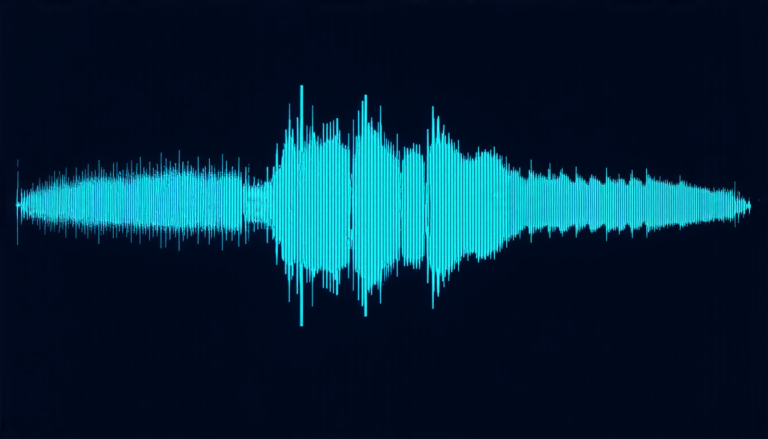
In their paper, the researchers describe how they used this approach to design a NLFM waveform that produces significantly lower sidelobe levels compared to traditional methods. They tested their waveform using simulations and found that it outperformed existing techniques by up to 20 decibels in some cases.
But what does this mean for real-world applications? In practical terms, the new technique could enable radar systems to detect targets more accurately at longer ranges, or to reduce the number of false alarms. This could be particularly useful in situations where target detection is crucial, such as in military surveillance or air traffic control.
The researchers also explored the relationship between sidelobe levels and mainlobe width, which refers to the width of the radar signal’s peak. They found that by reducing sidelobes, they were able to increase the mainlobe width, which can improve the overall performance of the radar system.
One potential challenge with this new technique is its computational complexity. The smoothing spline method requires more processing power than traditional methods, which could be a limitation for some applications. However, advances in computing hardware and software are rapidly addressing these issues, making it increasingly feasible to implement complex signal processing algorithms like smoothing splines.
In the end, the development of this new NLFM waveform is an important step forward for radar technology. By reducing sidelobes and improving target detection accuracy, researchers hope to enable more effective and efficient use of radar systems in a wide range of applications.
Cite this article: “Radar Technology Advancements: Smoothing Splines Reduce Sidelobes”, The Science Archive, 2025.
Radar, Nlfm, Sidelobes, Smoothing Splines, Pulse Compression, Frequency Modulation, Signal Processing, Target Detection, Air Traffic Control, Military Surveillance