

Thursday 06 March 2025
Researchers have made significant progress in developing a new way to understand and predict human behavior, specifically pedestrian behavior, using artificial intelligence (AI). The study combines two previously separate fields – computer vision and natural language processing – to create a model that can accurately identify and describe pedestrian actions and intentions.
The research team used a large dataset of images and text descriptions to train their AI model. They developed a new taxonomy of pedestrian behaviors and attributes, including various types of movements, actions, and interactions with the environment. This taxonomy allowed the model to learn how to recognize and understand human behavior in different contexts.
One of the key innovations of this study is the use of a vision-language model (VLM) to integrate visual and text data. The VLM can analyze images and generate descriptive text about the scene, including information about pedestrian actions and intentions. This allows the model to learn how to predict pedestrian movements and behaviors in real-time.
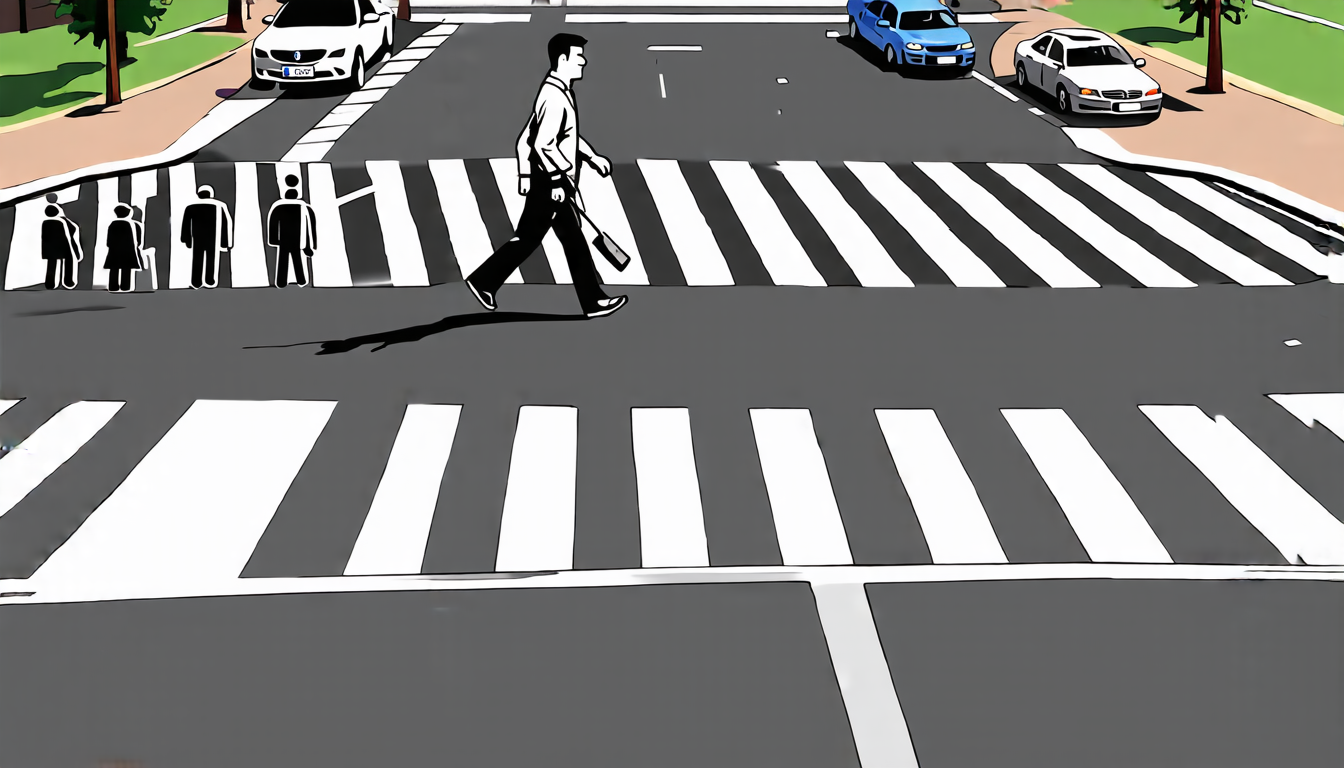
The researchers tested their model on various scenarios, including intersections, roadsides, and public spaces. They found that the model was able to accurately identify and describe pedestrian behaviors, such as walking, standing, or waiting, with high accuracy. The model also showed an impressive ability to predict pedestrian intentions, such as crossing the road or stopping at a stop sign.
This research has significant implications for autonomous vehicles, which rely on accurate understanding of human behavior to navigate roads safely. By integrating visual and text data, the VLM can provide more comprehensive information about the environment and pedestrians, enabling better decision-making by self-driving cars.
The study’s findings also have potential applications in other areas, such as surveillance systems, traffic management, and public safety. For example, the model could be used to identify suspicious behavior or detect potential hazards, allowing authorities to take proactive measures to prevent accidents or crimes.
Overall, this research demonstrates the power of combining computer vision and natural language processing to create a more comprehensive understanding of human behavior. The VLM model has significant potential for real-world applications, from improving autonomous vehicle safety to enhancing public safety and security.
Cite this article: “AI-Powered Pedestrian Behavior Analysis Revolutionizes Autonomous Vehicle Safety”, The Science Archive, 2025.
Artificial Intelligence, Pedestrian Behavior, Computer Vision, Natural Language Processing, Vision-Language Model, Autonomous Vehicles, Surveillance Systems, Traffic Management, Public Safety, Human Behavior.





