

Thursday 06 March 2025
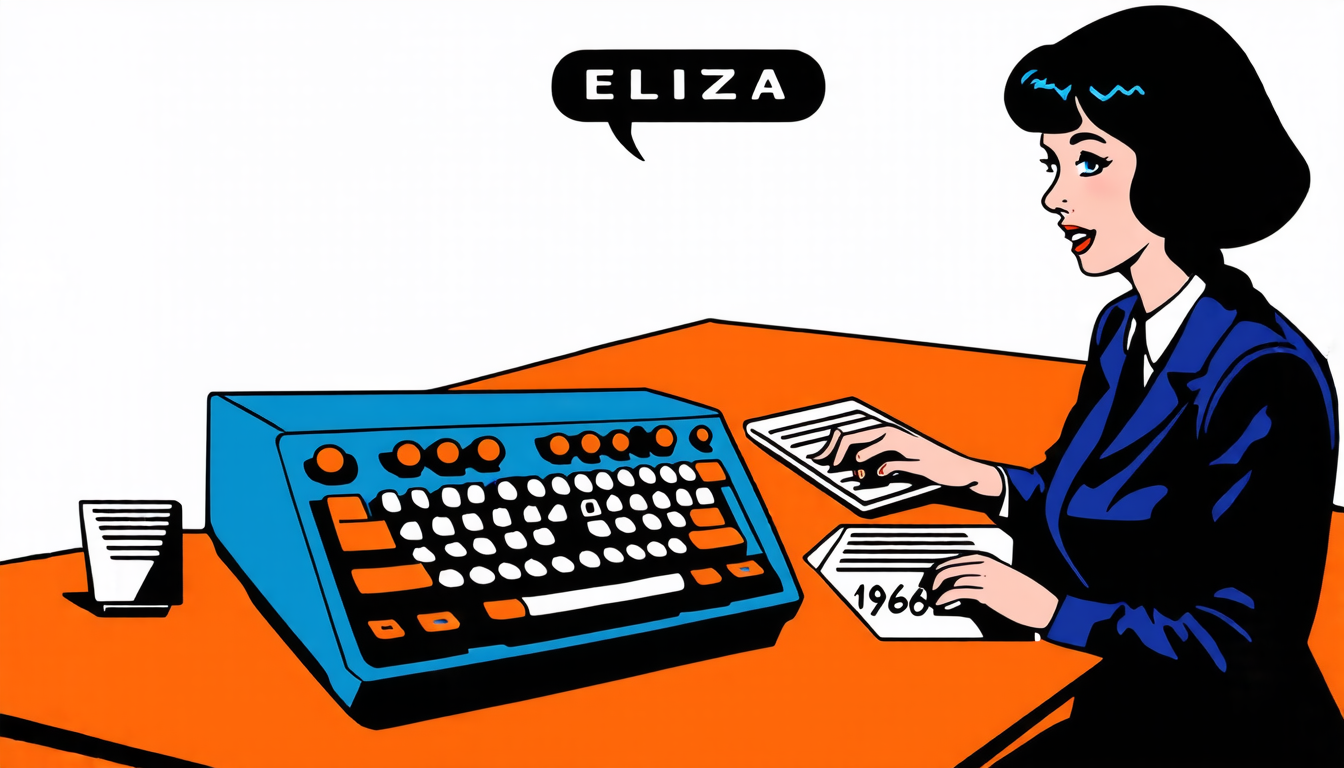
In a remarkable feat of digital archaeology, a team of researchers has successfully reanimated the world’s first chatbot, ELIZA, on an emulator running CTSS, the time-sharing operating system used by MIT in the 1960s. The achievement is a testament to the power of preservation and a fascinating glimpse into the early days of artificial intelligence.
ELIZA was created in 1966 by Joseph Weizenbaum, a computer scientist at MIT, as a demonstration of natural language processing capabilities. The program was designed to simulate a conversation with a human user, using a set of pre-defined rules to generate responses based on the user’s input. Despite its simplicity, ELIZA was incredibly effective in mimicking human-like conversations, and it quickly became a sensation in the AI community.
Fast-forward to today, and the team of researchers has managed to recover the original ELIZA code from Joseph Weizenbaum’s archives, along with extensive documentation on how to run the program. Using a combination of manual transcription and debugging, they were able to get ELIZA up and running on an emulator, allowing them to test its functionality and explore its capabilities.
The experience is surprisingly immersive, as users can engage in conversations with ELIZA using natural language input. The program responds with cleverly crafted responses, often referencing the user’s previous statements or asking follow-up questions. It’s uncanny how well ELIZA captures the essence of human conversation, despite being a product of its time.
One of the most fascinating aspects of reanimating ELIZA is the insight it provides into the early days of AI research. The program was originally designed as a tool for studying natural language processing, and its limitations reflect the understanding of machine learning at the time. Despite these constraints, ELIZA’s creators were able to achieve remarkable results, paving the way for future advancements in the field.
The reanimation of ELIZA also highlights the importance of preserving digital artifacts from the past. As technology continues to evolve at an incredible pace, it’s easy to lose sight of the pioneering work that has come before us. The team’s efforts serve as a reminder of the value of historical preservation and the potential for future discoveries.
Ultimately, reanimating ELIZA is more than just a curiosity – it’s a window into the past, offering a unique glimpse into the early days of AI research.
Cite this article: “Reviving the Past: The Reanimation of ELIZA”, The Science Archive, 2025.
Eliza, Chatbot, Ai, Mit, Joseph Weizenbaum, Natural Language Processing, Ctss, Emulator, Digital Archaeology, Historical Preservation





