

Thursday 06 March 2025
The quest for scientific discovery has long been a laborious process, relying on manual experimentation and human intuition. However, recent advancements in robotics and artificial intelligence are transforming the way scientists work, making it possible to accelerate the pace of research and unlock new breakthroughs.
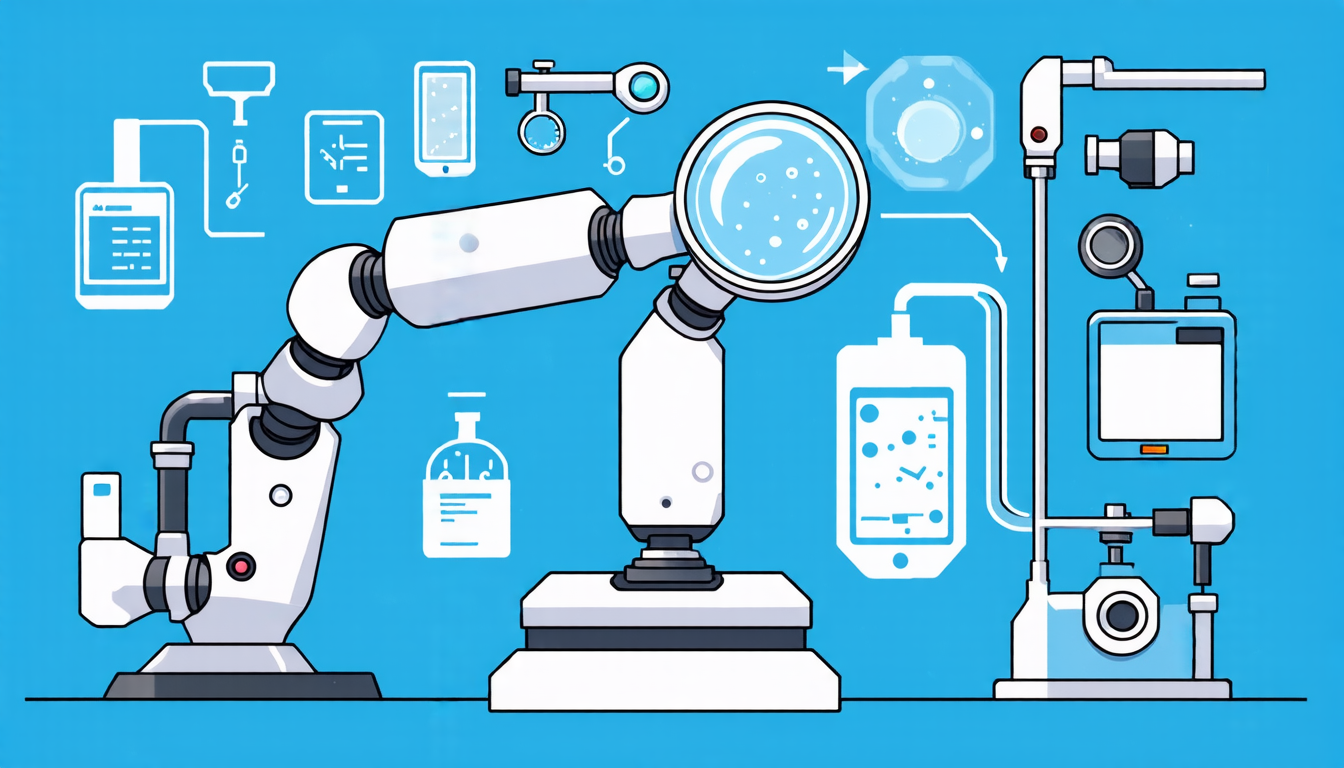
At the heart of this revolution is the concept of autonomous labs, where machines take over routine tasks such as data collection and processing, freeing up humans to focus on higher-level thinking. This shift is not only increasing efficiency but also improving reproducibility, a crucial aspect of scientific research.
One of the key challenges in automating experiments is integrating diverse instruments from different vendors into a single platform. This requires developing standardized communication protocols that enable seamless data exchange between machines. By achieving this interoperability, scientists can easily switch between different equipment and software, streamlining their workflow.
Another critical area where AI is making an impact is in the realm of data analysis. Classical machine learning methods are still valuable for predictive modeling and process optimization, but they often require significant computational resources. In contrast, foundation models like Large Language Models (LLMs) and Vision-Language Models (VLMs) can transform lab automation by boosting data processing, hypothesis generation, experiment planning, and decision-making.
Digital twins, a concept that originated in industrial manufacturing, are also being applied to scientific research. These digital replicas of physical systems enable scientists to simulate experiments, predict outcomes, and optimize processes before they even begin. This approach is particularly useful for high-risk or complex experiments, where mistakes can be costly or even catastrophic.
However, as automation becomes more widespread, there are concerns about the potential loss of natural variations in experimental results. In the past, human error and variability have often led to unexpected discoveries, so it’s essential that scientists continue to work closely with machines to ensure that the benefits of automation do not come at the expense of creativity.
Finally, standardization will play a crucial role in widespread adoption of automated labs. By developing user-centric standards for instrument integration and data exchange, scientists can focus on what really matters – advancing our understanding of the world.
As this technology continues to evolve, it’s likely that we’ll see even more innovative applications of robotics and AI in scientific research. From accelerating discovery in life sciences to optimizing materials synthesis, the potential benefits are vast. By embracing automation, scientists will be able to tackle complex problems with unprecedented precision and efficiency, unlocking new breakthroughs and driving human progress.
Cite this article: “Automation in Scientific Research: Accelerating Discovery and Breakthroughs”, The Science Archive, 2025.
Robotics, Artificial Intelligence, Autonomous Labs, Interoperability, Data Analysis, Machine Learning, Digital Twins, Scientific Research, Automation, Standardization





