

Thursday 06 March 2025
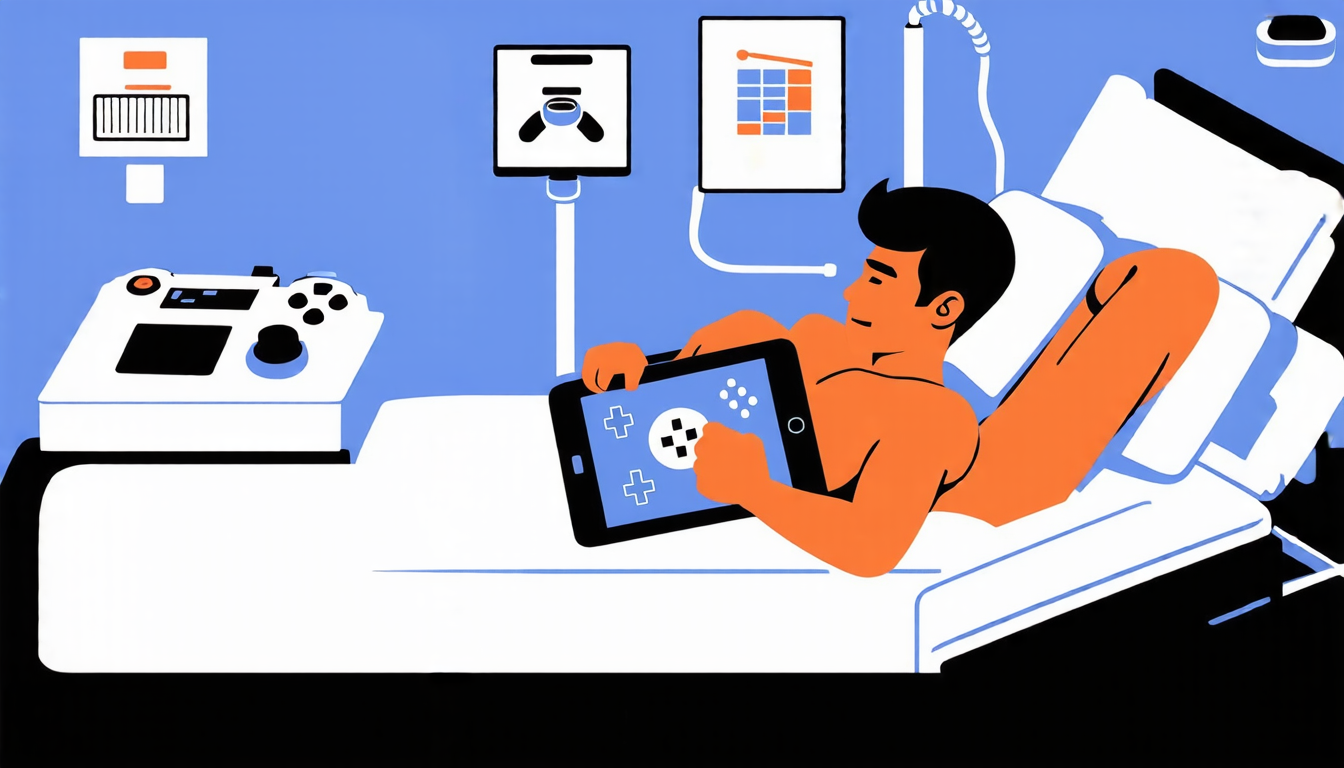
Serious games for rehabilitation have been touted as a promising tool for helping people recover from injuries and illnesses, but a new study suggests that these games often fall short of their potential due to a lack of understanding about what makes them engaging.
The researchers behind this study set out to identify the key elements that contribute to player motivation and engagement in serious games designed for rehabilitation. They analyzed existing research on game design and psychology, as well as conducted surveys and interviews with patients who had used these types of games during their recovery.
One major finding was that many serious games for rehabilitation are simply not very fun. While they may be designed to help people recover from specific conditions or injuries, they often lack the engaging gameplay mechanics and narrative hooks that make commercial video games so compelling.
Another issue is that many serious game designers fail to take into account the unique challenges faced by patients who are using these games as part of their rehabilitation. For example, a patient recovering from a stroke may have limited mobility or cognitive impairment, which can make it difficult for them to interact with certain types of games.
The researchers also found that many serious game designers neglect to incorporate feedback mechanisms and rewards systems into their games, which can make it difficult for patients to track their progress and feel motivated to continue playing.
Despite these challenges, the study’s authors remain optimistic about the potential of serious games for rehabilitation. They suggest that by incorporating more engaging gameplay mechanics, taking into account the unique needs and abilities of patients, and providing feedback and rewards, game designers can create more effective and enjoyable experiences for those using them as part of their recovery.
The researchers also propose a new framework for designing serious games, which emphasizes the importance of player motivation, engagement, and feedback. This framework could potentially be used to guide the development of more effective and engaging serious games in the future.
Overall, this study highlights the need for game designers and healthcare professionals to work together to create more effective and enjoyable experiences for patients using serious games as part of their rehabilitation. By taking a more holistic approach to game design and incorporating more engaging gameplay mechanics, rewards systems, and feedback mechanisms, it may be possible to unlock the full potential of these games and help people recover from injuries and illnesses in a more meaningful way.
Cite this article: “Unlocking the Potential of Serious Games for Rehabilitation”, The Science Archive, 2025.
Serious Games, Rehabilitation, Game Design, Player Motivation, Engagement, Feedback Mechanisms, Rewards Systems, Healthcare Professionals, Patient Recovery, Injury And Illness.





