

Thursday 06 March 2025
The pursuit of solving complex engineering problems has long been a challenge for researchers and engineers alike. One such problem is the simulation of structural mechanics, where predicting the behavior of materials under various loads and stresses is crucial for designing safe and efficient structures. Traditional numerical methods, such as finite element analysis, have been the go-to approach for decades. However, these methods can be computationally intensive and often require significant expertise to set up and interpret.
Recently, a new hybrid approach has emerged that combines the strengths of deep learning with traditional numerical methods. This method, known as Physics-Informed Neural Networks (PINNs), uses neural networks to approximate solutions to partial differential equations, which are used to model various physical phenomena in structural mechanics. The key innovation here is that PINNs use physics-based constraints to regularize the network’s predictions, ensuring that they adhere to the underlying laws of physics.
The hybrid approach combines the strengths of both deep learning and numerical methods. Neural networks can learn complex patterns and relationships from large datasets, while traditional numerical methods provide a robust framework for solving partial differential equations. By integrating these two approaches, researchers can develop more accurate and efficient models for simulating structural mechanics.
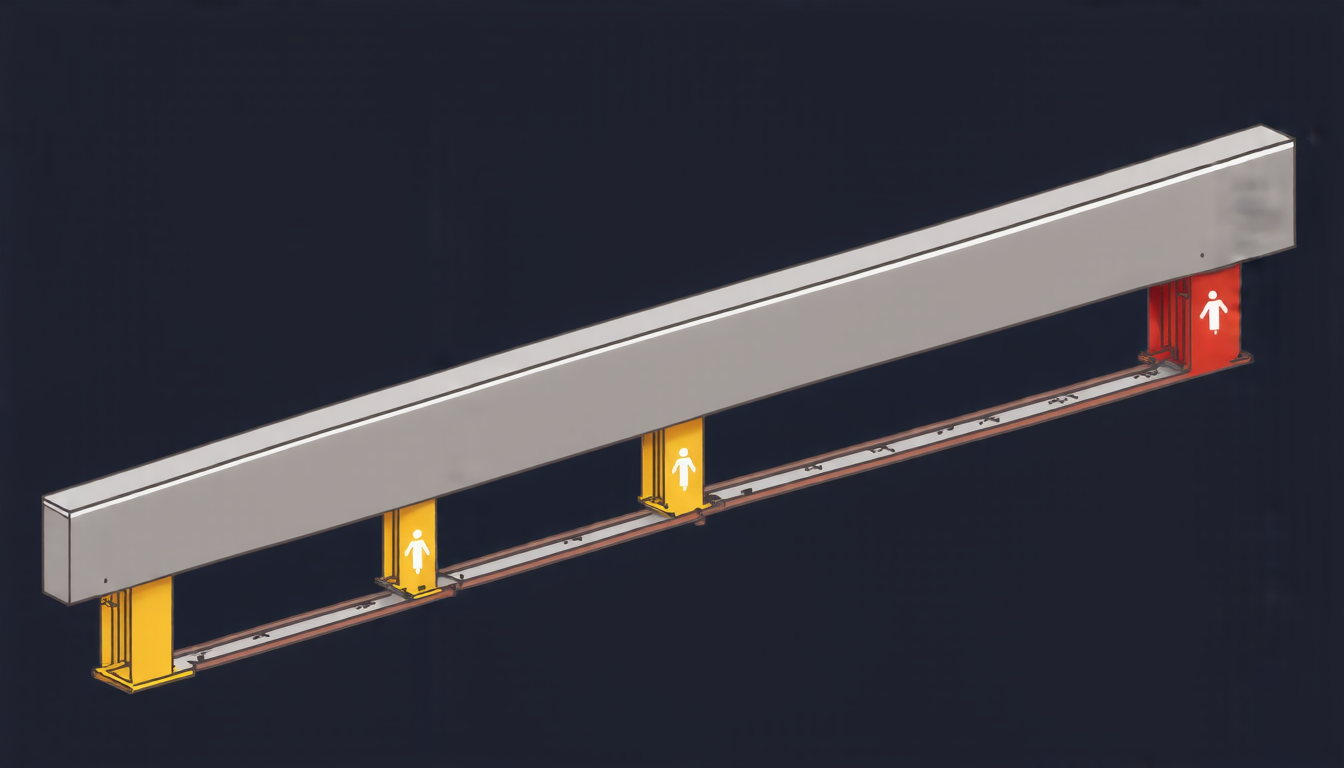
One notable application of PINNs is in the field of beam modeling. Beams are fundamental components of many structures, including bridges, buildings, and aircraft. Accurately predicting their behavior under various loads is critical for ensuring safety and efficiency. Traditional numerical methods have been used to model beams, but these approaches often rely on simplified assumptions and can be computationally intensive.
The hybrid approach offers a more accurate and efficient way of modeling beams. By using PINNs, researchers can develop models that capture the complex relationships between material properties, geometry, and loads. This enables engineers to simulate beam behavior under various conditions, including static and dynamic loads, with greater accuracy and precision.
Another advantage of PINNs is their ability to handle high-dimensional data. In many engineering applications, the number of variables involved in modeling a system can be quite large. Traditional numerical methods often struggle to handle these complex systems, leading to computational bottlenecks and limited scalability.
PINNs, on the other hand, are well-suited for handling high-dimensional data. By using neural networks to approximate solutions to partial differential equations, PINNs can efficiently process large datasets and provide accurate predictions even in high-dimensional spaces.
Cite this article: “Physics-Informed Neural Networks: A Hybrid Approach for Accurate and Efficient Simulation of Structural Mechanics”, The Science Archive, 2025.
Structural Mechanics, Physics-Informed Neural Networks, Pinns, Deep Learning, Finite Element Analysis, Partial Differential Equations, Beam Modeling, Structural Simulation, High-Dimensional Data, Numerical Methods.





