

Thursday 06 March 2025
Scientists have long sought to improve the resolution of micro-computed tomography (micro-CT) images, which are used to study the internal structure of materials like rocks and biological tissues. These images typically have a low resolution, making it difficult to discern important details about the material’s properties.
Now, researchers from King Abdullah University of Science and Technology have developed a new method using generative adversarial networks (GANs) that can significantly enhance the resolution of micro-CT images without requiring additional imaging data. This breakthrough has far-reaching implications for fields like geology, materials science, and biology.
Micro-CT scans use X-rays to create detailed 3D images of internal structures. However, these images are often limited by the resolution of the scanner, which can be as low as 1-2 micrometers. This makes it difficult to study complex phenomena like the distribution of minerals or pores within a material.
The researchers used GANs, a type of machine learning algorithm that can generate new data by learning patterns from existing data. In this case, they trained the GAN on a dataset of low-resolution micro-CT images and paired them with high-resolution images obtained using other imaging techniques like laser scanning microscopy.
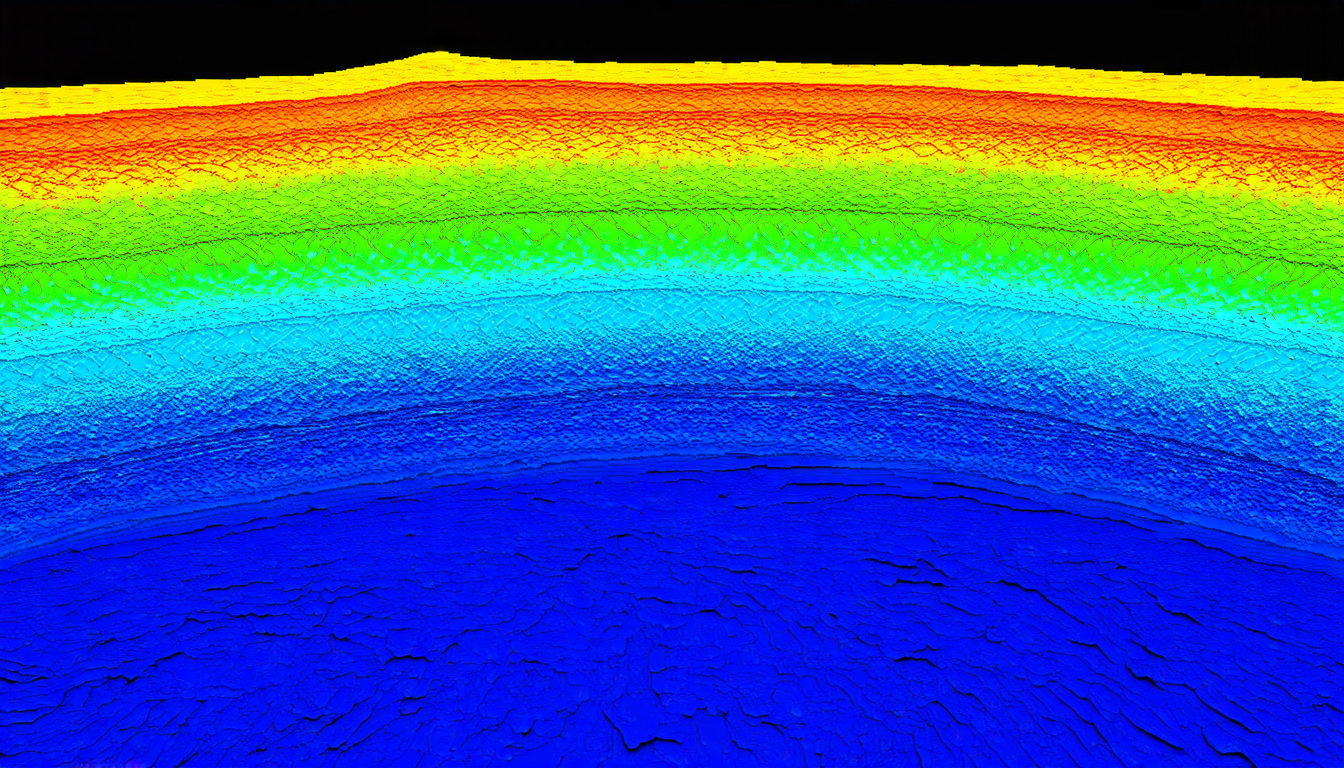
Once trained, the GAN was able to generate high-resolution images of arbitrary size from low-resolution inputs. The team tested their method on several samples of Berea sandstone, a common geological material used in research.
The results were striking. The generated images showed significantly higher resolution than the original micro-CT scans, with details as small as 0.4375 micrometers visible. This level of detail is critical for understanding the properties of materials at the microscopic scale.
The team also demonstrated that their method could be used to improve the accuracy of segmentation algorithms, which are used to identify and label different features within an image. This has important implications for fields like digital rock physics, where accurate segmentation is crucial for simulating complex phenomena like fluid flow through porous media.
While this breakthrough has significant potential for advancing our understanding of materials at the microscopic scale, it’s still early days for this technology. The researchers plan to continue refining their method and exploring its applications in a range of fields.
For scientists who study the internal structure of materials, this new method offers a powerful tool for unlocking the secrets of complex phenomena. With its ability to generate high-resolution images from low-resolution inputs, it’s poised to revolutionize our understanding of materials at the microscopic scale.
Cite this article: “Enhancing Micro-CT Image Resolution Using Generative Adversarial Networks”, The Science Archive, 2025.
Micro-Ct, Image Resolution, Generative Adversarial Networks, Machine Learning, X-Ray Imaging, 3D Images, Geological Materials, Materials Science, Biology, Digital Rock Physics





