

Thursday 06 March 2025
Neural networks have long been a cornerstone of artificial intelligence, allowing machines to learn and improve over time by recognizing patterns in vast amounts of data. But despite their widespread use, these networks can be limited by the way they process information – relying on fixed layers of nodes and connections that can struggle with complex or high-dimensional data.
A new type of neural network, dubbed Kolmogorov-Arnold Networks (KANs), promises to overcome these limitations. Developed by a team of researchers, KANs use a novel combination of mathematical techniques to create networks that can learn and adapt more effectively than traditional neural networks.
The key innovation behind KANs is their ability to represent complex functions using a combination of polynomial and radial basis functions. These functions are then combined in a hierarchical manner, allowing the network to capture subtle patterns and relationships in the data that might be missed by traditional approaches.
In tests on two popular datasets – MNIST and Fashion-MNIST – KANs were found to outperform traditional neural networks on a range of tasks, including image classification and dimensionality reduction. The researchers also experimented with different normalization techniques for the input data, finding that certain methods could further improve the performance of the networks.
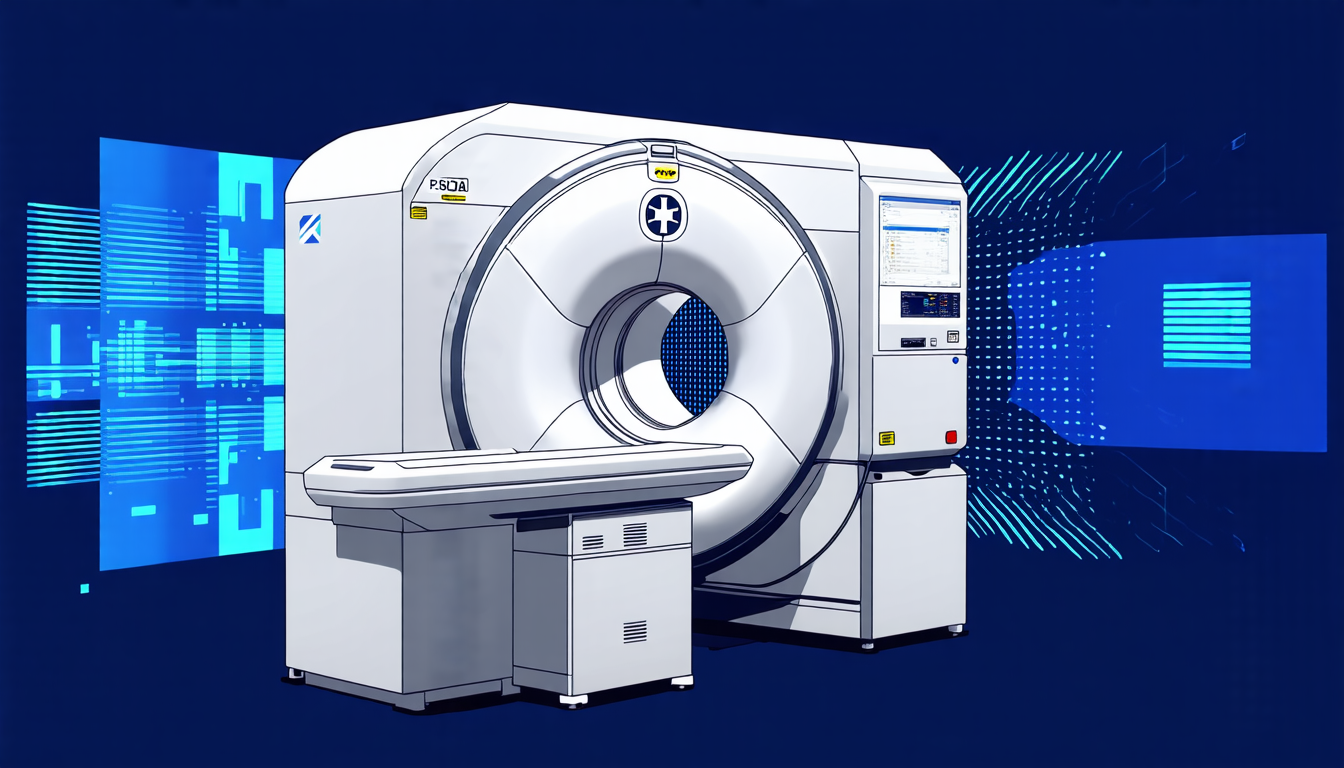
One potential application of KANs is in the field of medical imaging, where complex patterns in medical images can be used to diagnose diseases or identify areas of interest. Traditional neural networks may struggle with these types of data due to their fixed architecture and limited ability to capture high-dimensional relationships. KANs, on the other hand, are well-suited to this task, and could potentially lead to more accurate diagnoses and better treatment outcomes.
Another potential application is in natural language processing, where KANs could be used to improve the performance of language models or text classification algorithms. The networks’ ability to capture complex patterns and relationships in high-dimensional data makes them particularly well-suited to tasks such as sentiment analysis or topic modeling.
Overall, the development of KANs represents an important step forward in the field of artificial intelligence, and could have a range of potential applications across different domains. By providing a more flexible and powerful way to represent complex functions, KANs offer a new tool for researchers and developers looking to improve the performance of their neural networks.
Cite this article: “Kolmogorov-Arnold Networks: A New Frontier in Artificial Intelligence”, The Science Archive, 2025.
Artificial Intelligence, Neural Networks, Machine Learning, Kolmogorov-Arnold Networks, Kans, Mathematical Techniques, Polynomial Functions, Radial Basis Functions, Image Classification, Dimensionality Reduction





