

Thursday 06 March 2025
Researchers have long been grappling with the challenges of analyzing complex data sets in human-robot interaction studies. The problem is that these studies often involve a wide range of multimedia data, including video, audio, and robot logs, which can be difficult to process and analyze manually.
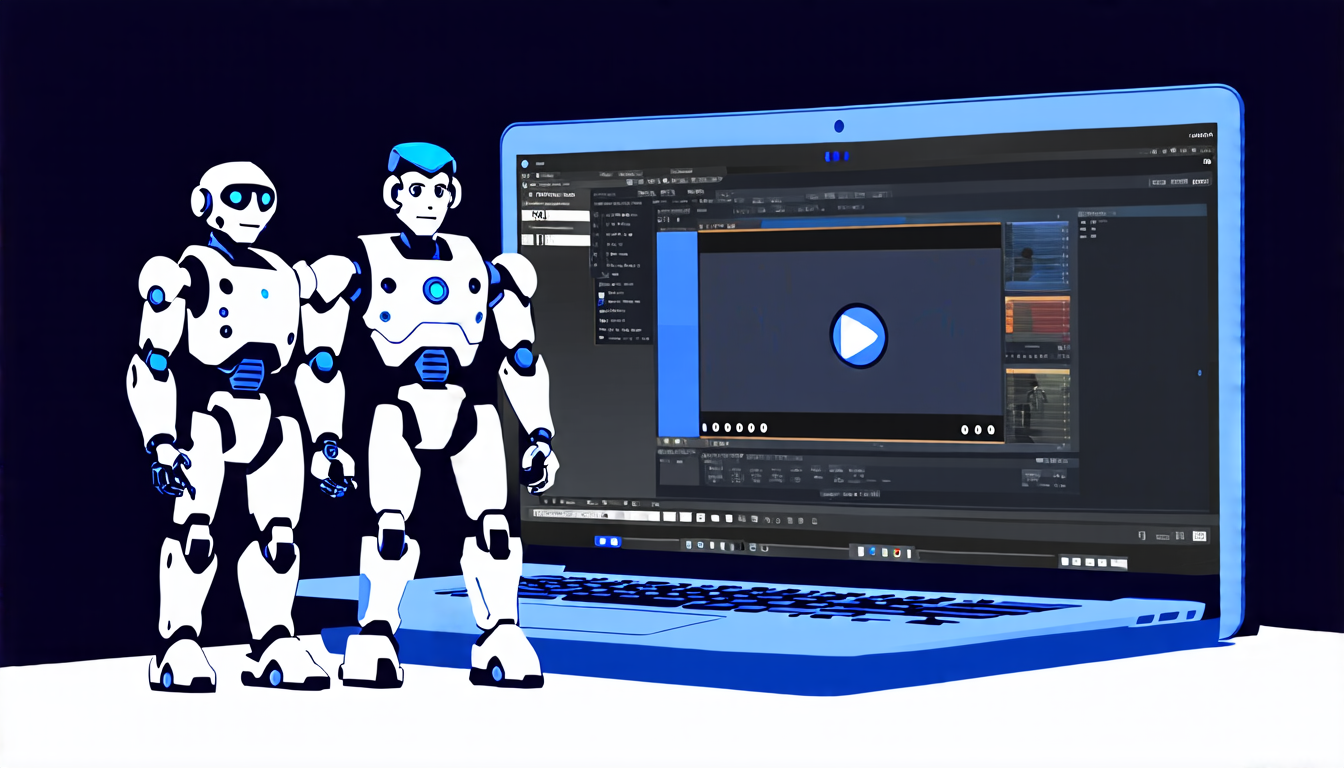
To address this issue, scientists have developed a new web-based application called ROSAnnotator. This tool allows researchers to easily extract messages from Robot Operating System (ROS) bags, which are files that contain temporally synchronized multimodal data collected during experiments with real robots.
One of the key features of ROSAnnotator is its ability to support both manual and automated annotation of this data. Manual annotation involves using a predefined codebook to label different segments of the data, while automated annotation uses machine learning algorithms to identify patterns in the data and assign labels accordingly.
The tool also includes a range of other features designed to make it easier for researchers to work with their data. For example, users can create multiple time axes and annotate different modalities, such as video and audio, simultaneously. The application also includes a statistical summary function that provides detailed information about the annotations, including the number of occurrences, frequency, average duration, and more.
ROSAnnotator is designed to be highly flexible and customizable, allowing researchers to tailor it to their specific needs and workflows. For example, users can define their own codebooks and customize the appearance of the interface.
The tool has already been tested in a range of human-robot interaction studies, including experiments involving robot-assisted surgery and human-robot collaboration. In these studies, ROSAnnotator was used to annotate data collected during the experiments, such as video footage and robot logs.
Researchers found that using ROSAnnotator significantly reduced the time and effort required for data analysis compared to traditional manual annotation methods. They were also able to identify patterns and trends in the data more easily, which helped them to better understand the behavior of humans and robots interacting with each other.
Overall, ROSAnnotator represents a significant step forward in the field of human-robot interaction research. By providing a powerful and flexible tool for annotating and analyzing complex data sets, it is helping researchers to gain new insights into how humans and robots interact and collaborate.
The application has already been released as an open-source project, which means that other researchers can contribute to its development and customize it to their own needs. This could lead to even more innovative applications of ROSAnnotator in the future.
Cite this article: “ROSAnnotator: A Web-Based Tool for Annotating and Analyzing Human-Robot Interaction Data”, The Science Archive, 2025.
Human-Robot Interaction, Data Analysis, Annotation Tool, Robot Operating System, Multimodal Data, Machine Learning, Codebook, Manual Annotation, Automated Annotation, Open-Source Project





