

Thursday 06 March 2025
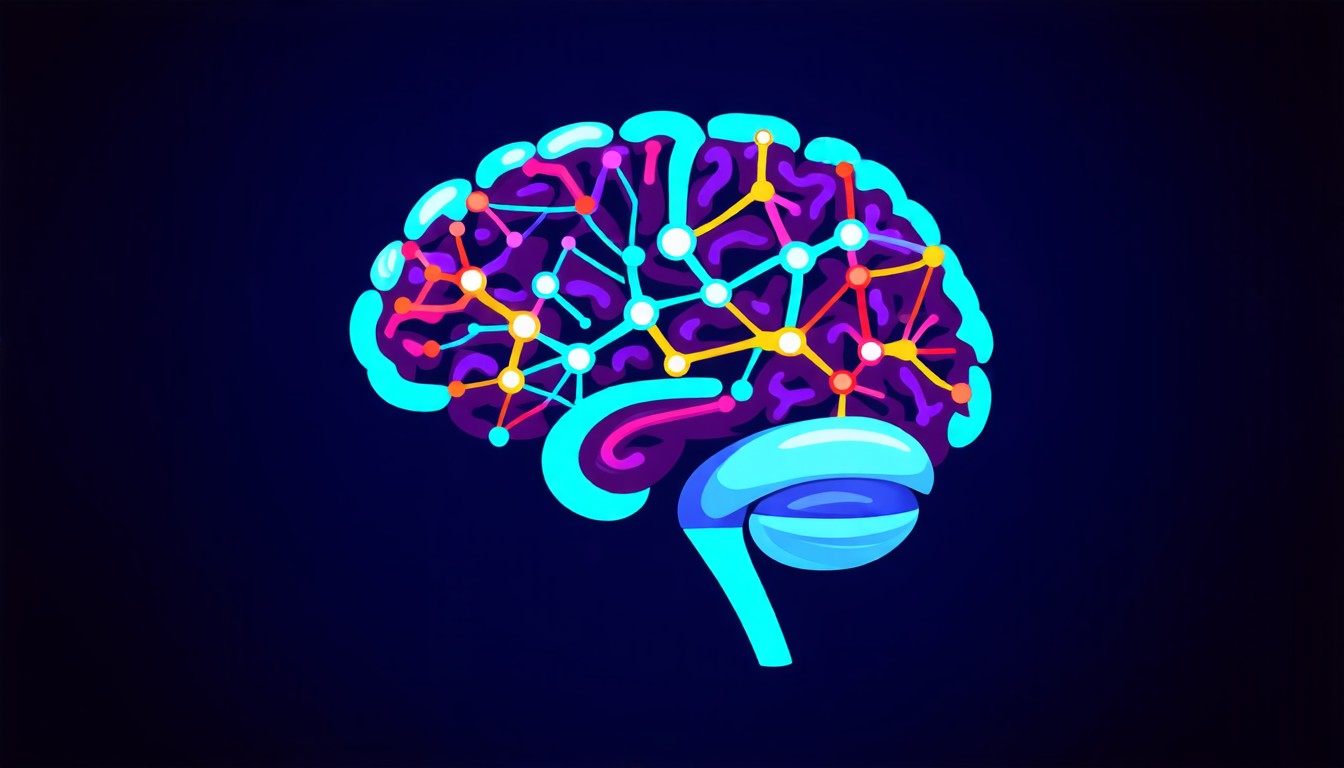
Scientists have made a major breakthrough in understanding how our brains work, and it’s all thanks to a new type of artificial intelligence. This innovative technology has allowed researchers to create a machine that can translate between different types of brain data, such as functional magnetic resonance imaging (fMRI) and diffusion tensor imaging (DTI).
Functional connectivity refers to the way different parts of the brain communicate with each other, while structural connectivity refers to the physical connections between brain regions. By using this new technology, scientists have been able to create a machine that can take fMRI data, which measures functional connectivity, and translate it into DTI data, which measures structural connectivity.
This breakthrough has significant implications for our understanding of how the brain works, and could potentially lead to new treatments for neurological disorders such as Alzheimer’s disease. Currently, there is no cure for Alzheimer’s, but researchers believe that understanding how the brain functions could lead to the development of new therapies.
The technology uses a type of artificial intelligence called a generative adversarial network (GAN), which consists of two neural networks that work together to create new data. In this case, one network generates fMRI data and the other network generates DTI data. The two networks then compete with each other, with the goal of creating data that is as realistic as possible.
The researchers used a dataset of 96 subjects who had undergone both fMRI and DTI scans. They trained their machine on this data, using it to learn how to translate between the different types of brain imaging data. The machine was then tested on a separate dataset of 24 subjects, with the results showing that it was able to accurately translate between the two types of data.
This technology has many potential applications beyond just understanding brain function and developing treatments for neurological disorders. For example, it could be used to improve our understanding of how the brain develops in children, or to study the effects of aging on the brain.
In addition to its potential medical applications, this technology also has implications for our understanding of artificial intelligence itself. It shows that AI can be used to learn and adapt in complex ways, and could potentially lead to the development of more sophisticated AI systems in the future.
Overall, this breakthrough has significant implications for both neuroscience and artificial intelligence, and could potentially lead to new treatments for neurological disorders.
Cite this article: “Artificial Intelligence Breakthrough Unlocks Secrets of Brain Function”, The Science Archive, 2025.
Ai, Brain Function, Alzheimer’S Disease, Fmri, Dti, Generative Adversarial Network, Neural Networks, Artificial Intelligence, Neuroscience, Translation Technology





