

Friday 07 March 2025
The quest for faster and more efficient wireless communication has led researchers to explore new ways to squeeze more data through existing networks. One such approach is the implementation of Multiple Input Multiple Output (MIMO) technology in Long Range (LoRa) systems. MIMO, commonly used in cellular networks, allows multiple antennas to transmit and receive data simultaneously, increasing overall throughput.
In a recent study, researchers from various institutions have demonstrated a LoRa MIMO system that boasts higher data rates than traditional single-input single-output (SISO) LoRa implementations. The team achieved this by exploiting the orthogonality of LoRa signals, which are spread across different frequencies to enable simultaneous transmission and reception.
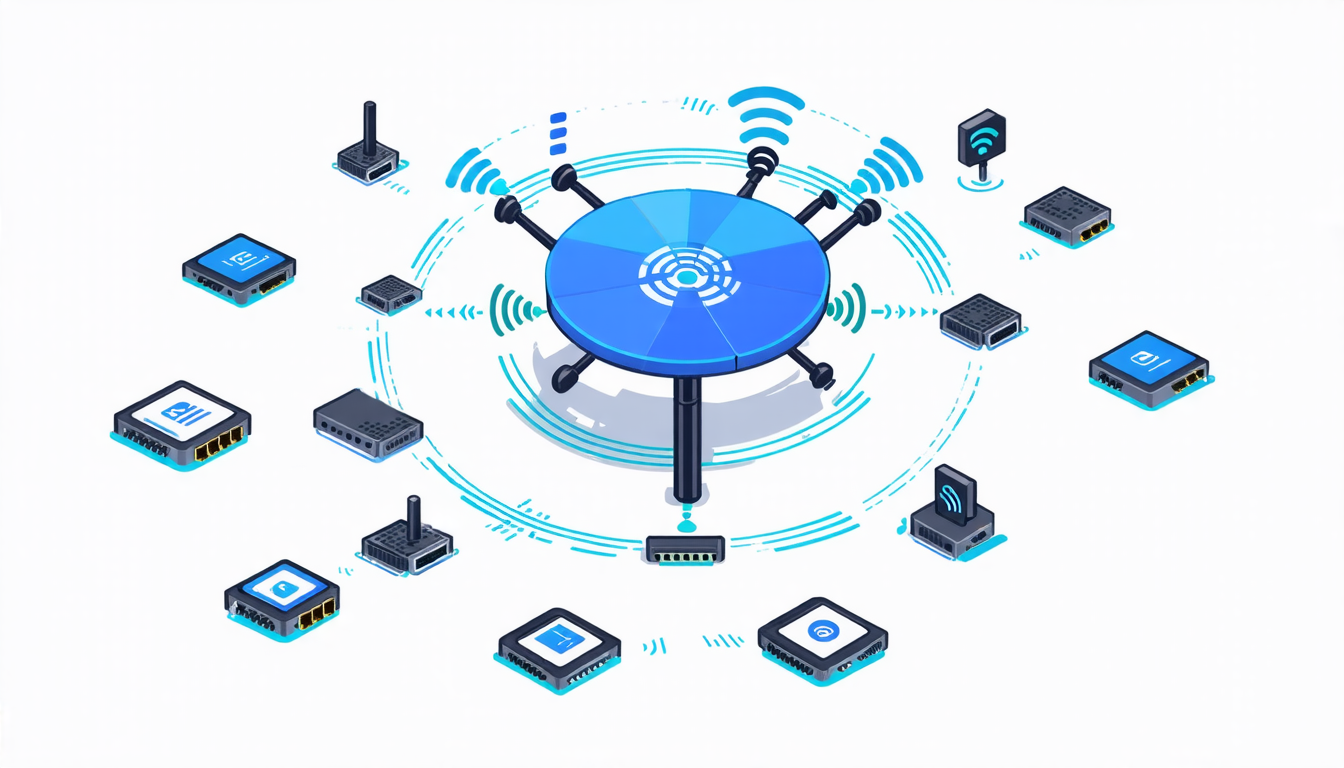
The proposed system consists of four identical SISO channels operating in parallel, each using a different frequency band. This allows for spatial multiplexing, where multiple data streams can be transmitted simultaneously without interfering with one another. The researchers used a combination of LoRa modules and ESP32 microcontrollers to build the MIMO system, which was tested on a hardware test bench.
The results are impressive: the team achieved an effective throughput of 85 kbps, nearly 18 times higher than traditional SISO LoRa implementations. This is significant for applications that require high data rates, such as industrial automation and smart agriculture. The researchers also demonstrated the ability to allocate modulation parameters dynamically, allowing for optimal performance in different environments.
One of the key challenges in implementing MIMO technology is the need for precise timing synchronization between the various antennas. The team addressed this issue by using a master-slave configuration, where one microcontroller serves as the master and coordinates data transmission and reception among the four LoRa modules.
The researchers also explored the impact of different spreading factors and bandwidth configurations on system performance. They found that higher spreading factors and lower bandwidths resulted in lower data rates, while increasing the number of hops between devices improved overall throughput.
In addition to its technical merits, the study highlights the importance of considering resource constraints when designing wireless communication systems. The team demonstrated the feasibility of implementing MIMO technology using commercially available LoRa modules and ESP32 microcontrollers, which are widely used in IoT applications.
The implications of this research go beyond mere technical achievements. As the Internet of Things (IoT) continues to grow, the need for efficient and reliable wireless communication will only increase. By exploring innovative approaches like MIMO-LoRa, researchers can help bridge the gap between device capabilities and the demands of emerging applications.
Cite this article: “Boosting LoRa Performance with MIMO Technology”, The Science Archive, 2025.
Mimo, Lora, Wireless Communication, Iot, Multiple Antennas, Spatial Multiplexing, Throughput, Data Rate, Synchronization, Esp32





