

Friday 07 March 2025
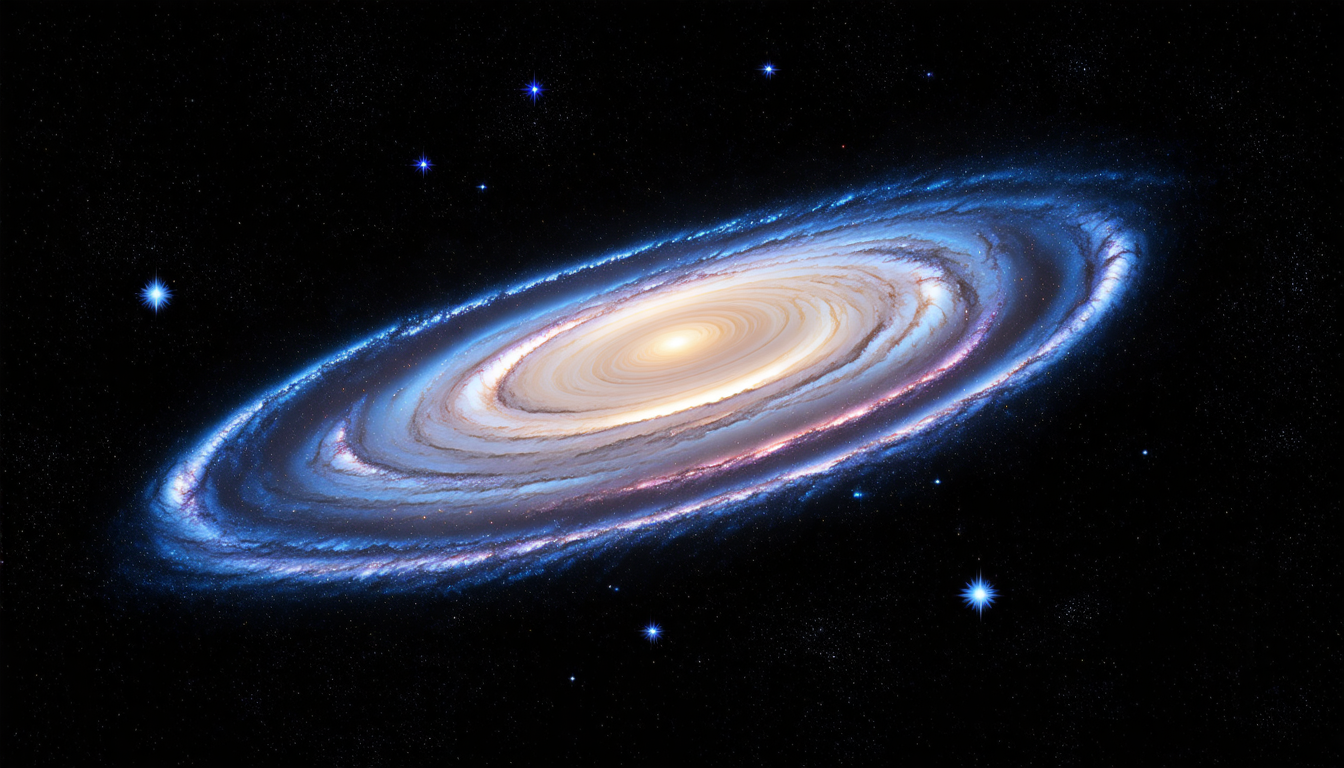
Astronomers have long been fascinated by the mysterious bulge at the heart of our galaxy, the Milky Way. This dense, spherical region is home to millions of stars and offers a unique window into the history of our cosmic neighborhood. Now, a team of researchers has made a significant breakthrough in understanding the origins of these stars.
Using sophisticated computer simulations, scientists have been able to recreate the evolution of the bulge over billions of years. Their findings suggest that the stars in this region were born hot and young, with some still burning brightly today. But how did they get there?
The team’s research indicates that a combination of processes contributed to the formation of the bulge. In the distant past, the Milky Way was involved in a series of violent mergers with smaller galaxies. These collisions triggered the birth of new stars and disrupted the existing stellar population.
At the same time, the galaxy’s central region was also home to a vast reservoir of gas and dust. This material collapsed under its own gravity, giving rise to massive stars that burned brightly for millions of years before exploding as supernovae.
The simulations suggest that these explosive events played a crucial role in shaping the bulge’s structure. The shockwaves generated by the supernovae helped to stir up the surrounding gas and dust, triggering the formation of new stars.
But there’s more to the story. The team’s research also reveals that the bulge is not a static entity – it has changed over time as stars are born and die. In fact, the simulations suggest that the bulge may have undergone several episodes of starburst activity, where large numbers of stars formed in a short period.
So what does this all mean for our understanding of the Milky Way? The findings provide valuable insights into the complex processes that have shaped our galaxy over billions of years. They also highlight the importance of ongoing star formation and the dynamic interplay between different regions of the galaxy.
As scientists continue to study the bulge, they may uncover even more secrets about the history of our cosmic neighborhood. For now, however, this breakthrough offers a fascinating glimpse into the Milky Way’s complex and ever-changing nature.
Cite this article: “Unveiling the Secrets of the Milky Ways Central Bulge”, The Science Archive, 2025.
Milky Way, Galaxy, Bulge, Stars, Simulations, Mergers, Gas, Dust, Supernovae, Starburst





