

Friday 07 March 2025
The Large Hadron Collider (LHC) is one of the most powerful particle accelerators in the world, and it’s about to get even more exciting. Scientists have been using the LHC to study the fundamental nature of matter and energy for years, but a new experiment is set to take things to the next level.
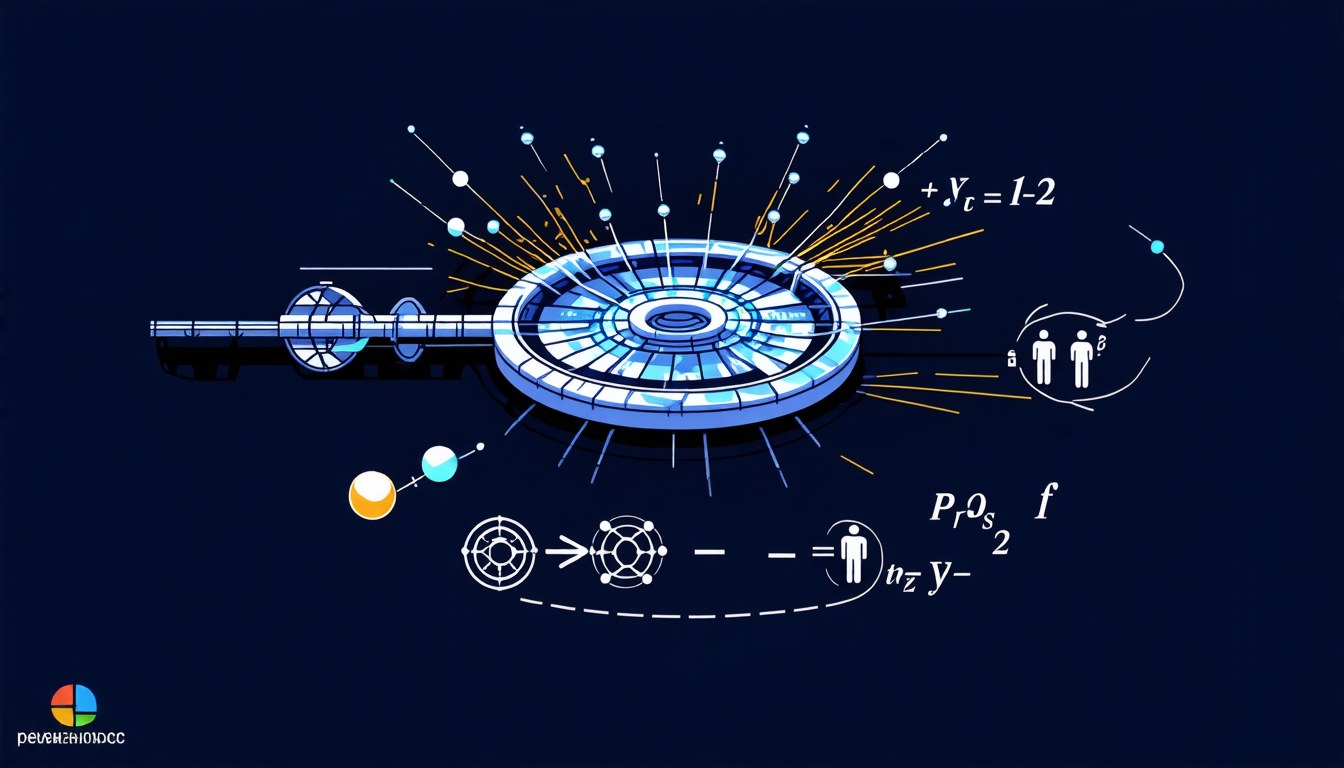
The FASER experiment, short for Forward Search Experiment, is designed to detect neutrinos – tiny particles that are created when high-energy particles collide with each other. Neutrinos are incredibly difficult to detect because they barely interact with matter at all, making them extremely hard to spot. But the LHC is so powerful that it can create huge amounts of these elusive particles.
The FASER experiment is a small detector that’s been built to sit 480 meters away from the main collision point at the LHC. It’s designed to detect neutrinos as they fly past, and it’s already started collecting data. The first results are in, and they’re promising – scientists have detected hundreds of neutrino-like events, which is a huge deal.
But why is this so exciting? Well, for starters, detecting neutrinos is incredibly challenging. It’s like trying to spot a single grain of sand on a beach. And yet, the FASER experiment has already managed to do just that. This means that scientists can start to study these particles in much greater detail than ever before.
One of the most interesting things about neutrinos is that they can travel long distances without being affected by the strong forces that govern the behavior of other particles. This makes them incredibly useful for studying some of the most fundamental questions in physics, like what happened in the very early universe.
The FASER experiment is also giving scientists a new way to study the properties of neutrinos themselves. By detecting these particles, scientists can learn more about their mass, their interactions with other particles, and even whether they have any unusual properties that could help explain some of the mysteries of the universe.
But perhaps most excitingly, the FASER experiment is also giving scientists a new way to study the strong nuclear force – one of the four fundamental forces of nature. The LHC is so powerful that it can create particles like protons and neutrons, which are the building blocks of atomic nuclei. By detecting neutrinos as they interact with these particles, scientists can learn more about how the strong nuclear force works at very high energies.
Cite this article: “Unlocking the Secrets of Neutrinos”, The Science Archive, 2025.
Large Hadron Collider, Faser Experiment, Neutrinos, Particle Accelerator, Fundamental Forces Of Nature, Strong Nuclear Force, Matter, Energy, Physics, Universe
Reference: Felix Kling, “Neutrino Physics at the LHC: Status and Prospects” (2025).





