

Friday 07 March 2025
The pursuit of efficient and accurate fault diagnosis in resource-constrained environments has long been a challenge for researchers and engineers alike. In recent years, advancements in deep learning have shown promise in tackling this issue, but limitations such as computational overhead and reliance on large datasets remain significant hurdles.
A new approach published in an academic journal seeks to address these challenges by introducing a knowledge distillation framework that leverages graph convolutional networks (GCNs) with adaptive subdomain adaptation. The methodology is designed specifically for fault diagnosis in rolling bearings under varying working conditions, but its principles can be applied to other domains as well.
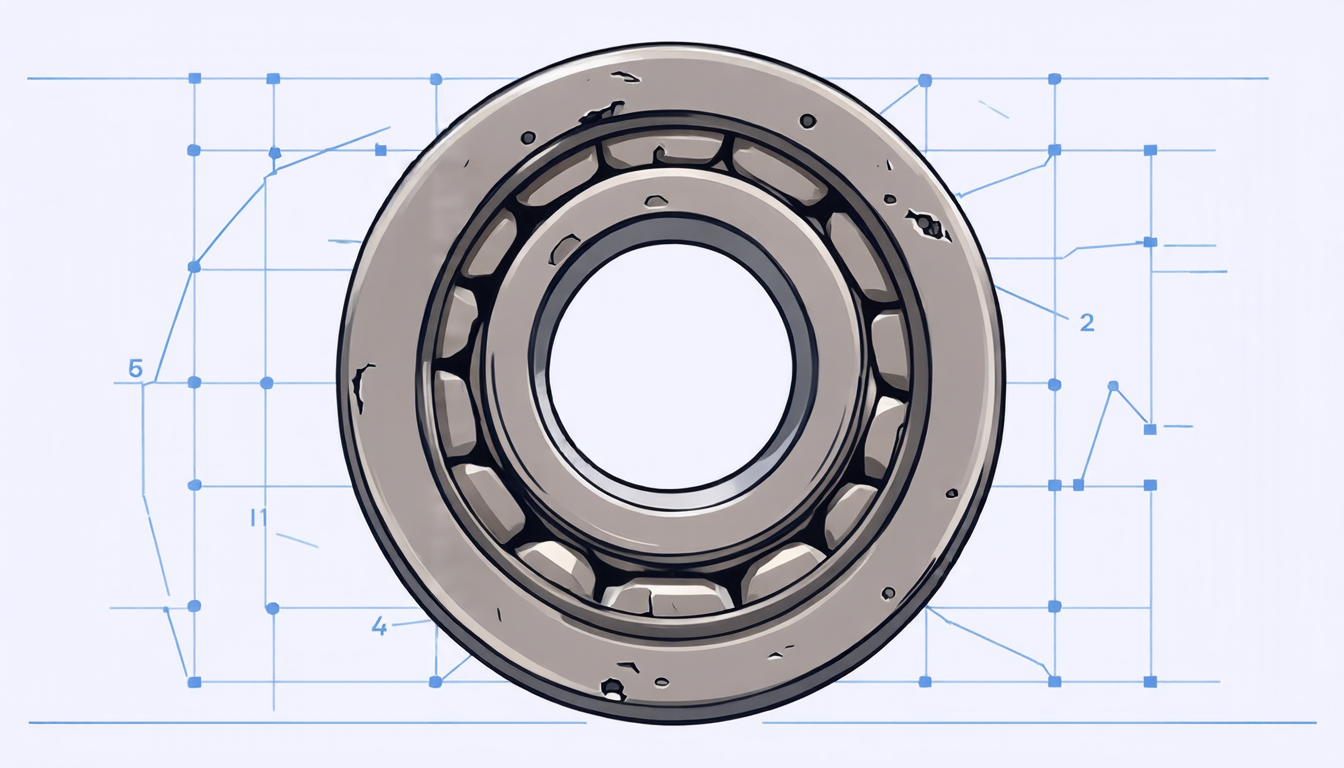
The key innovation lies in the use of GCNs, which are capable of extracting relevant features from complex data structures such as graphs. In this case, the graph represents the bearing’s mechanical structure, with nodes representing individual components and edges indicating their relationships. The GCN is trained on a source domain dataset to learn patterns that distinguish healthy bearings from those exhibiting faults.
The distillation framework then comes into play by transferring knowledge from the complex teacher model to a lightweight student model. This transfer process is facilitated by an enhanced local maximum mean square discrepancy (ELMMSD) method, which measures the difference between marginal and conditional distributions in both domains. By minimizing this discrepancy, the student model learns to align with the teacher’s decision boundaries.
The results are impressive: the proposed framework achieves superior accuracy in fault diagnosis compared to state-of-the-art methods, while also demonstrating reduced computational overhead and improved generalizability across different operating conditions. The authors’ experiments demonstrate that their approach can effectively handle imbalanced datasets, noisy data, and varying loads, making it a robust solution for real-world applications.
One of the most significant benefits of this framework is its ability to adapt to new domains with minimal additional training data. By leveraging subdomain adaptation, the model can learn to recognize patterns in novel bearing configurations without requiring extensive retraining. This adaptability is particularly valuable in industrial settings where bearings are often subject to changing operating conditions.
The authors’ use of GCNs and knowledge distillation also enables the framework to handle large amounts of missing data, a common issue in rolling bearing fault diagnosis. By focusing on relevant features and ignoring noisy or incomplete data, the model can achieve better accuracy even when faced with imperfect datasets.
While this approach shows great promise for resource-constrained environments, its applicability extends beyond industrial settings as well.
Cite this article: “Efficient Fault Diagnosis in Resource-Constrained Environments Using Graph Convolutional Networks and Knowledge Distillation”, The Science Archive, 2025.
Fault Diagnosis, Rolling Bearings, Deep Learning, Graph Convolutional Networks, Knowledge Distillation, Adaptive Subdomain Adaptation, Mechanical Structure, Edge Computing, Industrial Settings, Imbalanced Datasets





