

Friday 07 March 2025
The pursuit of tracking and analyzing tiny particles has long been a challenge for scientists. From understanding the behavior of microorganisms to monitoring the motion of subatomic particles, researchers have relied on traditional frame-based cameras to capture their movements. However, these cameras are often limited by their inability to detect changes in brightness quickly enough, resulting in lost data and reduced resolution.
Enter the event-based camera (EBC), a new type of sensor that can detect individual events – such as changes in light intensity or particle movement – with unprecedented speed and precision. This technology has been hailed as a game-changer for scientists studying passive and active matter, including microorganisms, nanoparticles, and even sperm cells.
By using the EBC to track the motion of particles, researchers have been able to capture detailed information about their behavior, including diffusion coefficients and motility parameters. These insights can be crucial in understanding how particles interact with their environment and each other, which has significant implications for fields such as medicine, materials science, and environmental research.
One of the key advantages of the EBC is its ability to detect events quickly and accurately, even in low-light conditions. This makes it ideal for studying particles that move rapidly or are found in environments with limited light exposure. The sensor can also be programmed to ignore background noise, allowing researchers to focus on specific particles or regions of interest.
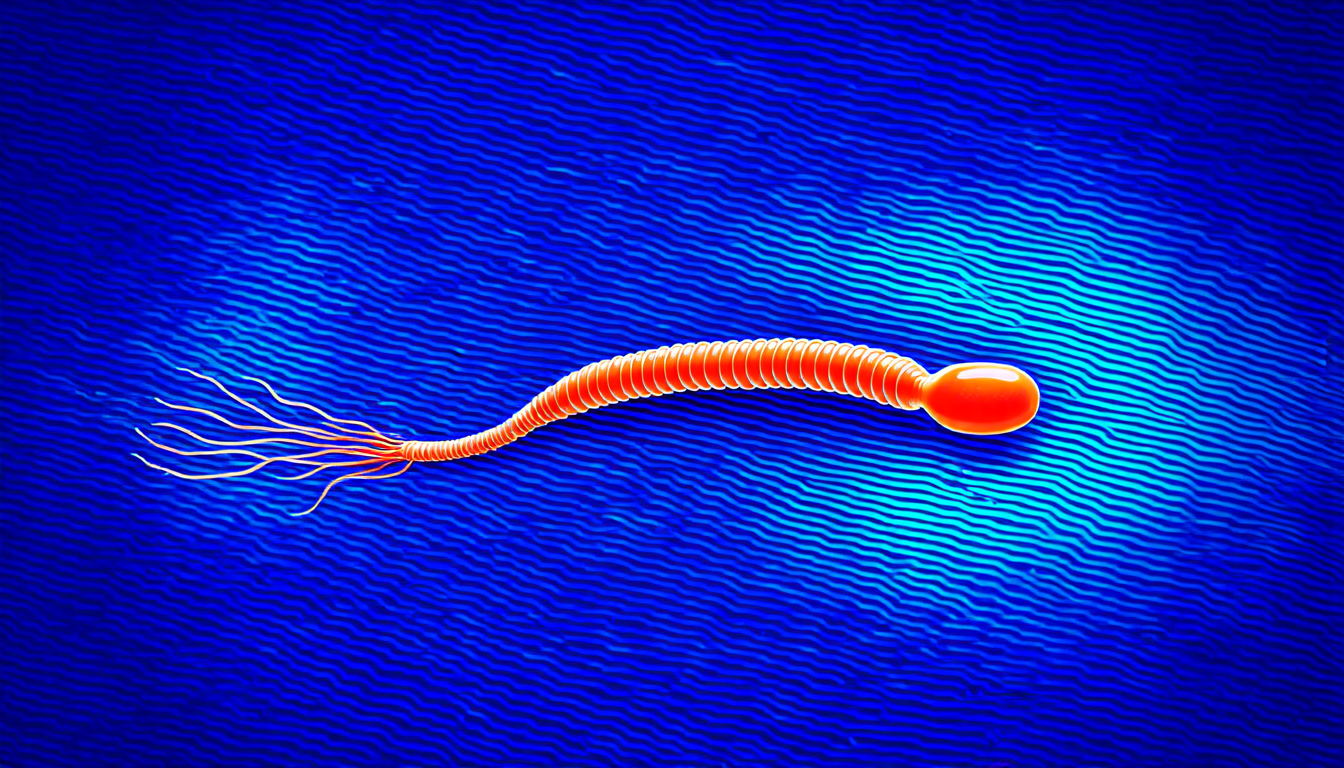
In a recent study, scientists used the EBC to track the motion of sperm cells and estimate their motility parameters. This is crucial for understanding fertility and developing more effective treatments for infertility. By analyzing the data collected by the EBC, researchers were able to identify patterns in the sperm’s movement that could not be detected using traditional cameras.
The potential applications of this technology are vast. For example, researchers studying microorganisms could use the EBC to track their behavior in real-time, allowing them to better understand how they respond to environmental changes and develop new treatments for infectious diseases. The sensor could also be used to monitor the motion of nanoparticles in medical devices or environmental monitoring systems.
As the development of this technology continues to evolve, it’s likely that we’ll see even more innovative applications emerge. The potential for the EBC to revolutionize our understanding of tiny particles and their behavior is vast, and scientists are eagerly exploring its possibilities. With its ability to detect events quickly and accurately, this sensor has the potential to transform a wide range of fields and unlock new discoveries.
Cite this article: “Unlocking the Secrets of Tiny Particles with Event-Based Cameras”, The Science Archive, 2025.
Event-Based Cameras, Particle Tracking, Microorganisms, Nanoparticles, Sperm Cells, Motility Parameters, Diffusion Coefficients, Medical Research, Environmental Monitoring, Materials Science.





