

Friday 07 March 2025
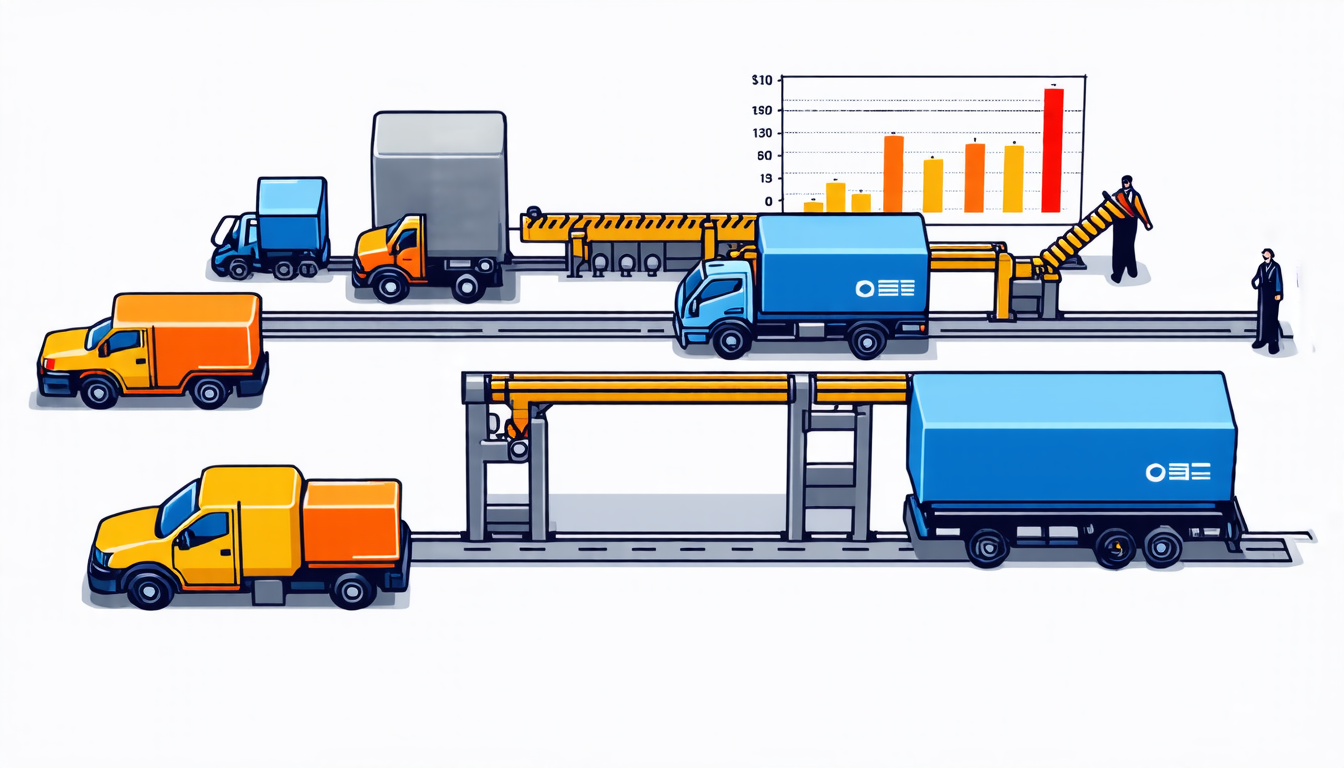
The world of manufacturing is about to get a whole lot smarter. A team of researchers has developed an artificial intelligence (AI) system that can accurately predict lead times in non-cycled areas of automotive production. This means that manufacturers will be able to better plan and control their production processes, leading to increased efficiency and reduced costs.
In the world of manufacturing, lead time refers to the time it takes for a product to move from one stage of production to the next. In non-cycled areas, such as testing and finishing centers, this process can be unpredictable and prone to delays. This is because each vehicle is unique and may require different processing times.
The researchers used a technique called gradient boosting decision trees to develop their AI system. This involves training a machine learning algorithm on data from a production line to identify patterns and trends that are then used to make predictions about future lead times.
The system was tested using real-world data from an automotive manufacturer and found to be highly accurate, with prediction accuracy reaching up to 90%. This means that the AI system can accurately predict when a vehicle will be ready for testing or finishing, allowing manufacturers to plan their production processes more effectively.
But how does it work? The AI system uses a combination of data from various sources, including sensor readings and historical production data. It then analyzes this data using machine learning algorithms to identify patterns and trends that are unique to each vehicle.
For example, if a vehicle has a certain type of engine or transmission, the AI system may be able to predict that it will require longer processing times due to specific testing procedures. Similarly, if a vehicle is being produced in large quantities, the AI system may be able to identify patterns in the production process that can help predict lead times.
The benefits of this technology are clear. By accurately predicting lead times, manufacturers can reduce delays and improve efficiency. This means that vehicles can get to market faster, which can give companies a competitive edge in the marketplace.
In addition, the AI system can also be used to identify areas where production processes can be improved. For example, if the system identifies that a particular process is consistently causing delays, manufacturers can take steps to optimize that process and reduce lead times further.
Overall, this technology has the potential to revolutionize the way manufacturing works. By providing accurate predictions of lead times, it can help companies improve efficiency, reduce costs, and get their products to market faster.
Cite this article: “AI-Powered Predictive Maintenance in Automotive Manufacturing”, The Science Archive, 2025.
Artificial Intelligence, Manufacturing, Lead Time, Automotive Production, Machine Learning, Gradient Boosting Decision Trees, Predictive Analytics, Production Planning, Efficiency, Cost Reduction.





