

Friday 07 March 2025
For years, scientists have been fascinated by the intricate web of human interactions that unfold every day in our communities, schools, and workplaces. These connections are crucial for understanding how diseases spread, how ideas are shared, and even how social structures form. But capturing this complex dance of face-to-face interactions has proven to be a daunting task.
Traditionally, researchers have relied on surveys, interviews, or small-scale observational studies to gain insights into human behavior. However, these methods often suffer from limitations – they can be time-consuming, expensive, and prone to bias. Moreover, they may not accurately reflect the dynamic nature of social interactions in real-world settings.
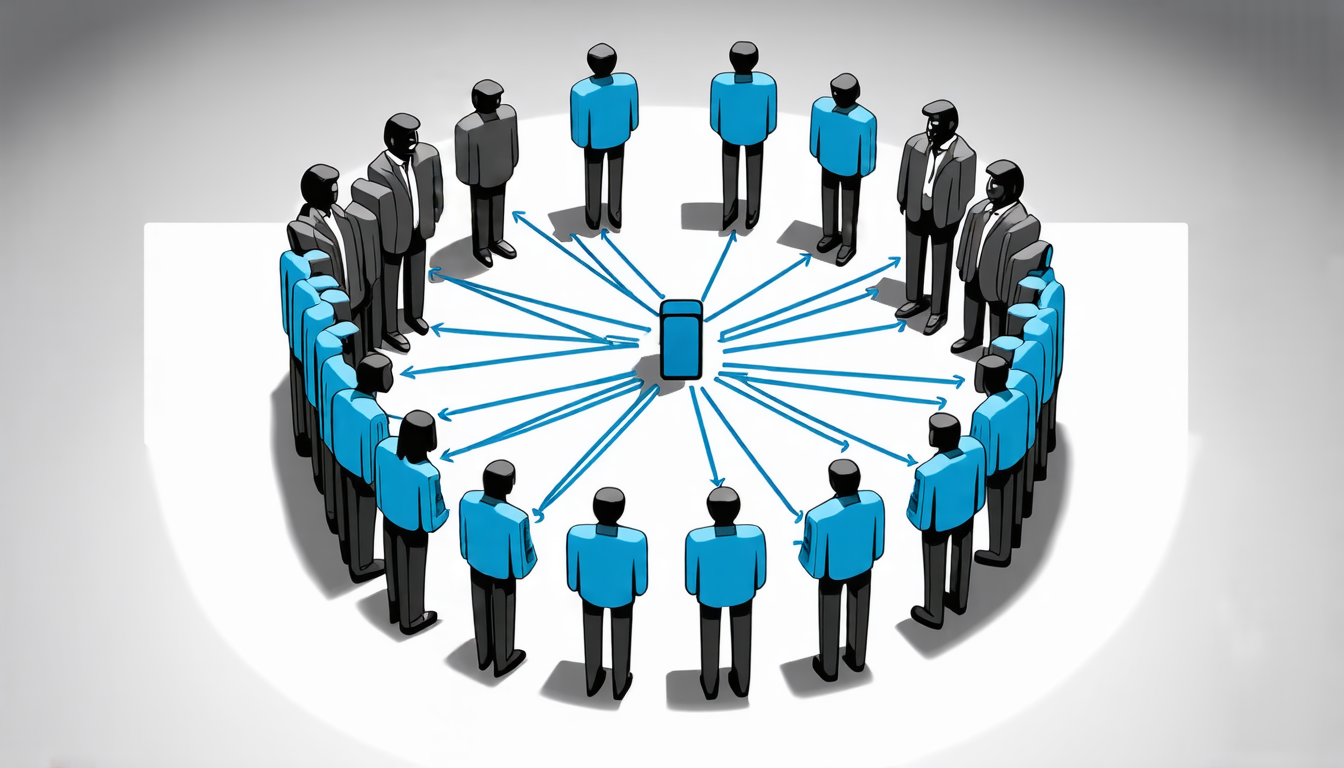
Recently, a team of scientists has developed a novel approach to capturing face-to-face interactions on a large scale. By leveraging wearable sensors and sophisticated data analysis techniques, they have created a new method for generating synthetic networks that mimic the intricate patterns of human behavior.
The process begins with volunteers wearing small devices that track their movements and proximity to others over extended periods. These data are then fed into advanced algorithms that identify key patterns and relationships between individuals. The resulting networks can be used to simulate various scenarios, such as how disease transmission might unfold in a school or office setting.
One of the key innovations is the ability to incorporate community structure into the models. This allows researchers to account for the natural groups that form within societies, such as friendship cliques or professional networks. By doing so, they can better understand how these social structures influence the spread of ideas and diseases.
The implications are far-reaching. For instance, by simulating different vaccination strategies, researchers can identify the most effective approaches for containing outbreaks in specific communities. Similarly, by modeling information diffusion patterns, they can develop more targeted interventions to promote social change or public health campaigns.
The potential benefits extend beyond academia as well. By providing a more accurate and efficient way to study human behavior, this technology could inform urban planning, marketing strategies, and even crisis response efforts.
While the approach is still in its early stages, it has already shown promising results in several pilot studies. As the method continues to evolve, it may ultimately revolutionize our understanding of human interactions and our ability to shape the world around us.
Cite this article: “Capturing the Complexity of Human Interactions”, The Science Archive, 2025.
Human Behavior, Social Networks, Wearable Sensors, Data Analysis, Synthetic Networks, Disease Transmission, Community Structure, Friendship Cliques, Professional Networks, Information Diffusion Patterns





