

Friday 07 March 2025
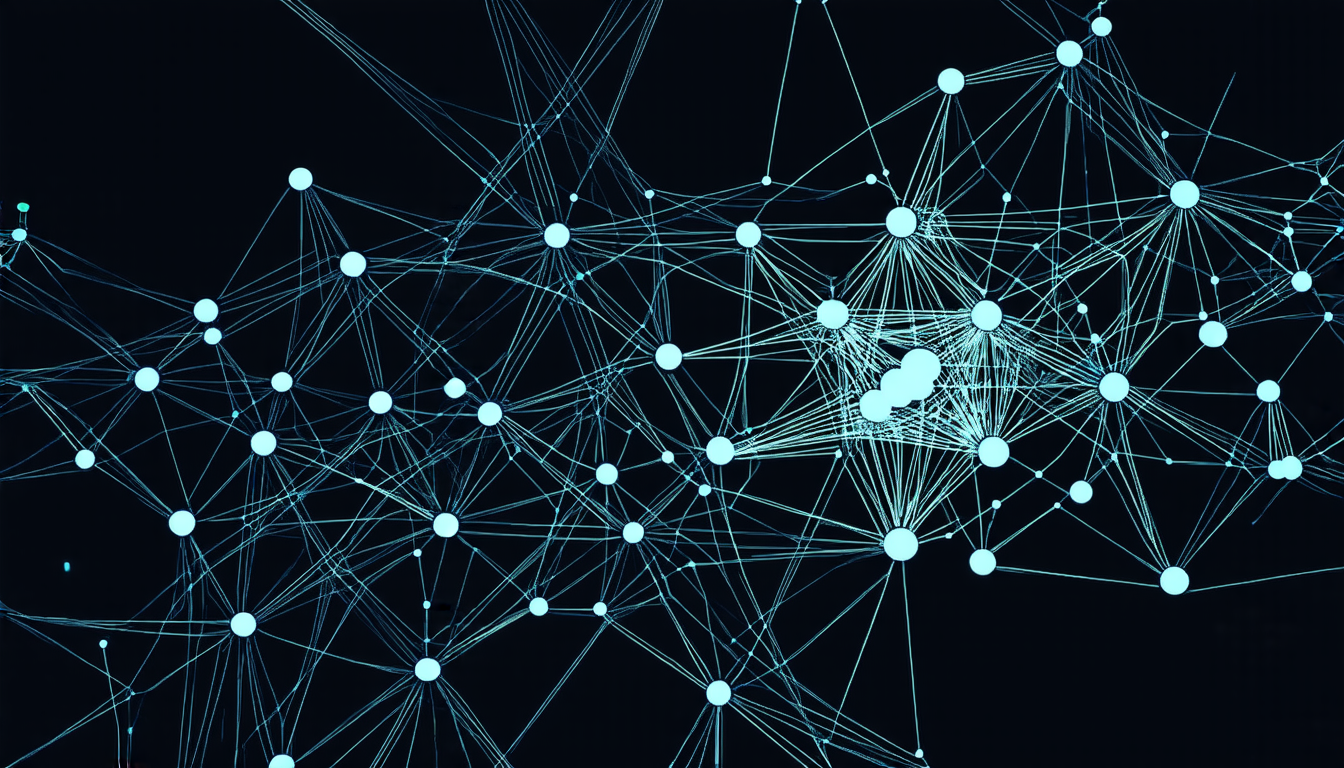
The intricate web of connections that underlies many complex systems, from social networks to biological organisms, has long fascinated scientists. Now, a new study sheds light on the crucial role that higher-order interactions play in shaping the behavior of these systems.
Researchers have long recognized the importance of pairwise interactions between individual components within a system. However, more recent work has highlighted the significance of higher-order interactions, which involve three or more components working together. These higher-order interactions can give rise to emergent properties that are not present at the level of individual components.
The study in question focused on the dynamics of coupled chaotic oscillators, which are systems that exhibit irregular and unpredictable behavior. The researchers used a combination of theoretical models and computer simulations to investigate how different levels of overlap between higher-order interactions affect the synchronization of these oscillators.
Their findings suggest that a high degree of overlap between higher-order interactions can actually hinder the synchronization of the oscillators. This is because the complex web of connections can lead to a loss of coherence, making it more difficult for the system as a whole to achieve a synchronized state.
In contrast, lower levels of overlap appear to promote synchronization by allowing the oscillators to communicate more effectively with one another. The researchers also found that the hierarchy of interactions within the system plays a crucial role in determining its behavior, with higher-order interactions having a greater impact on synchronization than lower-order ones.
The implications of these findings are far-reaching, and could have significant implications for our understanding of complex systems in many different fields. For example, they may help us to better understand the dynamics of social networks, where high levels of overlap between connections can lead to a loss of coherence and make it more difficult for individuals to communicate effectively.
The study also highlights the importance of considering higher-order interactions when analyzing complex systems. By ignoring these interactions or treating them as secondary to pairwise interactions, scientists may be missing important insights into the behavior of these systems.
In addition to its theoretical significance, this research has practical applications in fields such as engineering and medicine, where understanding the dynamics of complex systems is crucial for developing effective solutions.
The study’s findings also raise interesting questions about the nature of complexity itself.
Cite this article: “Higher-Order Interactions Shape Complex System Behavior”, The Science Archive, 2025.
Complexity, Systems, Interactions, Chaos, Synchronization, Oscillators, Networks, Coherence, Hierarchy, Emergence





