

Friday 07 March 2025
Scientists have long struggled to simulate complex physical systems, like the behavior of electrons in a metal, on computers. These simulations are crucial for understanding and predicting the properties of materials, but they can be incredibly difficult to run accurately.
One of the biggest challenges is that these systems often involve billions or even trillions of particles interacting with each other in intricate ways. This means that traditional methods of simulation, like using random numbers to approximate the behavior of individual particles, become impractically slow and inaccurate.
Recently, a team of researchers has developed a new approach to simulating complex physical systems using something called normalizing flows. These are special kinds of algorithms that can learn to mimic the behavior of these complex systems by analyzing large amounts of data and identifying patterns.
The key innovation here is that normalizing flows can be designed to respect certain symmetries, or rules, that govern the behavior of particles in a given system. For example, electrons in a metal are subject to certain rules about how they move and interact with each other. By incorporating these symmetries into their algorithm, researchers can create simulations that are much more accurate and efficient.
One of the most promising applications of this technology is in the study of materials like graphene, which has unique properties that make it incredibly strong and conductive. Simulating the behavior of electrons in graphene can help us understand how to harness its potential for a wide range of technologies, from super-efficient electronics to advanced medical devices.
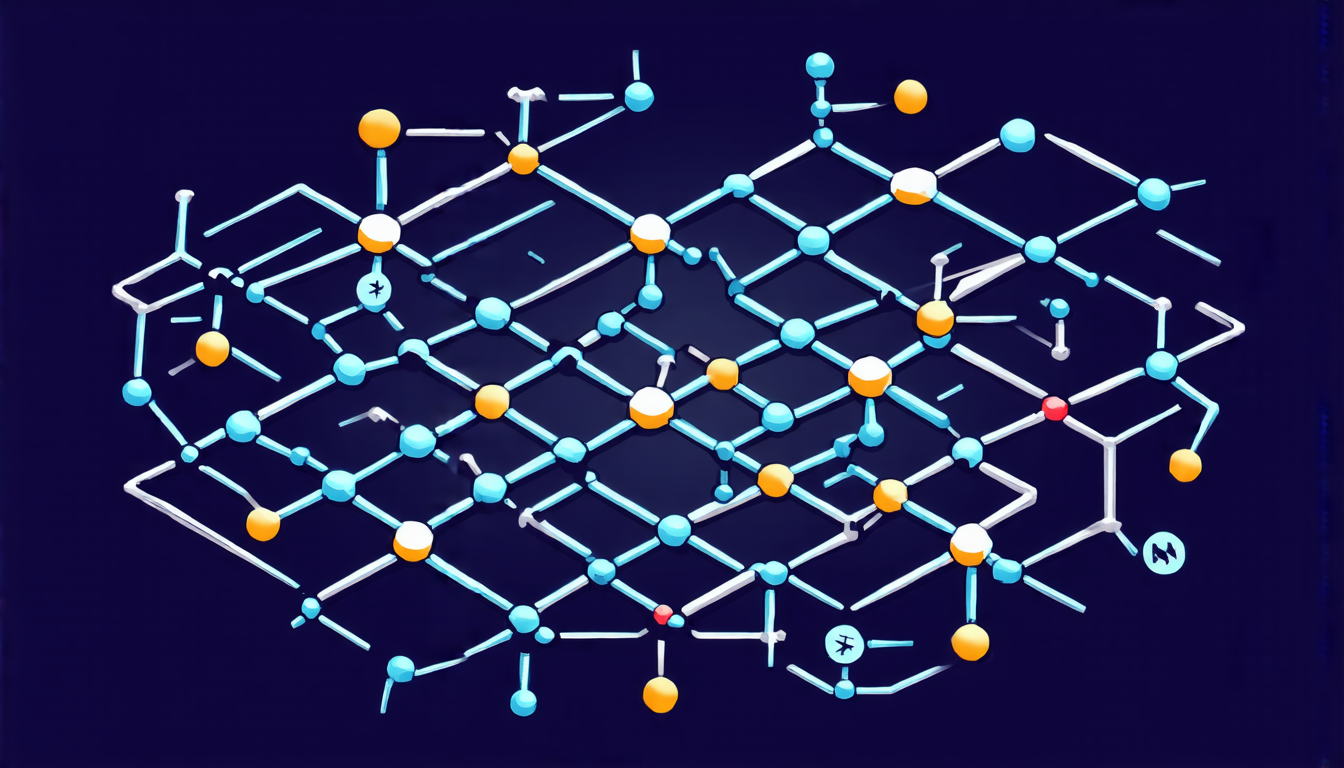
The researchers used normalizing flows to simulate the Hubbard model, a simplified version of the behavior of electrons in a metal lattice. They found that their algorithm was able to accurately capture the complex interactions between electrons and reproduce experimental results with high precision.
This is an important step forward for materials science and could have significant implications for our ability to design new materials with unique properties. By combining normalizing flows with other advanced algorithms, researchers may be able to simulate even more complex systems in the future, opening up new possibilities for discovery and innovation.
Cite this article: “Simulating Complex Physical Systems: A Breakthrough in Materials Science”, The Science Archive, 2025.
Materials Science, Normalizing Flows, Simulation, Complex Physical Systems, Electrons, Metal Lattice, Hubbard Model, Graphene, Materials Design, Quantum Computing.





