
Friday 07 March 2025
Researchers have been working on developing artificial intelligence-powered image reconstruction techniques for medical imaging, but a new study suggests that simpler models might be more effective in certain situations.
The study, published in a recent issue of IEEE Transactions on Medical Imaging, compared the performance of several deep learning-based reconstruction models trained on various types of datasets. The researchers found that smaller, less complex models were able to achieve comparable results to larger, more sophisticated ones in some cases.
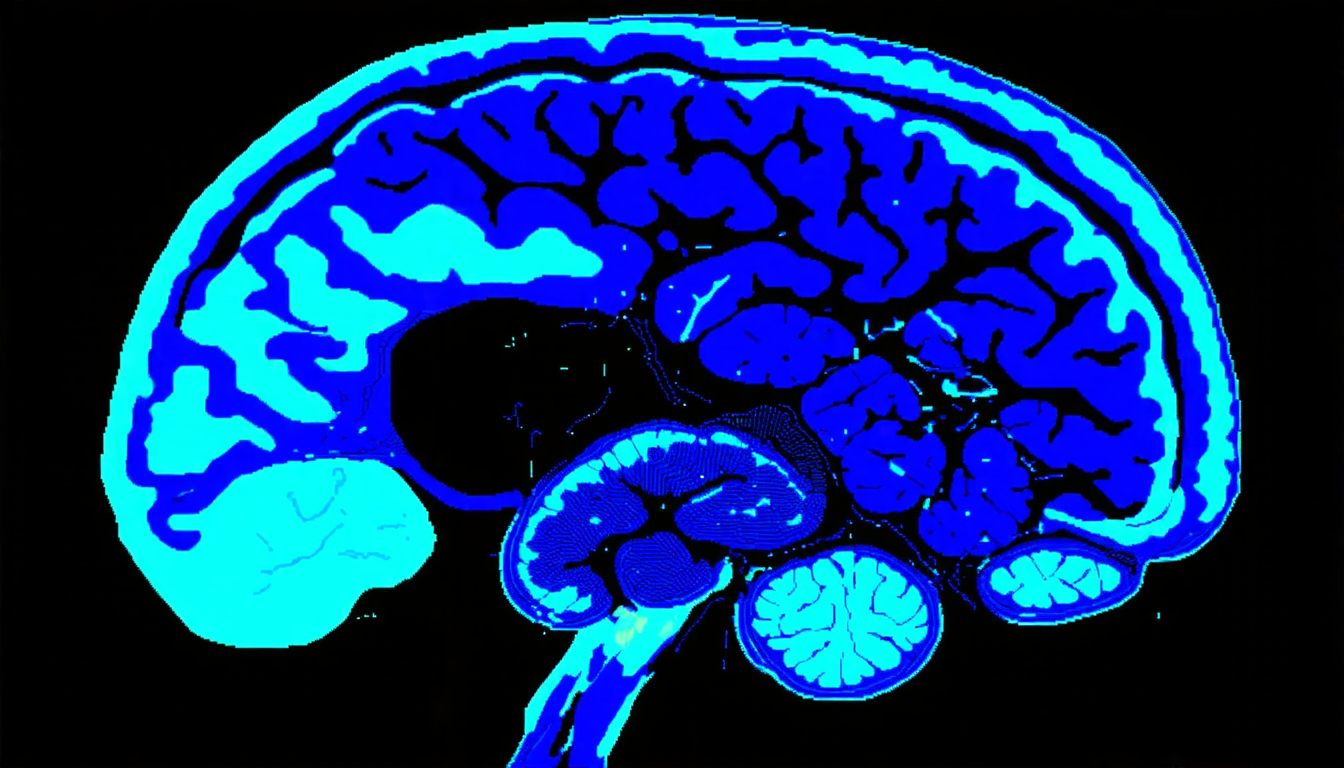
One of the key findings was that models trained on natural image datasets, such as faces and landscapes, performed surprisingly well when applied to medical imaging tasks like magnetic resonance imaging (MRI) and computed tomography (CT) scans. These models, known as diffusion-based generative models, are designed to generate new images by iteratively refining a noise signal until it converges to the target image.
The researchers used two different posterior sampling algorithms to train their models: one that relied on attention mechanisms, which allow the model to focus on specific parts of the input data, and another that used a more straightforward approach. They tested these models on several datasets, including thoracic CT scans and head MRI scans, using various undersampling masks and reconstruction settings.
The results showed that the simpler diffusion-based models were able to achieve high-quality reconstructions in many cases, often outperforming the more complex attention-based models. This was particularly true when the models were applied to medical imaging tasks outside of their training domain, such as reconstructing MRI scans from CT data.
The study’s authors suggest that this is because the diffusion-based models are able to learn generalizable features that can be applied across different types of images and datasets. In contrast, attention-based models may become overly specialized in their training data and struggle with out-of-distribution inputs.
These findings have important implications for the development of artificial intelligence-powered image reconstruction techniques in medical imaging. Rather than focusing solely on developing more complex and sophisticated models, researchers may need to consider simpler approaches that can still achieve high-quality results.
The study’s authors also highlight the potential benefits of using natural image datasets to train AI models for medical imaging tasks. These datasets are often larger and more diverse than medical imaging datasets, which could lead to better performance and more generalizable features.
Overall, the study provides valuable insights into the design and development of artificial intelligence-powered image reconstruction techniques in medical imaging. By exploring simpler approaches and leveraging natural image datasets, researchers may be able to develop more effective and efficient AI models for this critical field.
Cite this article: “Simpler AI Models Can Achieve High-Quality Image Reconstructions in Medical Imaging”, The Science Archive, 2025.
Artificial Intelligence, Image Reconstruction, Medical Imaging, Deep Learning, Mri, Ct Scans, Diffusion-Based Generative Models, Attention Mechanisms, Posterior Sampling Algorithms, Natural Image Datasets.