

Friday 07 March 2025
Scientists have long been fascinated by the workings of the human brain, and one of the most intriguing aspects is how it processes and interprets sensory information. Recently, a team of researchers has made significant progress in understanding this complex process, developing a new technique that allows them to disentangle multiple signals from a single stream of data.
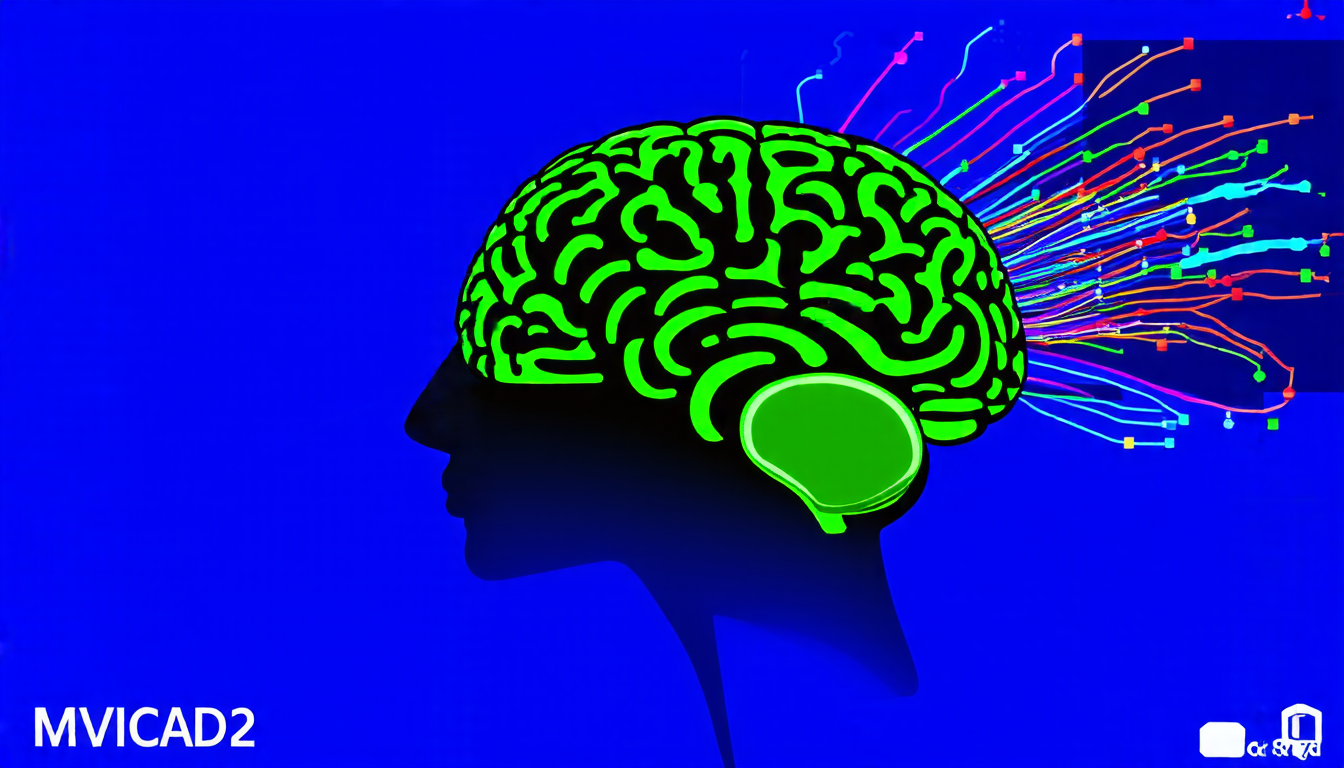
The breakthrough comes from the field of magnetoencephalography (MEG), which measures the magnetic fields produced by electrical activity in the brain. MEG is often used to study brain function and diagnose neurological disorders, but it’s limited by its ability to capture only a single signal at a time. The new technique, called Multi-View Independent Component Analysis with Delays and Dilations (MVICAD2), allows researchers to process multiple signals simultaneously, providing a more complete picture of brain activity.
The key innovation is the use of delays and dilations, which are essentially mathematical transformations that help separate the different components of the signal. By applying these transformations, MVICAD2 can identify distinct sources of activity within the brain, even when they’re mixed together in the original data. This is particularly useful for studying complex cognitive processes, such as attention or memory, where multiple neural networks work together to produce a single behavior.
The technique relies on an algorithm that iteratively refines its estimates of the delays and dilations until it converges on a solution. The algorithm is surprisingly efficient, requiring only a few minutes of computing time on a standard desktop computer. This makes it feasible for researchers to apply MVICAD2 to large datasets, such as those generated by functional magnetic resonance imaging (fMRI) or electroencephalography (EEG).
One potential application of MVICAD2 is in the diagnosis of neurological disorders, where it could help identify specific patterns of brain activity associated with different conditions. For example, researchers might use MVICAD2 to analyze the brain waves of patients with epilepsy, identifying the precise locations and timing of seizure activity.
Another area where MVICAD2 may have a significant impact is in the study of cognitive development. By analyzing the neural signals of children as they learn new skills or process complex information, researchers could gain insights into how the brain reorganizes itself during learning and development.
In the future, MVICAD2 has the potential to revolutionize our understanding of the human brain, allowing researchers to ask questions that were previously impossible.
Cite this article: “Decoding the Brains Complexity: A New Technique Unlocks Secrets of Neural Activity”, The Science Archive, 2025.
Magnetoencephalography, Brain Function, Neurological Disorders, Cognitive Processes, Attention, Memory, Algorithm, Delays And Dilations, Multi-View Independent Component Analysis, Neuroscience





