

Friday 07 March 2025
The quest for knowledge has always been at the forefront of human innovation, and in recent years, artificial intelligence (AI) has made tremendous strides in this pursuit. One area where AI has shown significant promise is in its ability to learn from vast amounts of data and recall specific information with remarkable accuracy.
A team of researchers recently published a paper detailing their efforts to create a benchmark for testing the factual knowledge of large language models (LLMs). These models, which are trained on massive datasets, have been touted as potential game-changers in various fields, including education, healthcare, and customer service. However, there has been a lack of standardized evaluation methods to assess their performance.
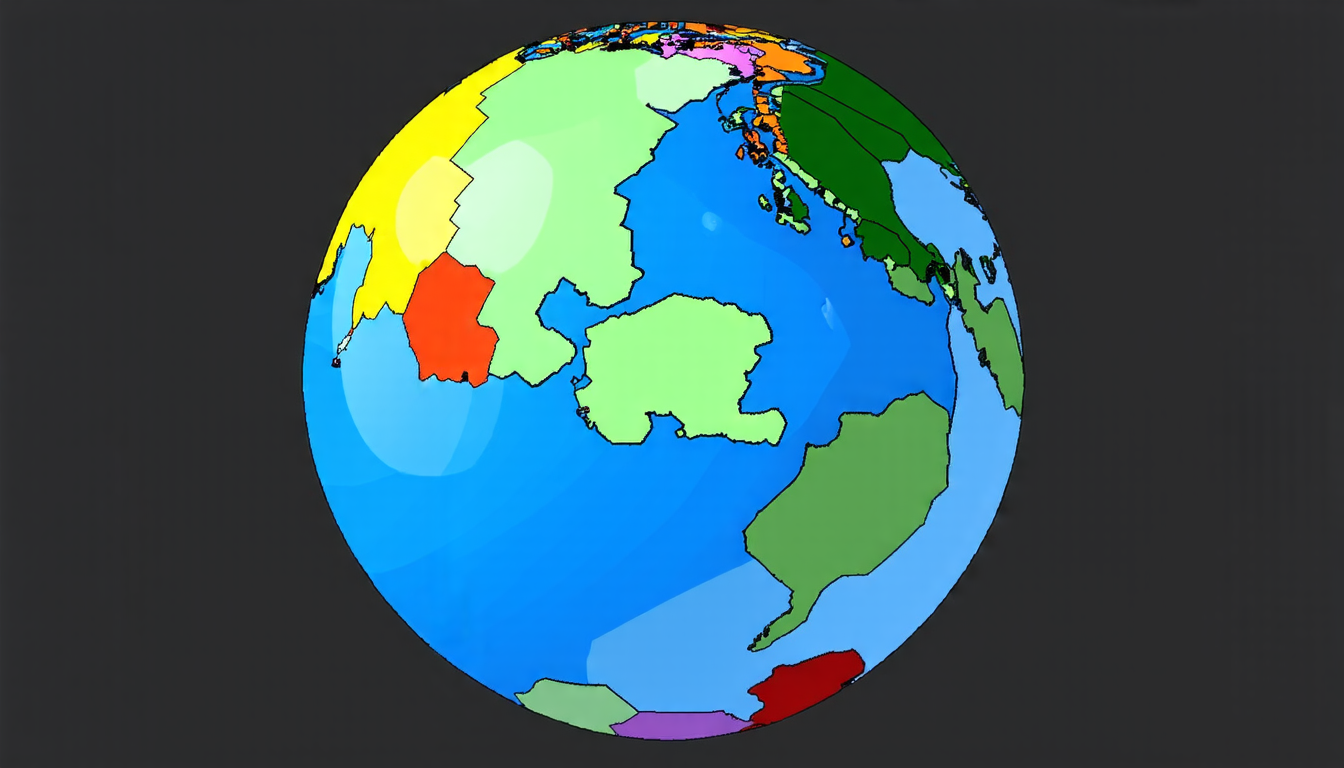
The researchers created a dataset called TiEBe, comprising over 11,000 question-answer pairs based on significant events listed in Wikipedia retrospective pages. These events span six geographical regions from 2015 to 2024, covering topics such as politics, science, and culture. The team designed a pipeline for generating these QA pairs, which allows the dataset to be updated continuously as new information becomes available.
The researchers then tested five different LLMs against this benchmark, including GPT-4o, Qwen2-70B, Sabi´a-3, Llama3-70B, and Mistral-large. The results were striking: while all models showed impressive performance overall, there was a significant gap in their ability to recall factual information from different regions.
GPT-4o, the top-performing model, demonstrated an accuracy rate of over 80% across all regions, with particularly strong performances in events related to the United States and global affairs. In contrast, models like Qwen2-70B and Sabi´a-3 showed marked disparities in their performance depending on the region, struggling to recall information from areas outside of their training data.
These findings have significant implications for the development and deployment of LLMs. As AI becomes increasingly integrated into various industries, it is essential that these models are evaluated against standardized benchmarks to ensure their accuracy and fairness.
One potential application of this research lies in its ability to identify language models that are better suited for specific tasks or regions. For instance, a model like GPT-4o may be more effective in a global news organization setting, while another model may be better tailored for a regional healthcare context.
Cite this article: “Evaluating Artificial Intelligences Factual Knowledge”, The Science Archive, 2025.
Artificial Intelligence, Language Models, Knowledge Benchmark, Factual Accuracy, Large Datasets, Wikipedia, Geographical Regions, Question-Answer Pairs, Machine Learning, Standardized Evaluation





