

Friday 07 March 2025
The intricacies of quantum systems have long fascinated scientists and engineers alike, but a new study has shed light on a crucial aspect of these phenomena: the interaction between a system and its environment.
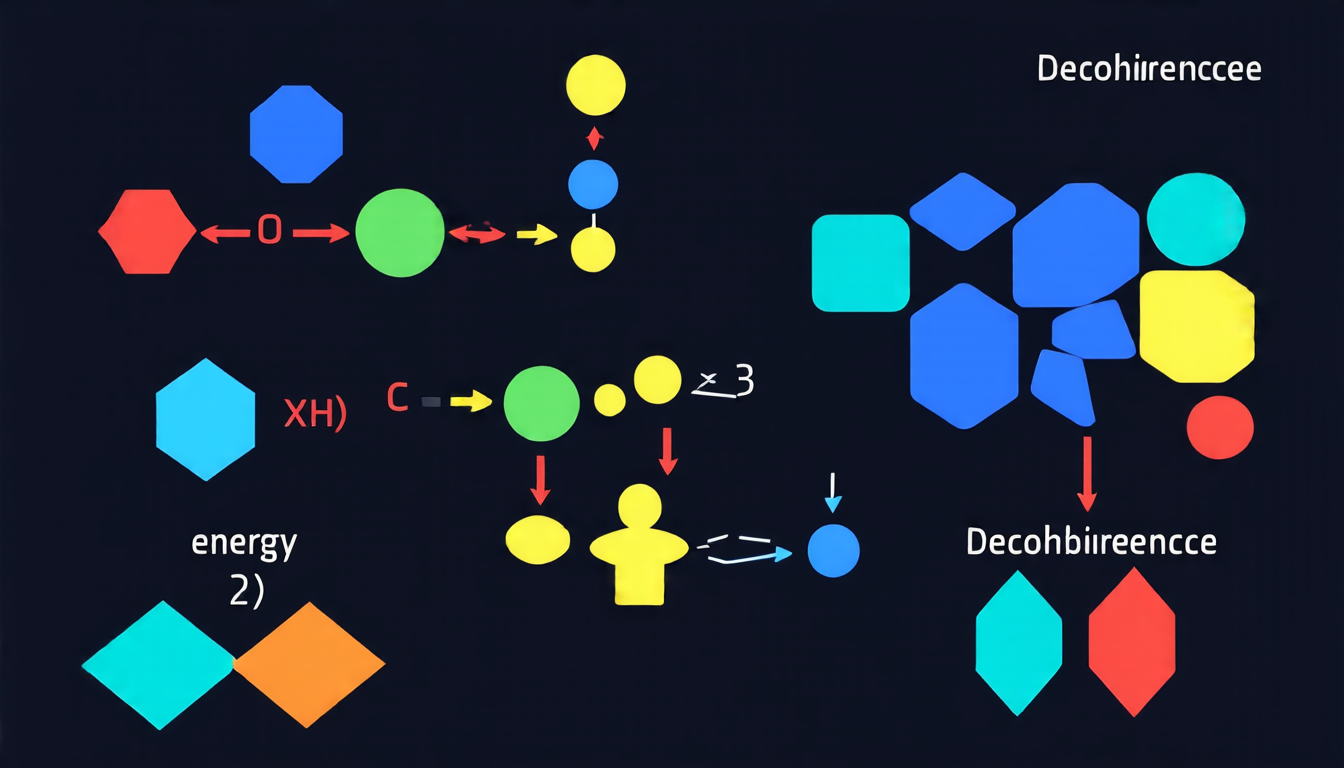
When a quantum system is placed in an environment – be it a thermal bath or a photonic field – it begins to lose its unique properties. This loss of coherence, known as decoherence, can render even the most complex quantum computations useless. But what determines the rate at which this decay occurs? Researchers have long struggled to answer this question, with many relying on simplified models that ignore the complexities of real-world environments.
A recent paper has taken a significant step towards resolving this issue by developing a novel approach to characterizing structured spectral densities. These densities describe the way in which energy is distributed within an environment, and are crucial for understanding how decoherence occurs. By leveraging machine learning techniques, the researchers were able to reconstruct key environmental features from limited data, allowing them to predict the time evolution of quantum systems with unprecedented accuracy.
The study’s authors employed a range of methods to simulate the behavior of quantum systems in various environments. They began by using neural networks to classify structured spectral densities into different categories, based on their underlying structure. This classification allowed them to identify patterns and correlations within the data that would have been difficult to discern manually.
Next, they used this information to train a machine learning model that could predict the time evolution of quantum systems in response to specific environmental conditions. The model was tested against a range of simulated scenarios, including those involving structured and unstructured environments.
The results were striking: the machine learning model was able to accurately predict the behavior of quantum systems even in situations where traditional methods would have failed. This is because it was able to capture subtle patterns and correlations within the data that are often lost in simplified models.
The implications of this research are significant. By developing more accurate models of decoherence, researchers may be able to design new quantum computing architectures that can operate for longer periods without losing their coherence. This could have major consequences for our ability to harness the power of quantum computing, which holds immense potential for solving complex problems in fields such as cryptography and optimization.
Moreover, this study highlights the importance of machine learning in tackling some of the most challenging problems in physics. By combining traditional theoretical approaches with cutting-edge computational methods, researchers may be able to unlock new insights into the behavior of complex systems – from quantum mechanics to condensed matter physics.
Cite this article: “Unraveling Quantum Enigma: Machine Learning Breakthrough in Understanding Decoherence”, The Science Archive, 2025.
Quantum Systems, Decoherence, Environment, Spectral Densities, Machine Learning, Neural Networks, Quantum Computing, Cryptography, Optimization, Condensed Matter Physics.





