

Friday 07 March 2025
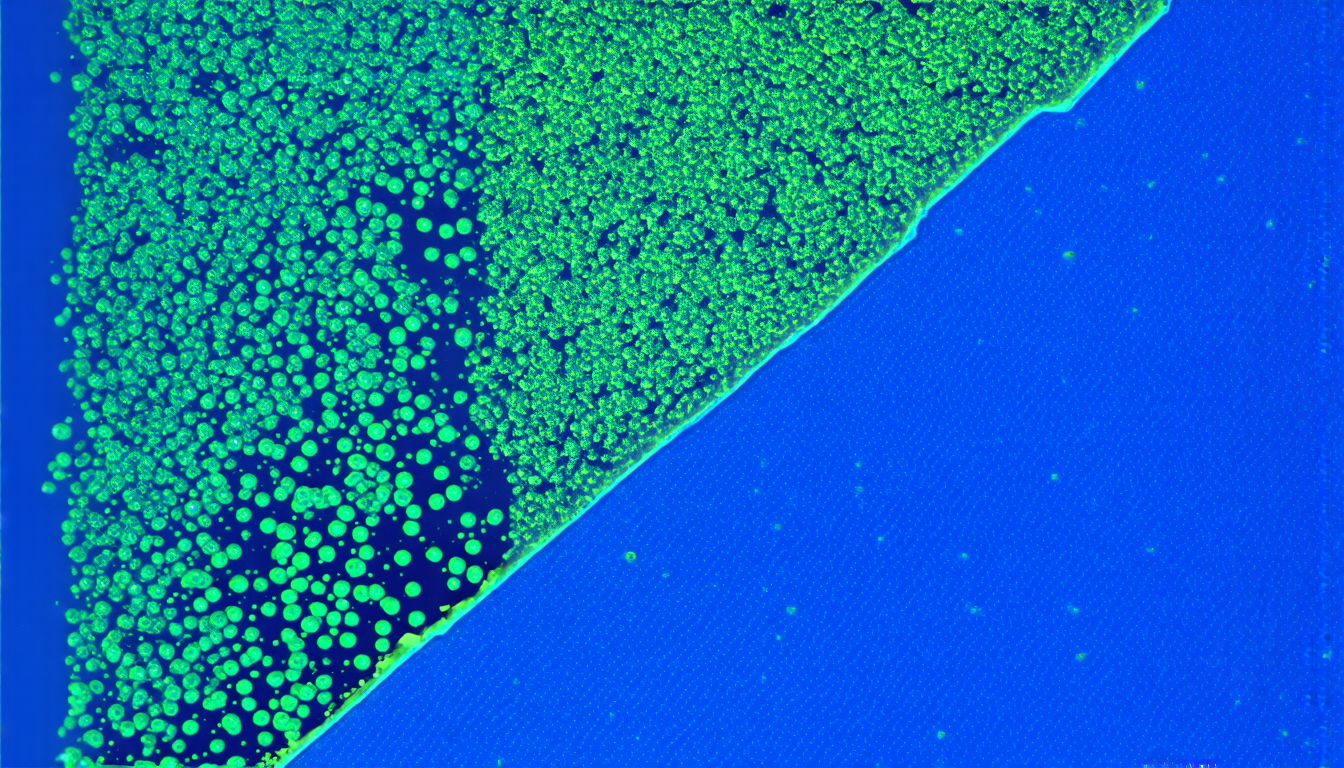
Cells are fascinating creatures, capable of adapting and responding to their environment in complex ways. One aspect of this adaptability is the way cells arrange themselves on a substrate, often forming patterns that reveal insights into their behavior and interactions.
Recently, researchers have been studying the way cells behave at corners, where two surfaces meet. This might seem like a minor detail, but it turns out to be crucial for understanding how cells move and interact with each other.
The problem is that cells don’t behave uniformly at these corners. Instead, they exhibit a range of behaviors, from aligning themselves perfectly along the edge to deviating significantly from this alignment. The reasons behind this variability are still unclear, but researchers suspect it has something to do with the way cells respond to their environment and each other.
To better understand what’s happening, scientists have been studying the director field, which describes how the cells’ orientation changes across the corner. By analyzing this field, they’ve discovered that cells can exhibit two main types of behavior: splay, where they align themselves along the edge, or bend, where they curve around the corner.
The researchers found that for a particular angle, the energy associated with these two behaviors is equal. This suggests that there’s an underlying balance between the two, which could have important implications for our understanding of cell behavior and development.
One potential application of this research is in the field of tissue engineering, where scientists are working to create artificial tissues that mimic the structure and function of natural ones. By better understanding how cells behave at corners, researchers may be able to design more realistic and functional artificial tissues.
The study also highlights the importance of considering the local environment when studying cell behavior. Cells don’t operate in isolation; they’re constantly responding to their surroundings and interacting with each other. By taking this into account, scientists can gain a deeper understanding of how cells function and adapt to different situations.
Overall, this research offers a fascinating glimpse into the intricate world of cellular behavior. By exploring the complex interactions between cells and their environment, scientists may uncover new insights that could have significant implications for our understanding of life itself.
Cite this article: “Cells at the Corner: Unraveling the Secrets of Cellular Behavior”, The Science Archive, 2025.
Cells, Behavior, Corners, Substrate, Pattern Formation, Director Field, Splay, Bend, Tissue Engineering, Cell Biology





